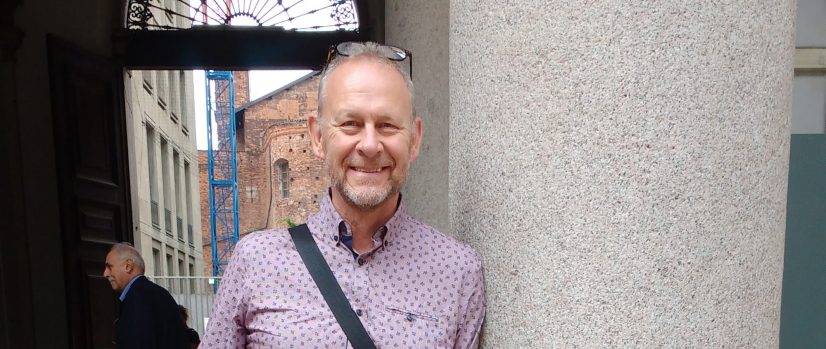
The weather forecast was dire, it wasn't a day for country walks or anything in the great outdoors. So we took the easy way out thand went to another castle. That's the great thing about Scotland, there is always another castle to visit. Stirling Castle is one of e samethe best, the seat of the Scottish Royal family for three hundred years. It sits on top of a craggy hill and dominates the small city of of Stirling. It has been besieged many times by the English, and was a military fort until the sixties. 
Some of the principal rooms have been beautifully restored and have had many millions of pounds spent on them, it is the Scottish equivalent to Windsor Castle. The Royal apartments are beautifully colourful, restored to how they looked in the 16th century at the time of James V. There are some amazing tapestries which are copies of originals which are now in a museum in New York. The copies took thirteen years to weave and cost £2,000,000. 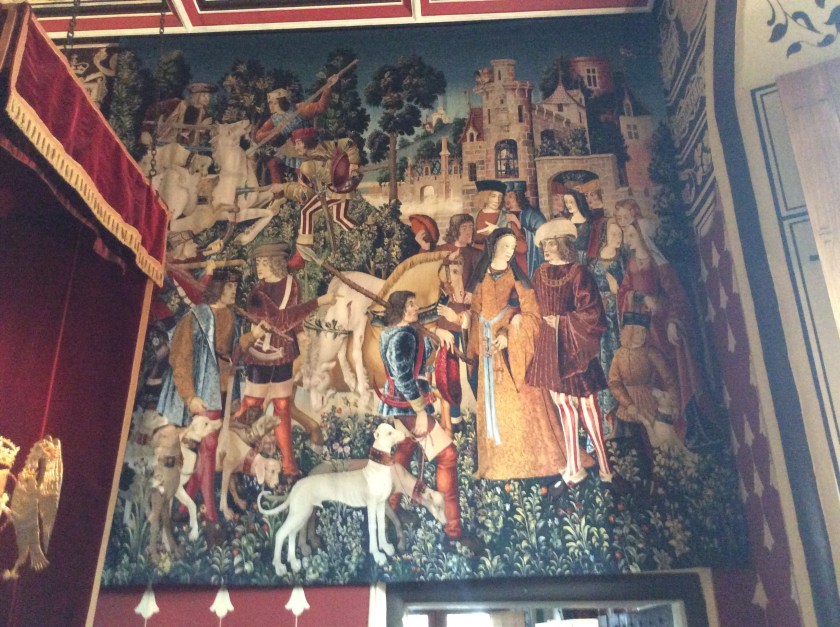
There are some pretty streets in the old town of Stirling, old stone buildings built when the Stuart kings ruled over just Scotland, before they also became Kings of England. But the only rest of Stirling is the same as any other British city, nothing I would want to return to. 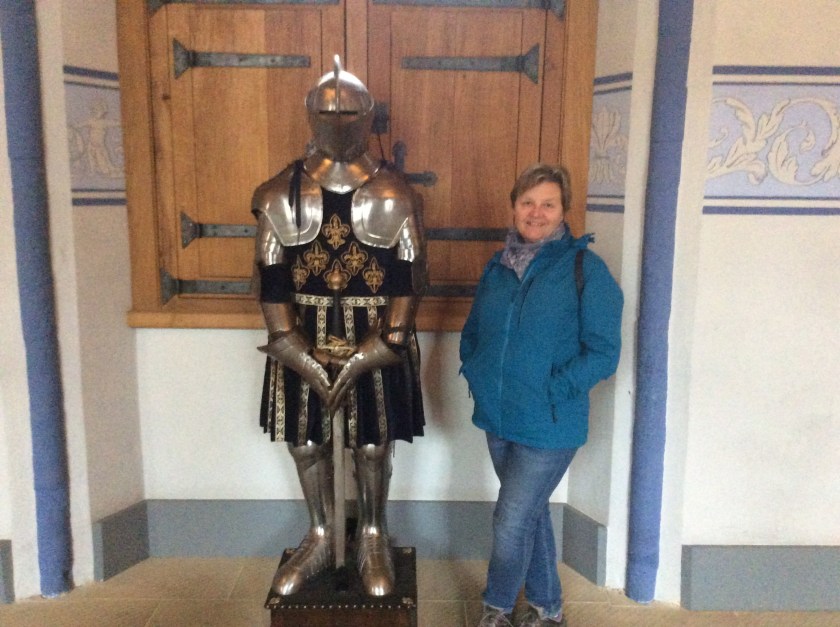
One thing about Scotland that is quite annoying is that most places shut at 5pm, the shops, the cafes, the tourist attractions. I suppose after 5 they all go to the pub or chip shop.
Month: July 2017
Scotland Day 5 – The Hollow Mountain
During our second breakfast we chatted to the Dutch ladies who were also staying at Tigh Bhan (pronounced Tie Van). They had travelled a lot, and really liked London, ladies of taste and distinction. It was raining again, but this time it hardly stopped. So indoor activity was the order of the day, and what better way to start than to go inside of a mountain. Ben Cruachan is a 3,600 foot mountain on the shore of Loch Awe, which has been turned into an awesome pump-storage hydro-electric power station. a natural corrie on the mountain side was dammed and turned into a reservoir. Then tunnels were excavated through the black granite to a massive turbine hall a thousand metres into the mountain. Water from the reservoir is used to turn massive turbines which drive generators making electricity. There is enough water to run for fourteen hours at full power, the water runs into Loch Awe. At night, when electricity is very cheap, the same turbines are used to pump water back up into the reservoir! The main use of the Hollow Mountain is to produce electricity very quickly, it can be switched on in two minutes at times of peak demand. So when there is an interval in a football match and millions of people put the electric kettle on, extra electricity can be produced on demand. The tour took us by mini bus into the power station to show us the generating hall, with its four massive generators sitting above the turbines. This amazing piece of engineering was built between 1959 and 1965 and was opened by the Queen.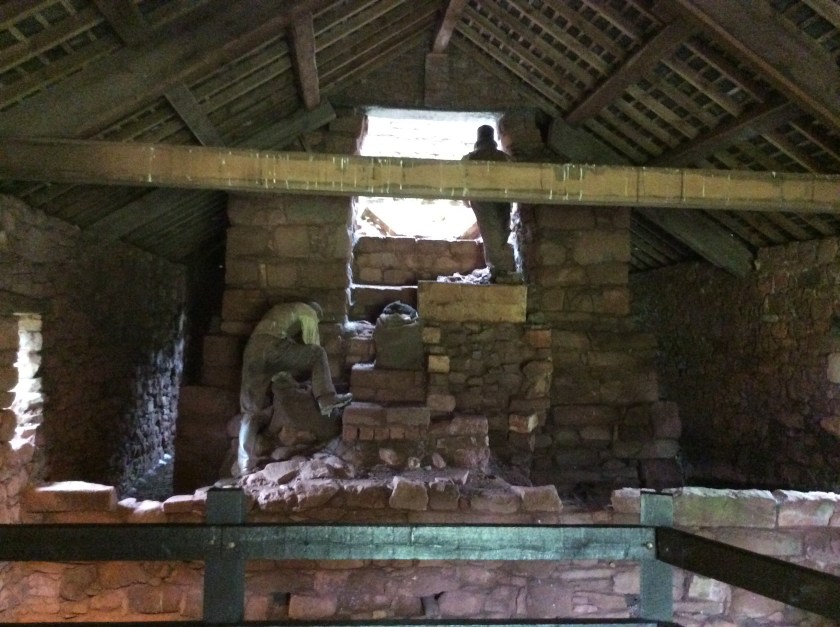
Having got into the industrial groove, we went to an old blast furnace next w went to Bonawe Furnace. It's an 18th century blast furnace on the shores of Loch Etive. It used charcoal from the local forests to heat the furnace, and power for the bellows was provided by a waterwheel. Vast amounts of timber were used, two tons of iron needed two tons of charcoal, which is a huge amount of wood.
A few miles down the road we stopped for lunch at the Inverawe Smokehouse, a place that smokes all sort of foodstuffs. It has a great cafe, and we had their chowder for lunch. It was very expensive (£7.95 each) but was undoubtedly the best smoked haddock chowder I have ever, ever eaten. Basically it as smoked haddock cooked in cream, delicious!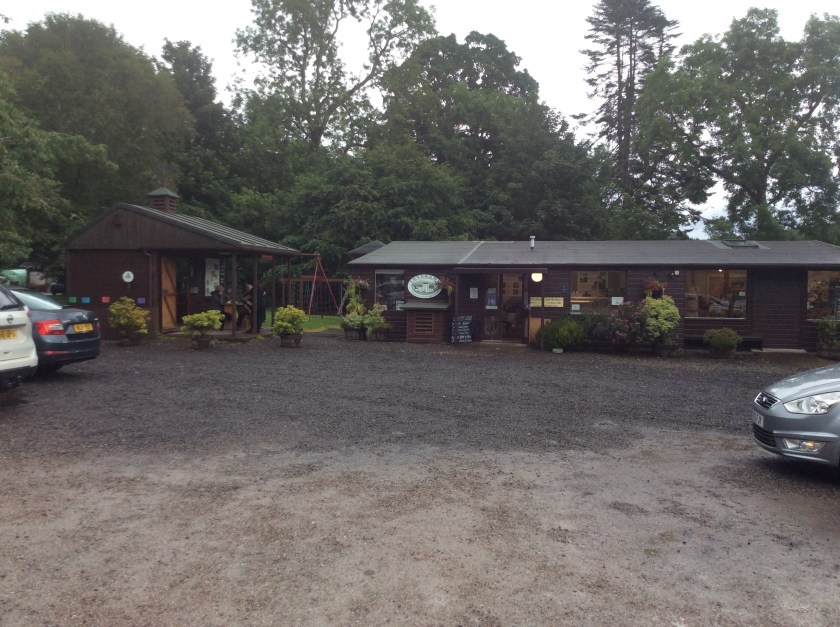
The weather was very wet, so we headed south towards our next destination at Gartmore. There were many beautiful lochs and mountains, but the views were often covered by rain and clouds. There are a huge amount of mountains and lochs in Scotland, it really makes the Lake District look small.
Our next AirBnB is in Gartmore, a small 18th century planned village which is basically one street. We ate a good dinner at the only pub, the Black Bull, and then went back to our accommodation at Elgin House. Our hosts Jacky and Paul are both orchestral musicians, very friendly and generous with their malt whisky. 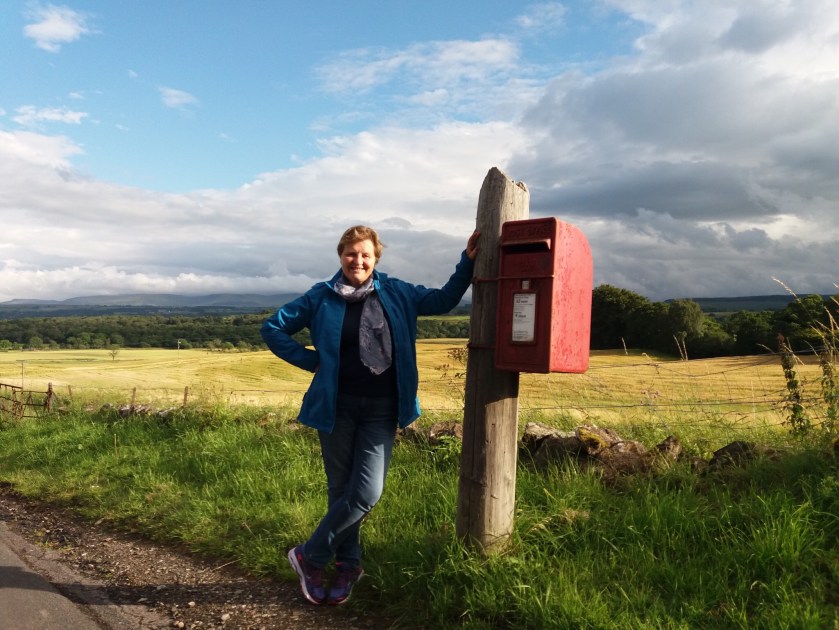
Scotland Day 4 – Mountains and Lochs
After stuffing our faces with a full English at the BnB, we went a few miles north to the village of Glencoe. It is a two-horse town, without the horses. There is almost nothing to see there, so we went straight through to a forest park and had a walk in the woods. It was undemanding and very pretty. We fancied a coffee and went to the Glencoe Visitors centre, and had some truly terrible coffee, but the soup and scone was much better. The exhibition about the Glencoe Massacre was very interesting, the story about McDonalds Vs Campbell's had nothing to do with catering but was all to do with the Clan rivalries and government power.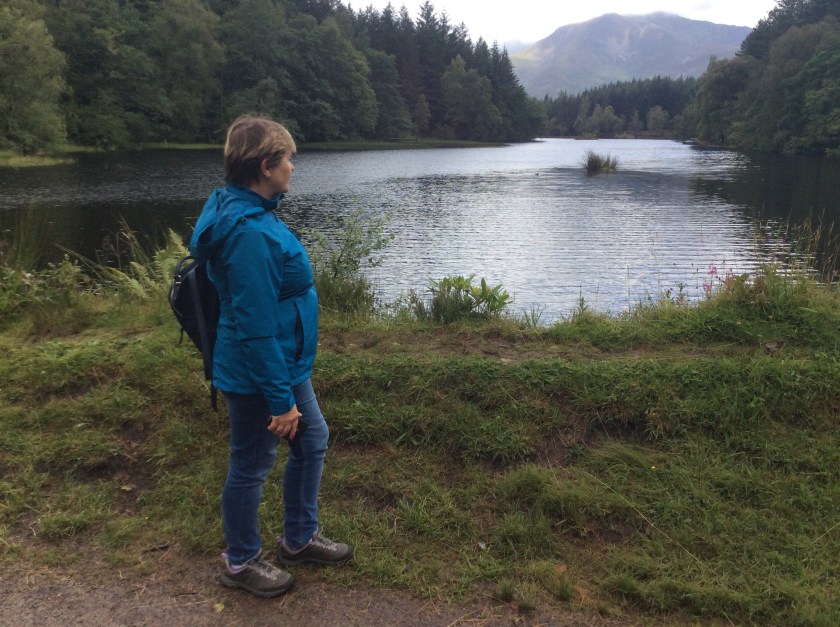
Glencoe it's self is a beautiful glaciated valley, with streams cascading down the side and mists swirling across the summits. It was raining when we drove through, which somehow made it feel more powerful. I almost expected an army of Orcs to burst out a cave and charge down the mountain side!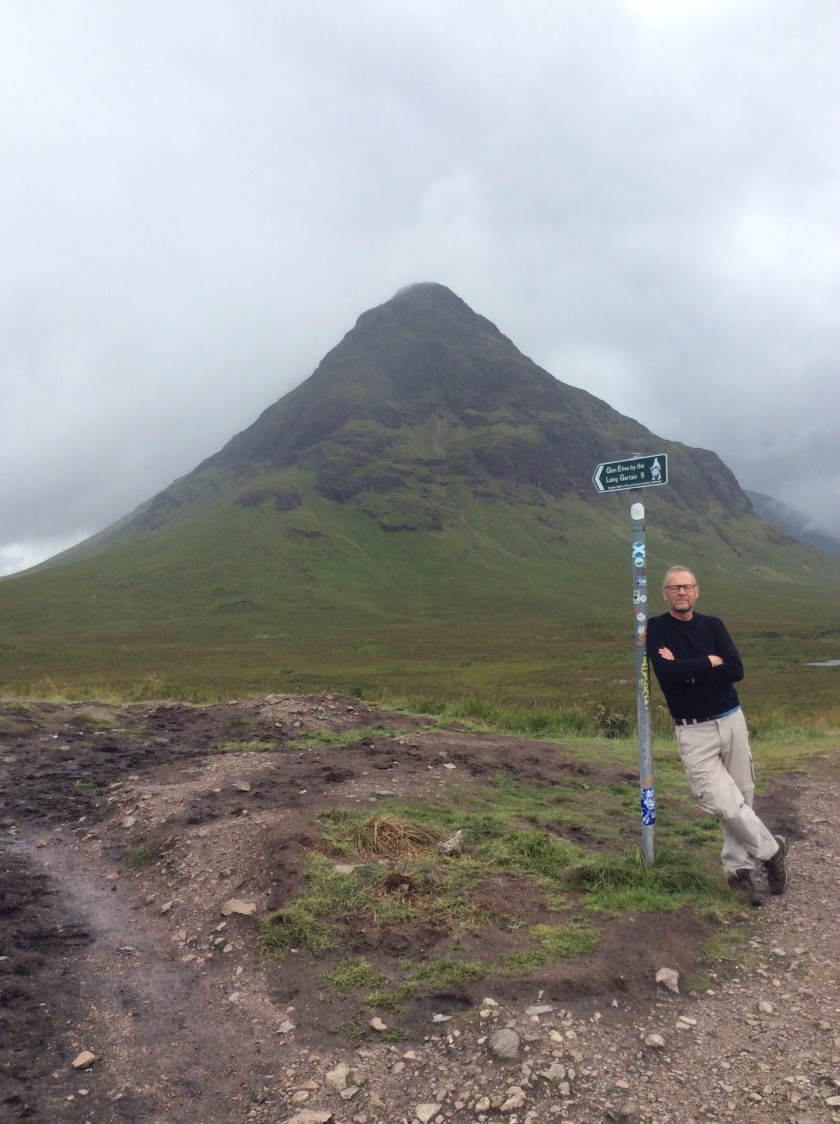
As we drove away the rain dried up, and we crossed Loch Leven and caught the ferry at Corran to cross over Loch Linhe to go over to Ardamurchan. We didn't know what to expect, but it turned out to be the best part of our holiday so far. The scenery is a spectacular combination of mountains, lochs, rivers and sea, with another great view round ever corner. The roads are mostly single carriage way with passing places, which kept Julie on her toes pulling in every few minutes. The road goes around the Ardnamurchan region, which is the furthest part west of the British mainland. 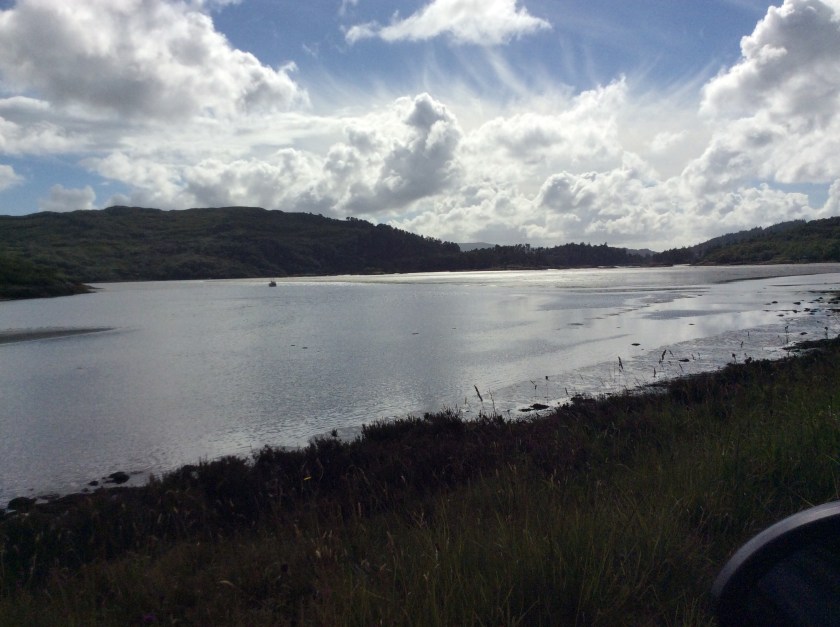
The sun came out and the views were outstanding, we kept seeing places that looked like Cornwall, the Lake District, British Columbia and New Zealand! Our final destination was Arisaig which is on the road north to Mallaig. It has some lovely white sandy beaches and blue sea, which reminded me of Whitsand Bay. 
After that it was a dash east down the A830 to Fort William to get some dinner. It ain't a pretty town. The high street is full of all manner of tourist tat shops, and the sea front is a dual carriageway. It does have a Wetherspoon's, and as you know, dear reader, I enjoy a good-value dinner. After a lamb shank and two pints of Deucher's IPA, I viewed Fort William much more favourably.
So in summary, if you visit Argyle, don't miss Ardnamurchan, it won't disappoint you, bit Fort William will.
Scotland Day 3 – I’ll take the high road
It was pissing down when we left Glasgow this morning. When I awoke I looked out of the window and saw people in coats with brollys, a very reliable indicator of rain. We got a cab to Europcar and collected our new Corsa. Julie drove and I navigated, using a combination of an Aldi road atlas and Google Maps. Our destination was a tiny place caller Duror, half way between Oban and Fort William. It too me a while to work out the best route to get there because the Argyle coast is very complicated. It looks like a normal county that has been torn to pieces and then thrown up into the air to land randomly. The region to the north west of Glasgow is all lochs, islands and peninsulas with a few small towns.
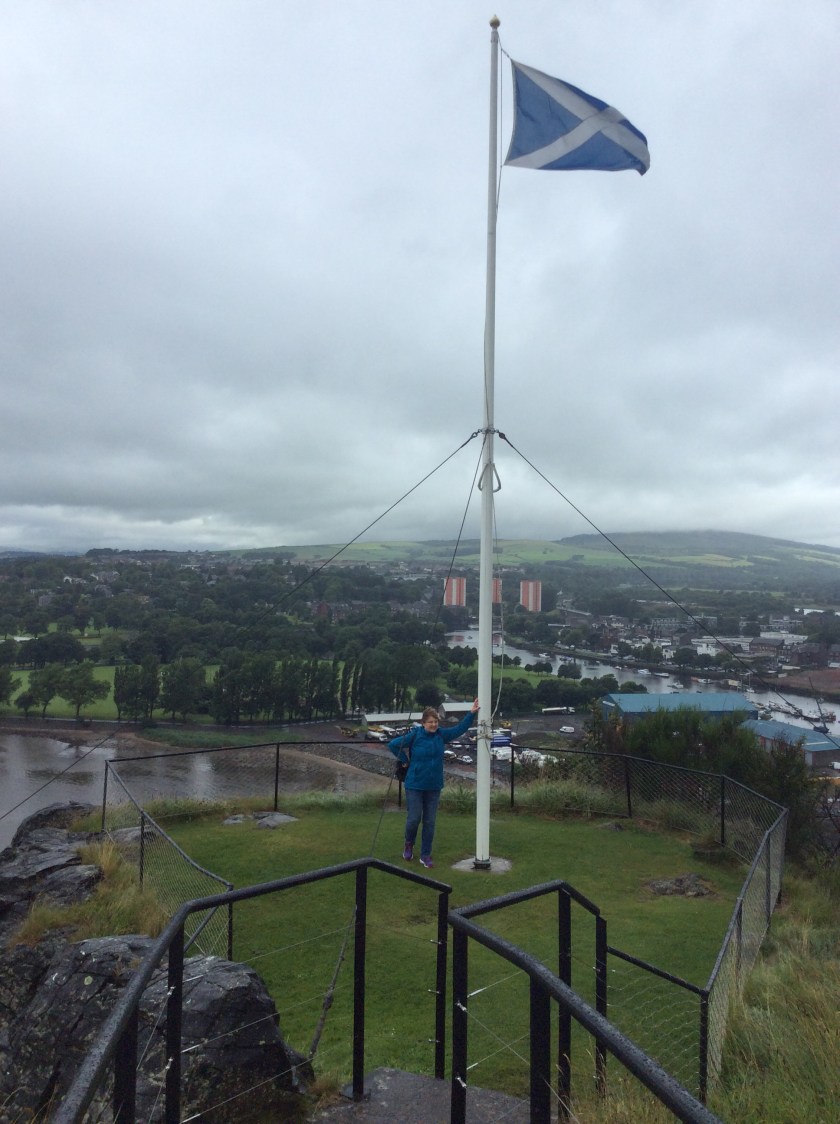
Leaving Glasgow along the M8 we crossed the Erskine Bridge (an impressive cable-stayed construction) and had a look at Dumbarton. Julie's brother Ian had lent us his Scottish National Trust cards, so we went to see Dumbarton Castle. It sits on a tall volcanic plug, like Arthur's Seat in Edinburgh, and has been a fort for fifteen hundred years. It's a steep climb up to the top, but the views over the Clyde and Dumbarton make it very worthwhile. The rain stopped and Scotland turned from monotone to colour once again, as though BBC 2 had just been switched on in 1965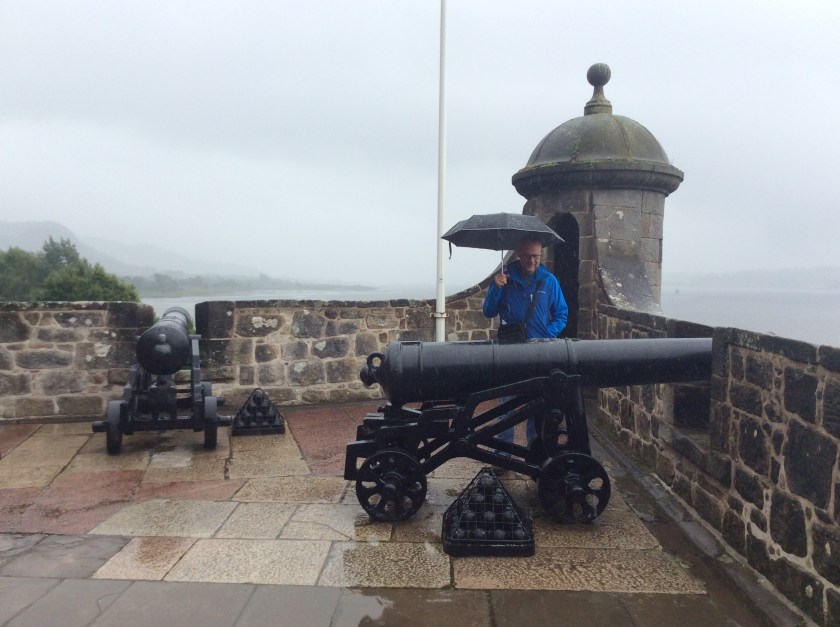

The A82 took us up the side of Loch Lomond, the biggest freshwater lake in Britain. We stopped briefly at Luss, which is a small tourist trap village with a big coach park. At Tarbet we turned eat along the A83, and the landscape became much more mountainous and interesting. Basically it looked just like the Shortbread tins, we even saw some shaggy cows with big horns. The road took us all the way down Loch Fyne, which is an actual loch and not a made up place for selling fish. The sun shone and Scotland looked as it does in guide books, which is what we had come for. The road was very good, and Julie enjoyed the driving while I looked out of the window, an excellent division of labour.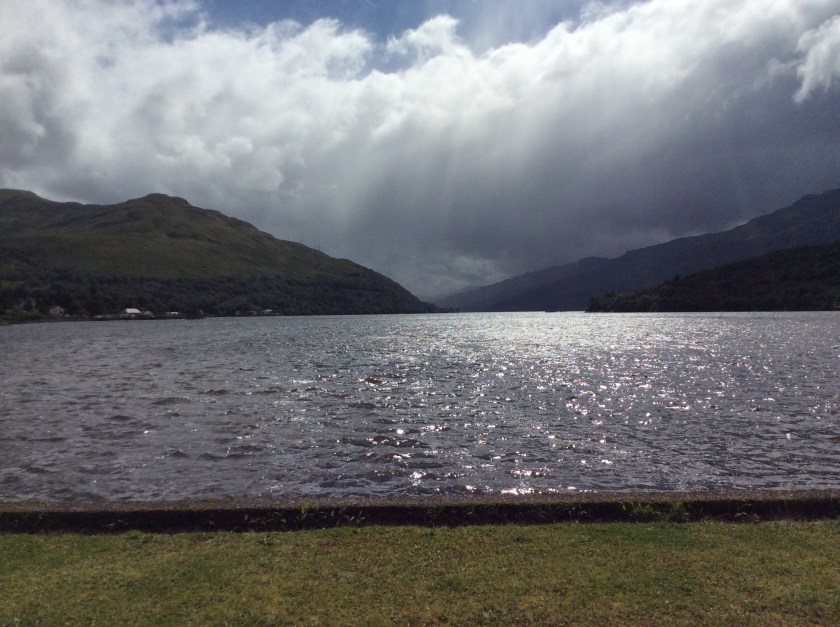
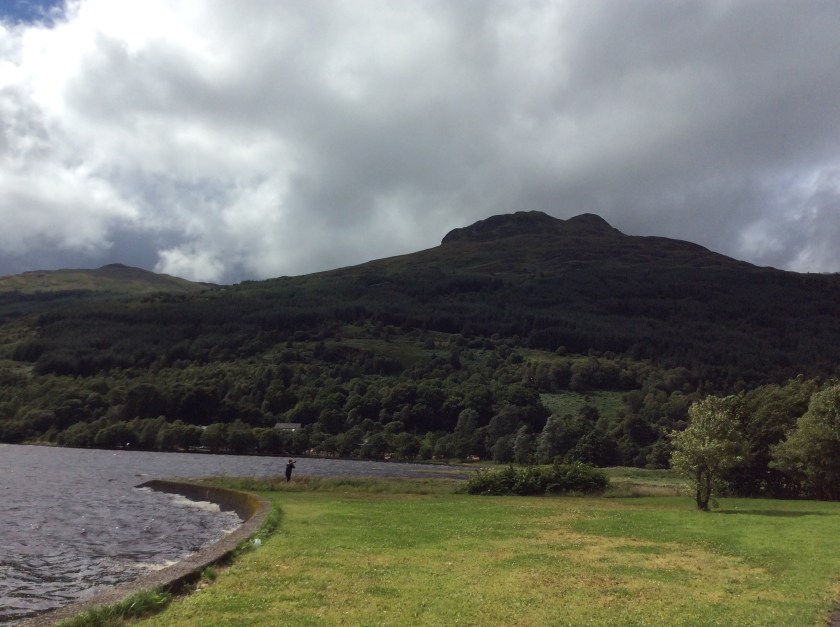
All the villages have unusual names, many of them unpronounceable for a soft Southerner. My favourite was Lochgilphead, which was at the head of Loch Gilph, From there we headed north up the A812 to Oban, which is a small town but a major transport hub for the region. Being in a fishing port, a fishy dinner beckoned, and we chose the Fishouse restaurant. The food was superb, I had haddock chowder to start and seafood pasta as my main. Both were creamy with lots of tasty fish, I would highly recommend it!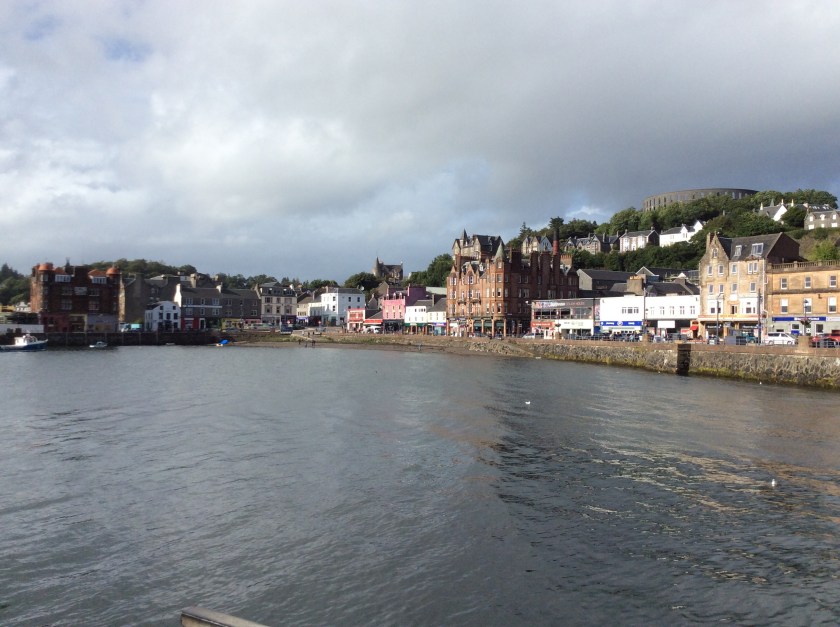
From Oban it was just half an hour north up the coast to our next AirBnB in Duror, Tigh Bahn. Our room is about a quarter of the size of the last one, but is cozy and very colourful. We have smuggled in some excellent Merlot from Morrisons in Dumbarton, the perfect accompaniment to blogging.
Scotland Day 2 – Culture Day
Glasgow is a big city with a lot to offer. On our first (and only) full day we hunted down Culture, grabbed it with both hands and gave it a big fat kiss.
Our accommodation is in the West End of Glasgow, the hip area close to the University, which was established in 1451. A short walk through streets of beautiful Victorian tenements is the Hunterian Museum. Within the museum is the former home of Charles Rennie Mackintosh – sort of. The actual house was demolished in the sixties because it was subsiding into old mine workings. So the complete interior was stripped out and put into a rather nasty looking concrete extension to the Hunterian art gallery. Admission is by a guided tour from the gallery. Our guide was enthusiastic and engaging, and told us in some detail about the three rooms which make up this reproduction house. Mackintosh was a designer, architect and artist who did his best work at the end of the 19th century. He is to Glasgow what Gaudi is to Barcelona and Frank Lloyd Wright is to Chicago, a pioneering modernist who is still very relevant today.
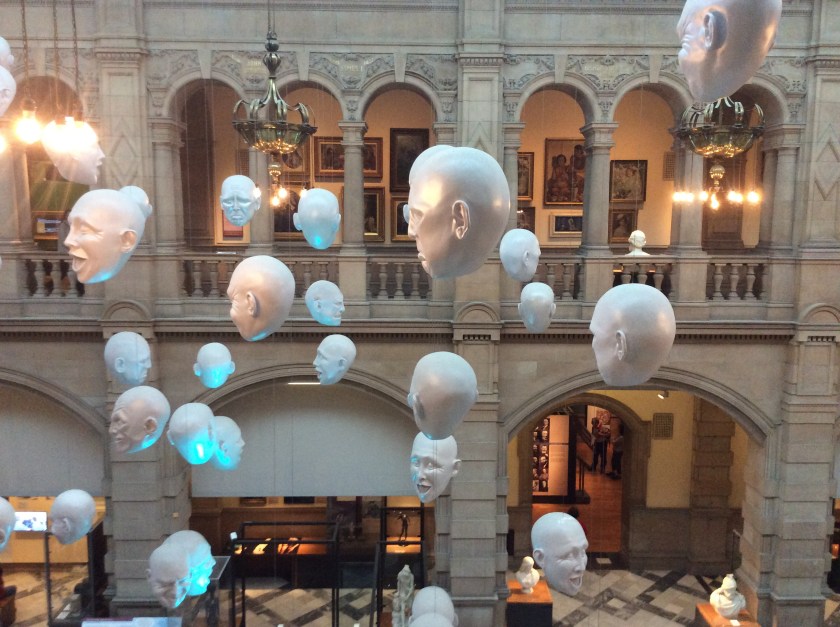
Half a mile down the hill is Kelvingrove Museum, a magnificent palace of Victorian Gothic and a fabulous place to visit. The building is reminiscent of the V&A and the Natural History Museum, a huge an beautiful exhibition of art, taxidermy and with bizarre sculpted heads suspended from the ceiling. There is more CRM stuff and some gorgeous paintings by Scottish Colourists, who were influenced by the French Impressionists. All that culture makes one peckish, and just as I was buying sandwiches the awesome pipe organ started playing some Handel (or possibly Bach). So we sat and munched our sarnies while being entertained by the organist who played with his feet as well as his hands, a TV screen showed his feet in action.
 j
j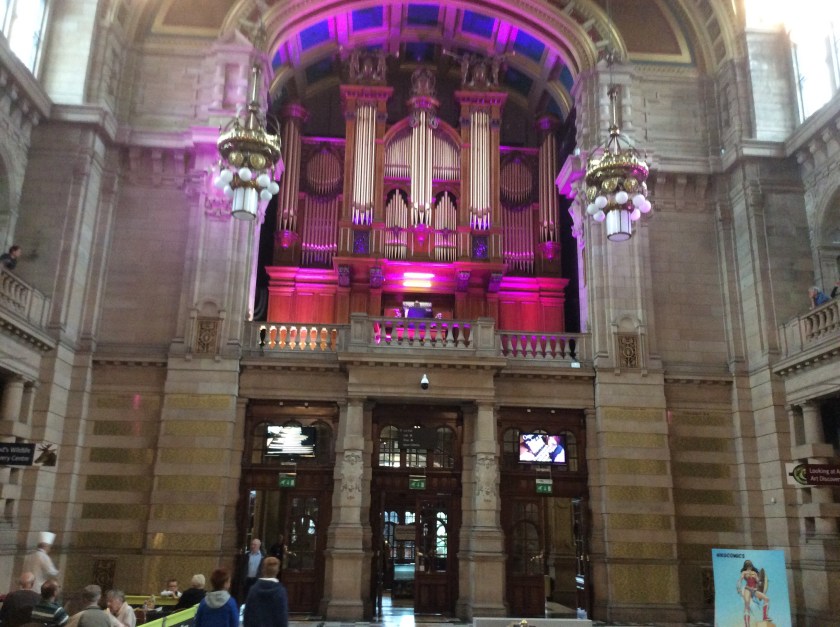
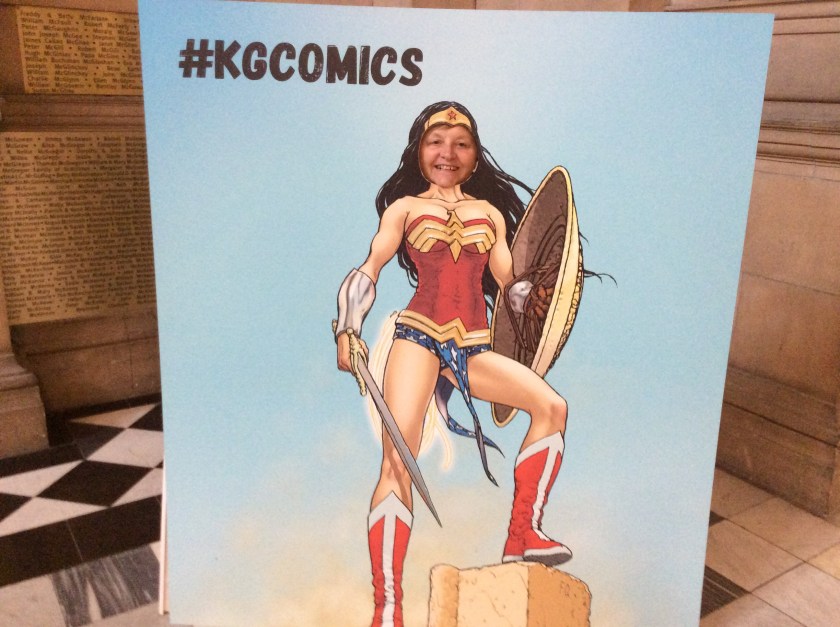
Tiring of being informed and educated we walked down Sauchiehall Street towards the city centre. A worthwhile diversion was to the Tenement House which is a preserved Victorian tenement apartment, shown as it would have looked seventy years ago. It has four rooms and is mostly let by gas mantles, and there is a bed in the cupboard in the kitchen! It gives a great insight into how most Glaswegians lived until about fifty years ago.
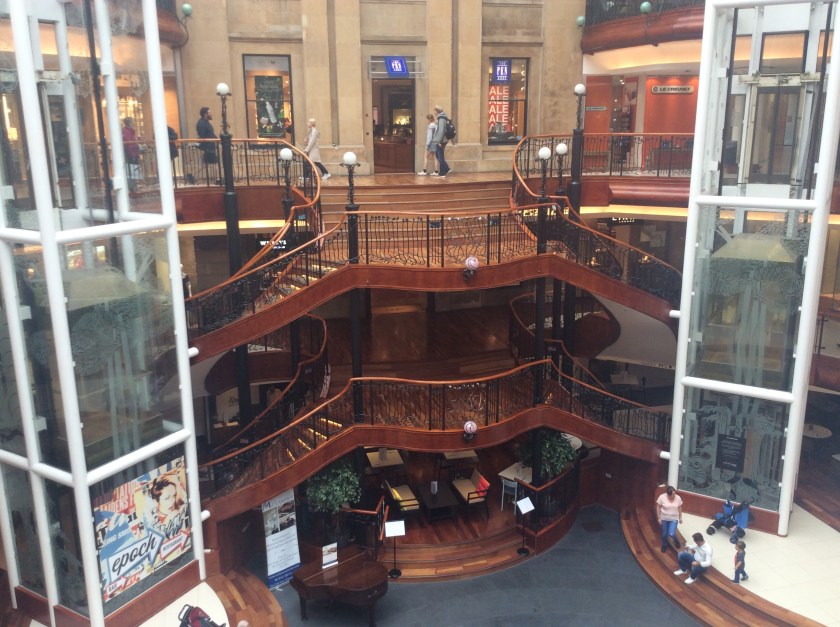
Glasgow is set out on a grid like American cities, so it's quite easy to get around. Buchanan Street is like a pedestrianised Oxford Street, lots of upmarket shops in big sandstone buildings. Princes Square is a very pretty shopping centre with lovely art nouveau stairs.
The weather forecast is for rain for the rest of the week, so Julie bought a new waterproof coat to prepare for the worst. We paid a brief visit to a design centre called the Lighthouse, and saw yet more CRM stuff, this guy gets everywhere in Glasgow! The "viewing" platform is less interesting than the top of the multi-storey car park in Hounslow, don't go there!
Getting a bit tired of walking we took advantage of our Meercat Movies deal and went to see Dunkirk. It is thrilling, nail-biting, harrowing and uplifting. You feel like you are in the cockpit with the Spitfire pilot, and in the sea with the floundering soldiers. Dinner was at a very cheap and cheerful Yates, I recommend the Echo Falls Chardonnay at a very reasonable nine quid. It was the perfect balance to a day that was slightly culture-heavy, too much for my poor nerdy brain.
Scotland Day 1 – Glasgow Virgin
The Midlands are rushing past at great speed as I look out of the window of the 7.30 train from Euston to Glasgow. It is Julie's birthday (24th July) and we are on a Virgin express on the West Coast Main Line at the start of a week in Scotland. Stafford is whizzing by and the first stop will be at Warrington. The train is only half full, so I have spread out on a double seat to myself. I have been shamefully "manspreading", which is a new social offence I read about last week. It is when a man sits on the train with his knees apart, thus signalling ownership of a larger personal space than he ought to have. I'm mad, bad and dangerous to know, fear my widespread knees!
The train is smooth, comfortable and quiet, now the irritating kid has stopped playing Frustration. For the first twenty minutes out of Euston he was popping the little plastic dome roughly once a second. I was formulating a suitable remark to his mother when he got bored and started using his phone instead. I'm over sixty now and well into grumpy old man territory, so the little shit was playing with fire.
We arrived in Glasgow dead on time at 11.59, and got a cab to our AirBnB in Hamilton Park Avenue in the West End. Our room is huge with ceilings about ten feet high and massive sash windows. 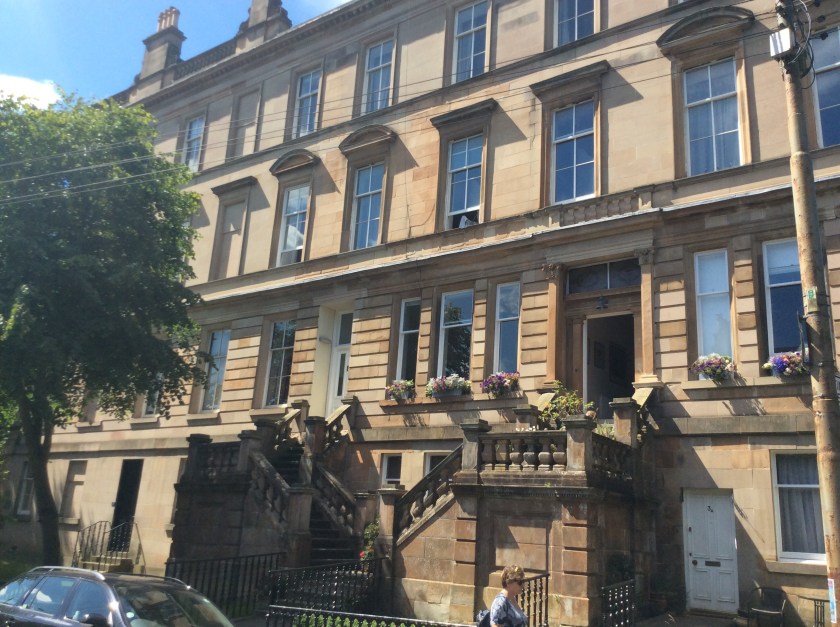
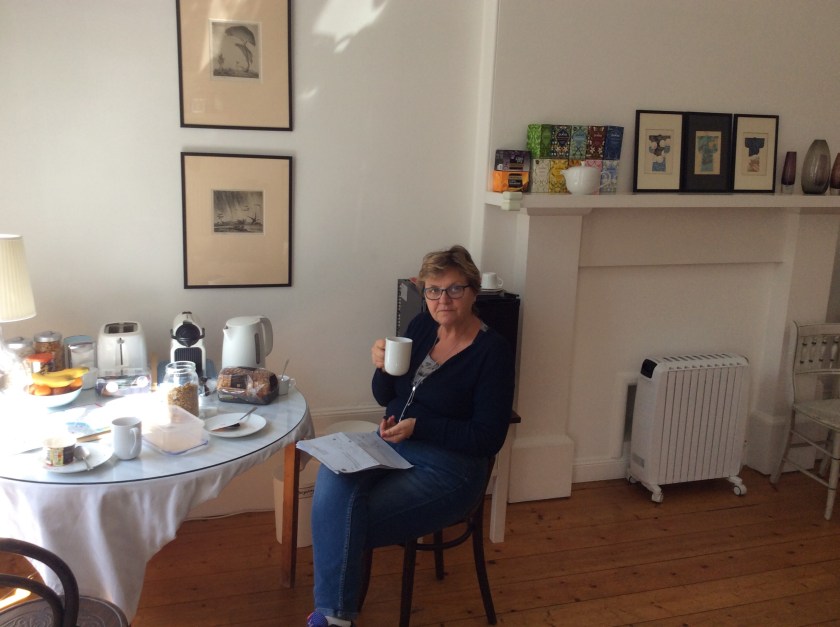
Our hostess Lucy gave us a map of Glasgow and loads of recommendations for places to visit. Miraculously the weather is hot and sunny, 25 centigrade, IN GLASGOW! After "freshening up" we walked up to the Botanic Gardens, which are lovely but the glass houses are far too hot today. Having reviewed the options for the day we decided to go to the Riverside Museum on the Clyde. Our route took us along the lovely Byers Road and then through the university and past the Kelvingrove Museum, which we will save for another day.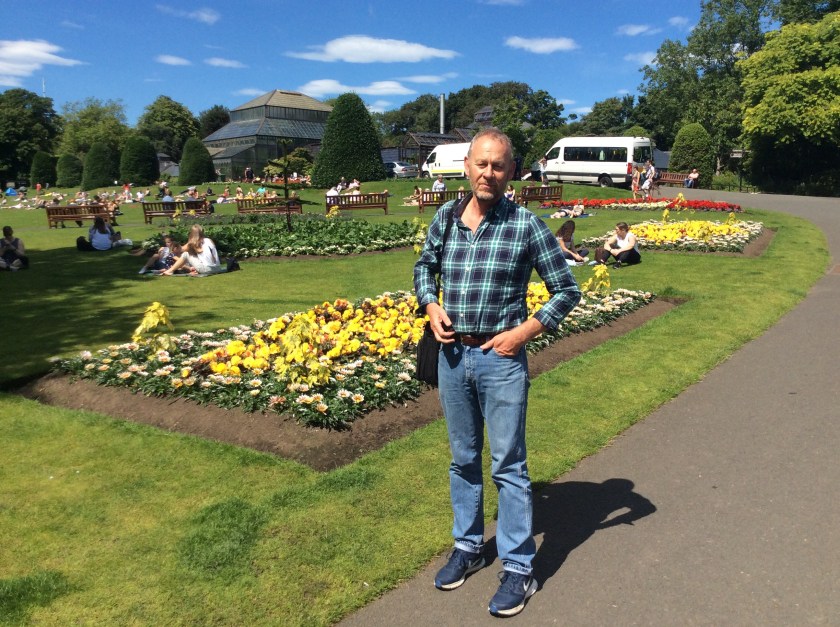
The Riverside Museum is a brilliant exhibition of transport and local history, displayed in an interactive and lighthearted way. I was pleased to see the battered BMW motorbike that Ewan McGregor rode around the world. But a German guy who was also looking at the motorbikes said he thought it was really ugly and preferred the classic Black Shadow further up the Motorcycle Wall. I smiled and agreed, not being a motorcycle expert. My only bike was an MZ 150 Eagle, an East German two stroke about as sexy as I am.
The Zaha Hadid designed museum is next to the Clyde , and moored up on the quayside is the Glenlee. It is a steel barque built in 1897 in Glasgow that sailed to Australia and South America to collect cargos of coal, guano and grain. It ended up as a Spanish Naval training vessel before returning to Scotland as a museum. 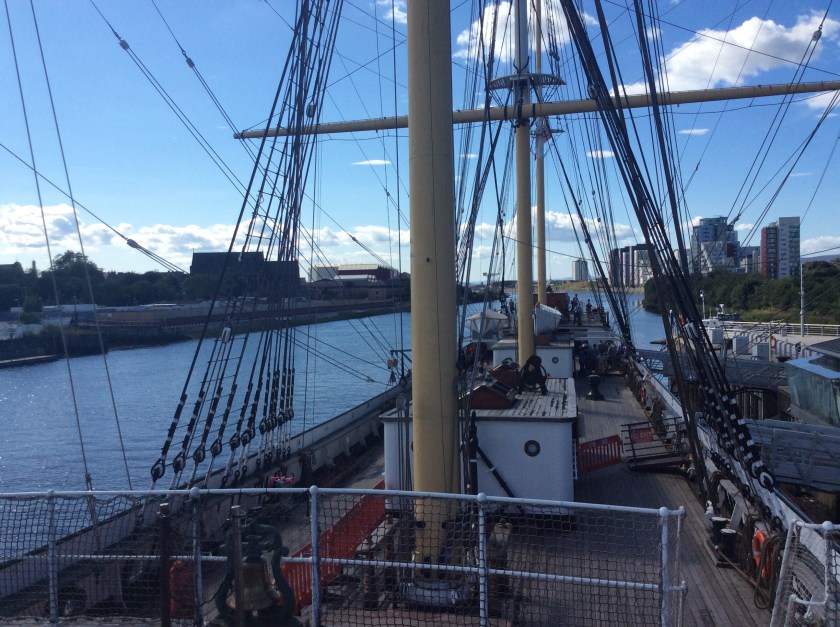
The museum closed at 5pm, and we took the subway, Glasgow's underground railway. It's a single circular line, one hundred and twenty years old, and it's £1.65 for a single, not bad. We got off at Kelvinbridge Station close to our accommodation, and found a pub called the Bellhaven Dunbar for a well deserved sit down and a drink. I liked the framed fork handles.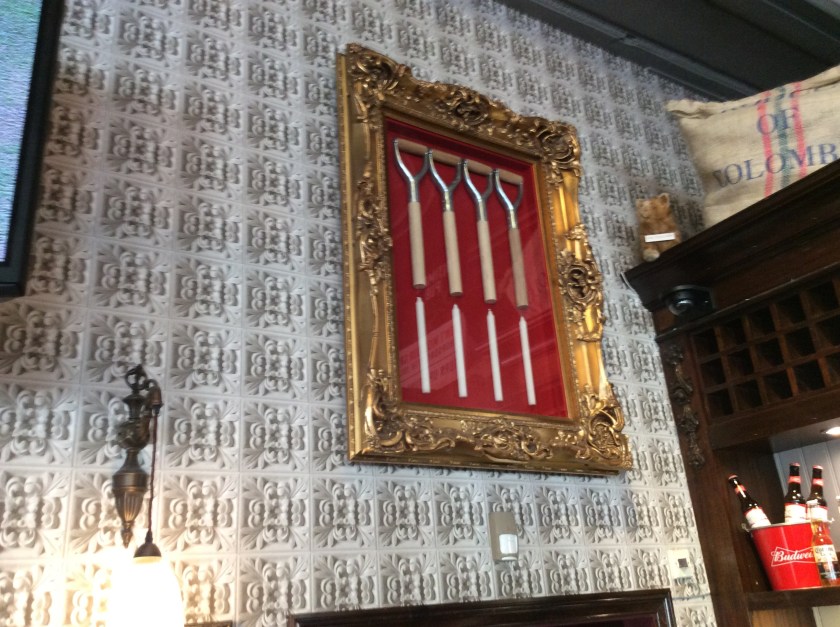
 timharnesstravels