Krakow Day 4 – Crazy Guys!

I needed to be sure how to pronounce the name of the city I was staying in. I was saying Krakov, but I had heard alternative pronunciations. Our guide Maciej said that the locals say Krakuf, Germans say Krak-ow, and the French say Krakova. So take your pick, but I’m sticking with Krakov!

Maciej picked us up at 10.30 in his 40-year-old black Trabant. Inside it’s about the same size as an old mini but is noisier and smellier. The petrol tank is under the bonnet, not a good substitute for an airbag. It went surprisingly fast for a 2-stroke 600cc air cooled engine, but since it was mostly made of East German glass fibre, it’s quite light. Our guide came from an outfit called Crazy Guys, and they give conducted tours around Nowa Huta, the new town built next to Krakow to house workers for the enormous steelworks that was a gift from Stalin. It was built from scratch for 100,000 people, providing much-needed homes in post-war Poland. Many people moved from thatched wood and mud cottages into centrally heated flats with inside toilets and electricity, I’m sure they were very grateful. The flats were built to a high standard and faced with sandstone, which is a bit grimy today but the town is still impressive.
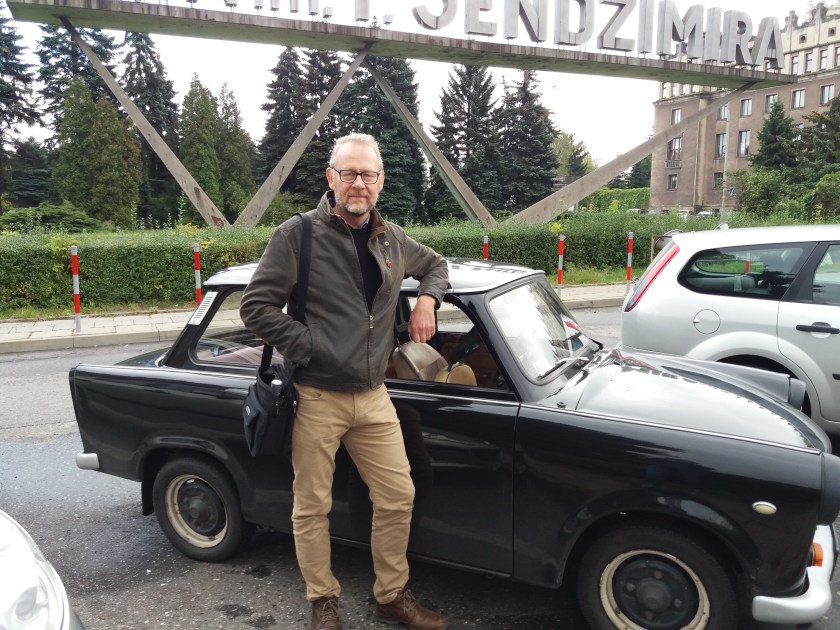
Tim and a Trabant
Maciej our guide look under the bonnet

Nowa Huta (which means New Mill) is laid out with wide avenues and green areas and is connected to the rest of Krakow by tram lines. The main square is named after Ronald Reagan, who is fondly remembered in Poland for funding the Solidarity trade union which was very strong in Nowa Huta. These days the steel mill is owned by Arcelor Mittal, and has 3,000 workers, down from 40.000 in its hay day.

Maciej took us into one of the flats which the Crazy Guys rent out to show to tourists. The flat has polished wooden floors, central heating and is reasonably spacious; but often there would be three generations squeezed into each flat. An unusual domestic accessory was the still in the bathroom for making vodka. Maciej put on an old black-and-white propaganda video about the construction of the city and gave us a vodka and pickle to put us in the mood. He was a very knowledgeable guide who gave us a great insight into life under Communism.
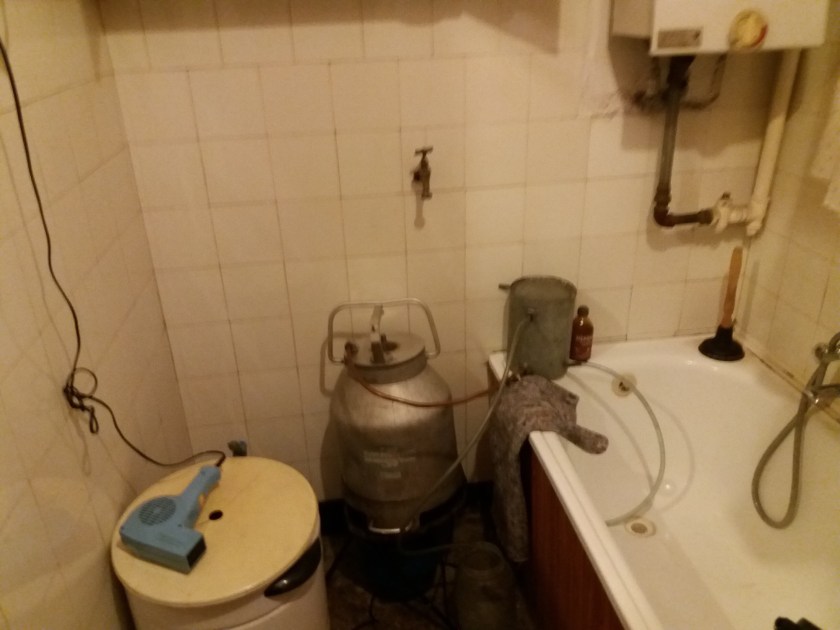
 

Washing machine, vodka still and bath


We went for lunch in a Milk Bar, which is a low-priced cafe for local people. I had some beetroot soup to start which was surprisingly sweet and tasty, and I followed that with some pork dumplings. After that hearty meal I was ready to go and make some steel! I loved the menu board with the little plastic letters in it. Four of us ate well for about 10 quid!

I loved the menu board with the little plastic letters in it, the Milk Bar look likem it hadn’t changed for 50 years! Four of us ate very well for about £10, what a bargain.
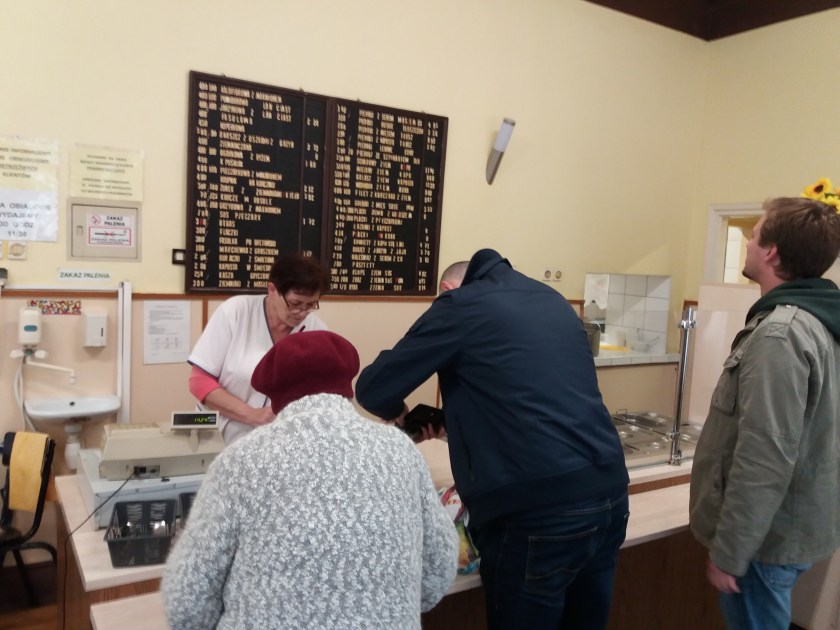
 

Milk Bar – you can anything you like from the menu


At the end of the tour we were dropped at the Barbican close by the Old Town and had a walk around some parts of it that we hadn’t seen so far. The Dorling Kindersley guidebook is brilliant for finding interesting streets that you wouldn’t come across if you were walking around randomly.

Julie (bless her) found a great bar called Banyaluka where all the drinks are 4 Zlotys (about 90 pence), so we had a shot, then a mulled wine, then a beer. It was a very relaxing bar.
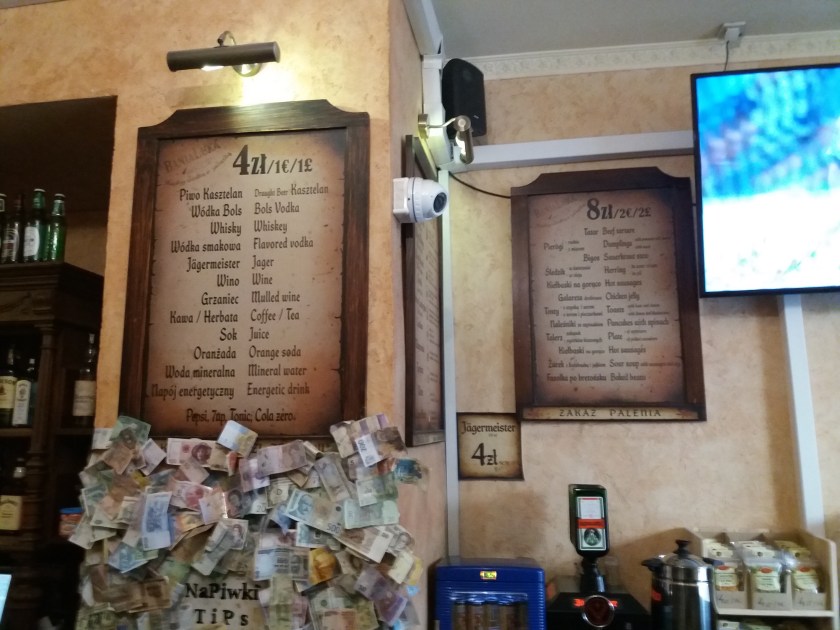
 

All drinks for 4 Zlotys!


Krakow Day 3 – Salt Mines

Getting to the Wieliszka Salt Mines took a bit of faffing about. To get there we needed to get the tram to the railway station, and at the tram stop, a young lady with perfect English told us to get the number 18. The Krakow Glowny station is joined onto a huge shopping centre and we had to hunt around the maze to find the ticket office and the correct platform.

After much faffing and a couple of minor domestics we found the right train and were soon heading out of the suburbs on a new and very comfortable train to the mine. The mine was one of the first UNESCO World Heritage sites, and the Polish people are very proud of it. Since the 13th century, the salt mined at Wieliczka has been a steady source of income to the Polish Crown, providing the King with a third of his income.

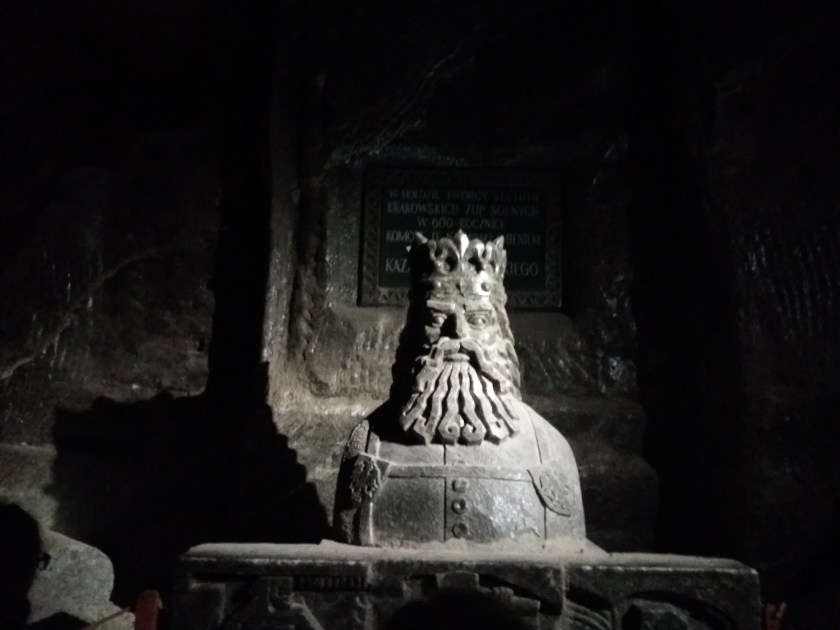
At 10.30 we entered the mine with Adrian, our English speaking guide. He was very good but stuck perfectly to his script, he wouldn’t have been much good at improv comedy. To get to the level that is set up for tourists, we had to walk 200 feet down a wooden staircase. Miners have been excavating the grey rock salt for over seven hundred years, so there are miles and miles of chambers, held up by tree trunks. It was cut out and taken away in barrels and barrel-shaped lumps of salt, both of which could be easily rolled along. Mining was very dangerous, so the miners were very religious, it was the only insurance they had. So miners carved out several chapels out of the salt where they could pray, and they are still in use today for weddings (if you have a couple of grand).

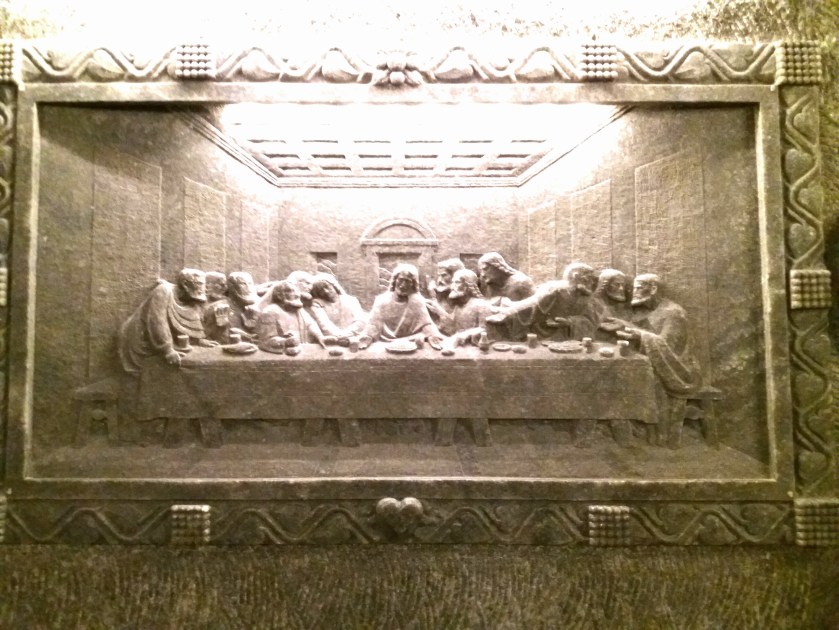
The Last Supper – pass the salt


At the end of the tour is a restaurant, where I had a bloody lovely goulash and fried potatoes. It is also 130 metres below ground, the deepest meal I have ever eaten. Naturally, it was well seasoned.

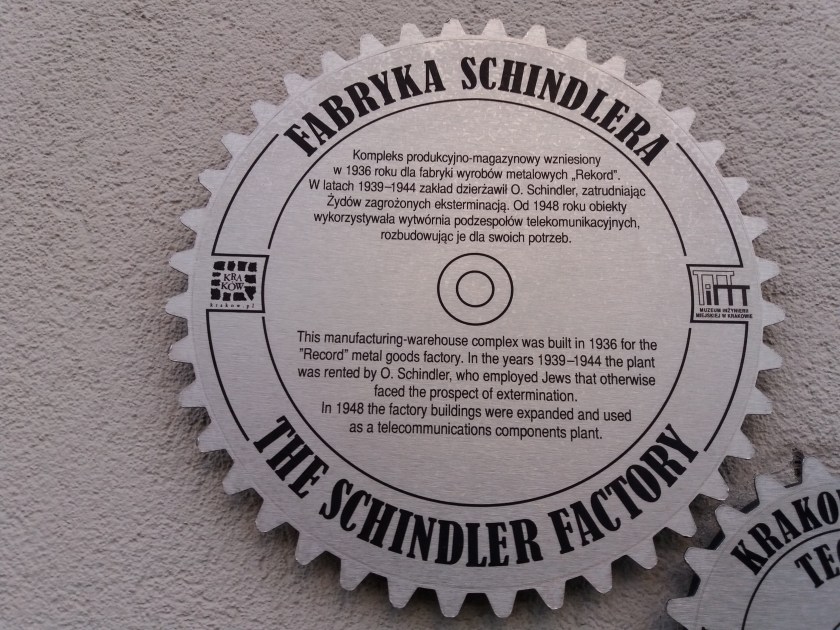
After lunch, we got the train back to Krakow and then a number 3 tram across the Vistula to Oscar Schindler’s factory. It is now a museum about the history of the Nazi occupation of Krakow. The story is inventively presented, but it is a not a comfortable experience. There were many atrocities and the Jewish population, 50,000 before the war, were almost all murdered. It is thought that Schindler may have saved 1,200 people by giving them work in his factory.


Ocar Schindler’s desk


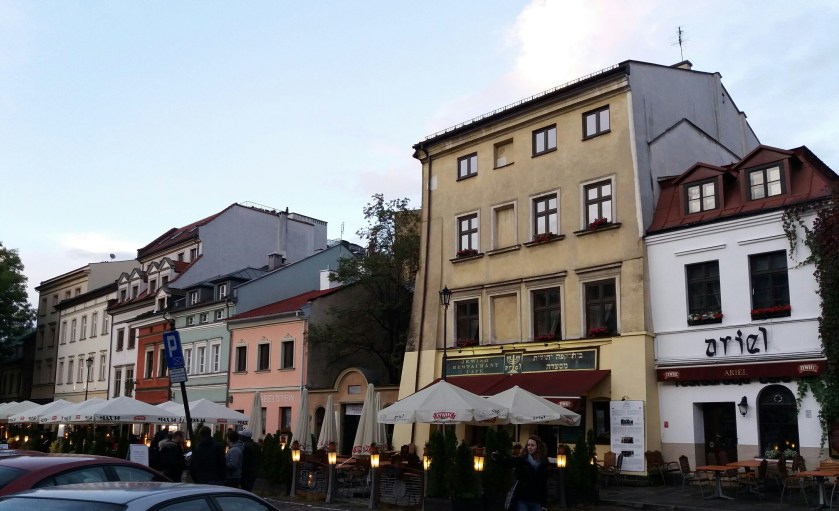
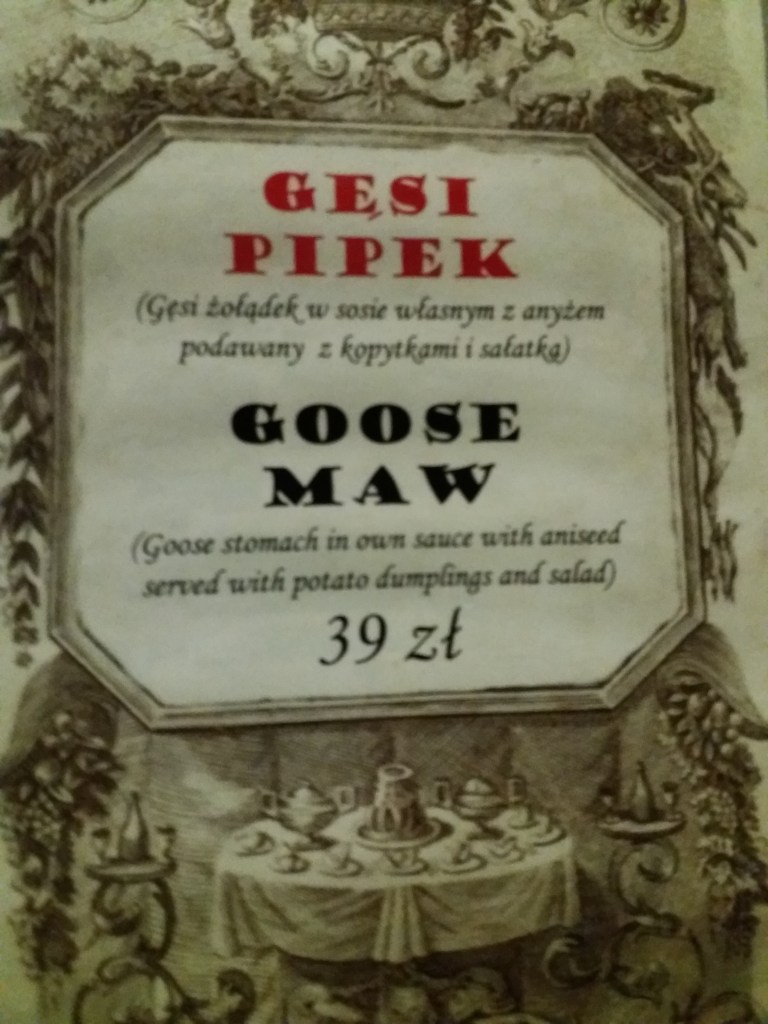
We walked back towards our flat over the river and through the area where the Jewish Ghetto used to be. At the centre is Jewish Square, which is lined with Jewish restaurants, and no bacon sandwiches. There was an opportunity to eat a delicious goose stomach, but I didn’t fancy it tonight.


Jewish Square


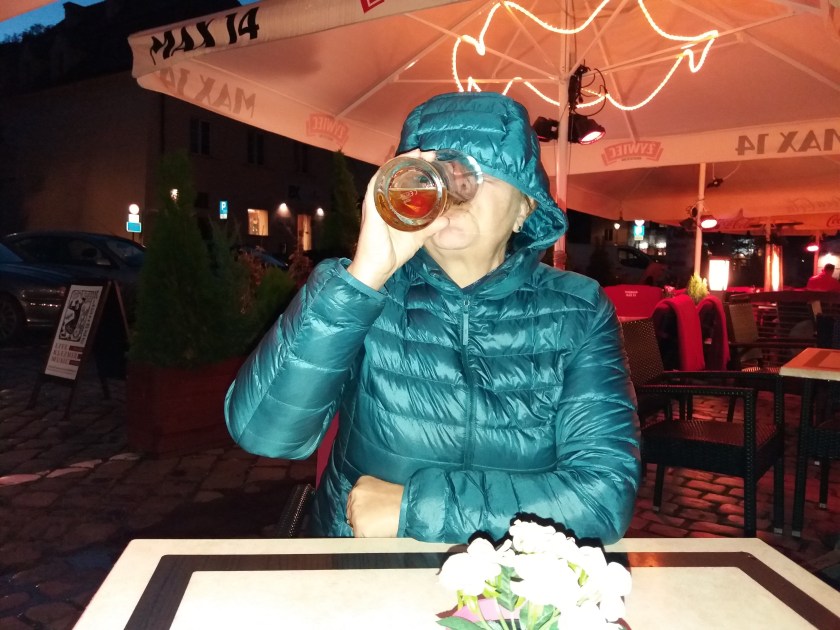
Julie Polish-ing off  her Tyskie beer
20171006_185703
If I was a rich man – I wouldn’t eat goose stomach


Being exhausted from too much culture, we had a beer and shivered at an outside table as it got dark. We ate dinner in a cafe on Krakowska street, I had  bigos (beef stew with sausage and cabbage), beer and Julie ate pierogi. I’m getting a taste for Polish food, it reminds me of school dinners, good sold fare.

Krakow Day 2 – Going Underground

It was already raining when we left the flat, and Julie was annoyed that BBC Weather had lied to us AGAIN! Having got the lie of the land, we walked up Grodzka to the Market Square, the heart of the old city of Krakow. The Market Square (Rynke Glowny) is 200 metres square and was laid out in 1257 when Duke Boleslaw the Chaste (not a Monty Python name) gave Krakow its charter. It’s the biggest square in Europe, and is surrounded by beautiful historic buildings. I have seen a few ancient squares in Brugge, Bristol, Prague and Seville, and this is the best.


Cloth Hall in Rynek Glowny


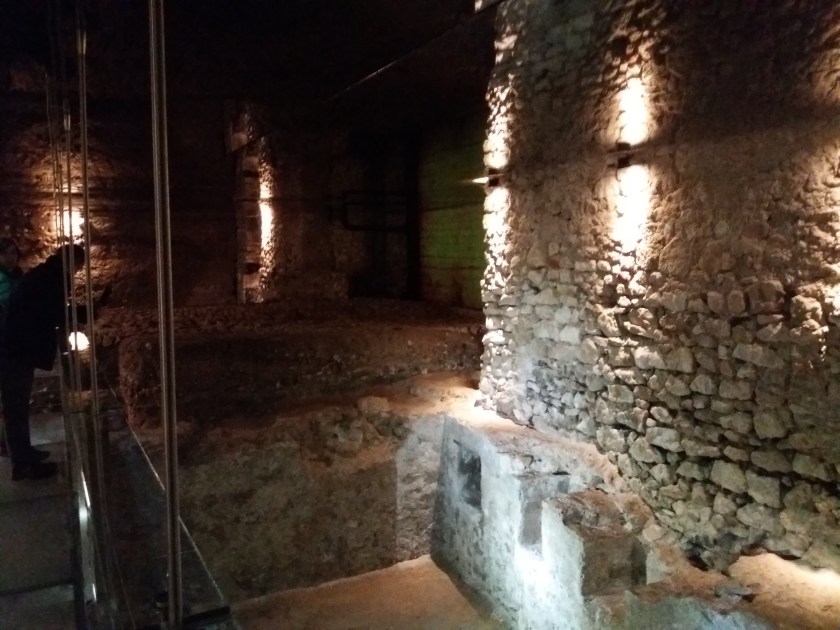
Sitting in the middle is the Cloth Hall, which looks like a Renaissance building, but is actually 19th century. The arcade down the middle is lined with souvenir shops selling wooden toys, hats and fridge magnets. I got a charming fridge magnet for 15 Zlotys, probably too much. But the best is hidden beneath. A decade ago the square was excavated and all sorts of amazing archeology was exposed. When the archaeologists has finished, a huge concrete slab was laid over it and the dig became Rynek Underground Museum.

It is a very high tech museum, with lots of touch screens and low lighting, so low that the written signs were hard to read. Layers of old streets and foundations are shown, and a whole row of medieval shops which were used by all the local traders and craftsmen. We spent several hours in there, it is a very different and fascinating museum.


Old shops in the Underground Museum


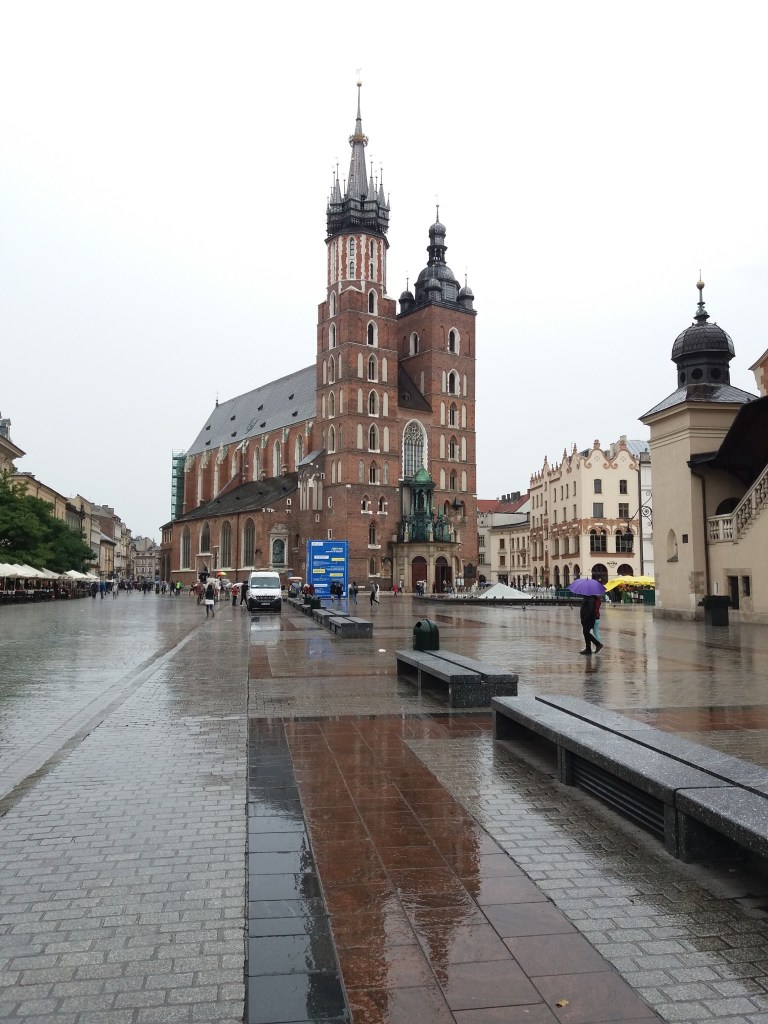
Emerging back into the square we walked a short way over the the Church of St Mary, which is a huge Gothic building with two towers at the front. Inside there is barely a square inch that is not decorated in some way. The highlight is the elaborately carved high alter, painted wooden statues and lots of gold leaf. We paid 10 zlotys to get in, but if we had been good Catholics we could have got on a different entrance to pray for nothing!


St Mary’s Basilica


All that culture left us very hungry, so we went to a tourist trap and ate some poor food. I had Bigos, which is supposed to be a stew, but it was cabbage with a few bits of meat and lots of bread. It filled a gap but wasn’t great food.

The castle and cathedral are on Wawel Hill at the edge of the old town overlooking the Vistula, which was a trading route to The North Sea. There wasn’t enough time to go inside any of the buildings, so we had a look around the courtyard and enjoyed the views over the city.


Wawel Castle


By then we had seen enough old buildings and paintings and it was cold and raining. Time to go and get a coffee and cake, something that Poland is very good at.

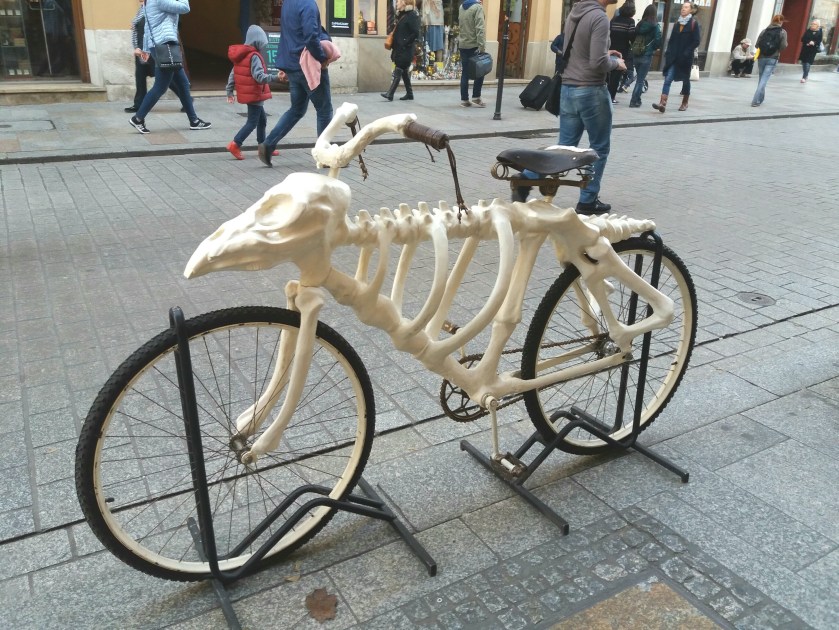
And finally, I found Fred Flintstone’s bike parked in the street.


Yabba Dabba Doo!


Krakow Day 1 – Mmm Vodka!

Poland isn’t an obvious places to go for a short holiday, but it should be. I have been here about eight hours and I’m already very impressed by the sights, sounds and tastes of Krakow.

We flew by EasyJet from Gatport Airwick, which is 850 miles and took about two hours. Krakow is in the south of Poland near Slovakia, and is in the middle of the invasion route for armies over the last thousand years. The Poles did see off the Mongols in the 13th century, but to be fair they had arrived by pony from Mongolia, which is a very long way.

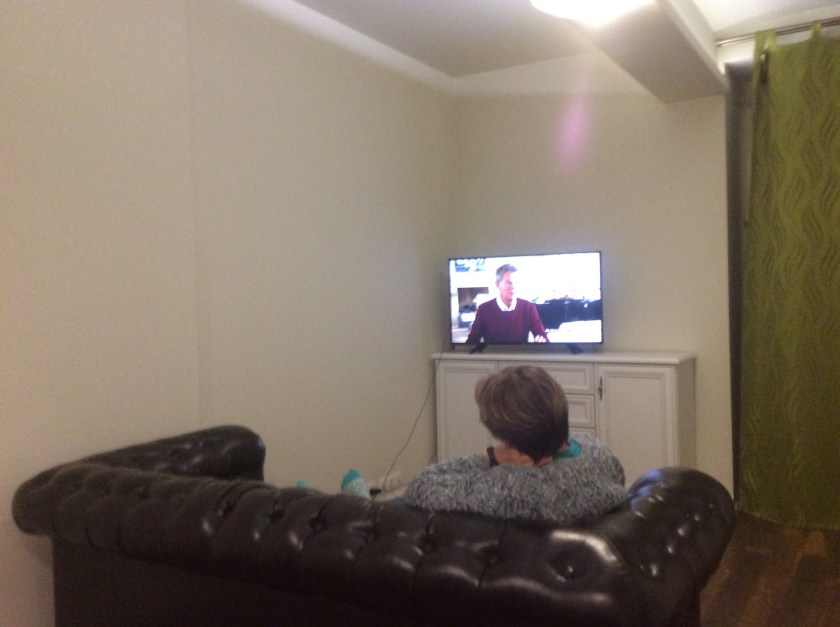
To enjoy some local colour, we took the bus into the Krakow Glowny where there is an enormous shopping centre. We ate at almost the first cafe we came to, and had a spicy soup in a Mexican place. It was like a runny chilli con carne, very tasty and sweat-inducing. Thus replenished, we hoofed it down Pawia street to the apartment we had rented on Sukiennisca close to the Vistula river. The flat is modern, comfortable and devoid of any decorative touches, but it did have loads of hot water and a very good telly!


Our accommodation


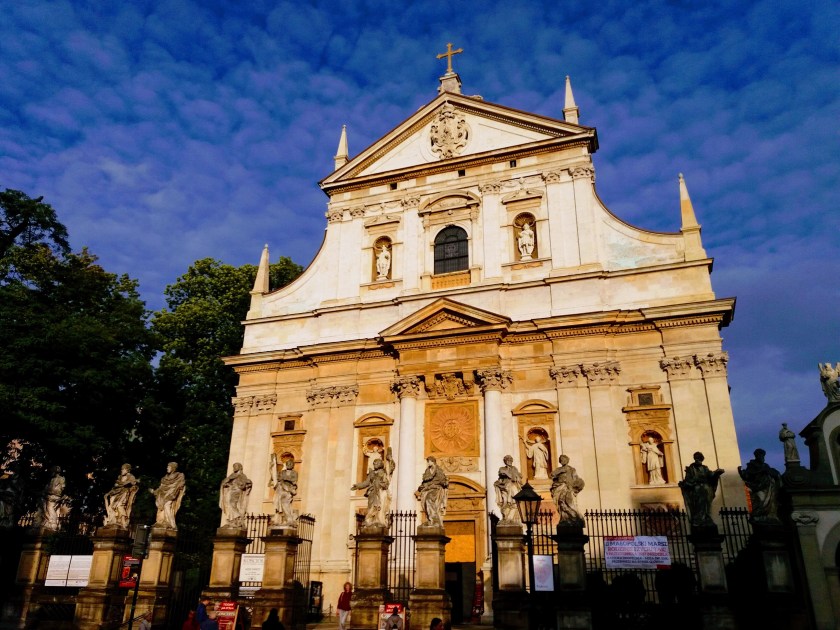
Its only five minutes walk to the Okol district which is at the foot of the hill where the castle sits. The main road is Grodzka, which is very popular with tourists, for good reason. It is full of beautiful old houses and churches, but also restaurants and shops. The Church of Saints Peter and Paul is a gorgeous Baroque edifice, like our own Saint Paul’s on a smaller scale.


St Peter and St Paul


By 6pm it was getting dark so we returned to the flat. The TV gave us a good selection of Polish TV, but Polish Masterchef didn’t keep my attention for long. I had brought and iPad and Chromecast, and by wrestling with the iPad and wifi managed to connect to Netflix. We watched “We’re the Millers”, which contrived to be both very funny and very filthy, a winning combination!

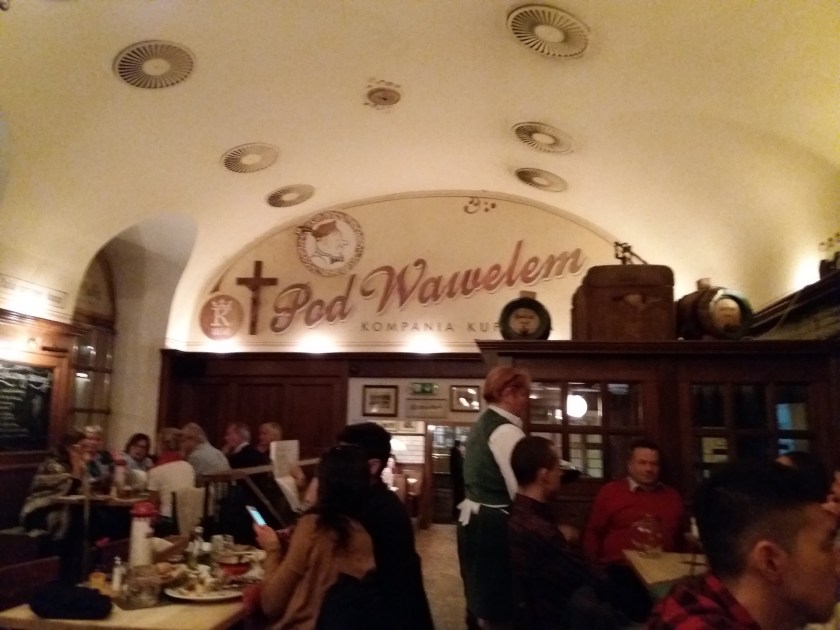
Julie had found a local restaurant called Pod Walwelem, which is close to the castle. It was big and noisy and busy. The waitresses looked like they were wearing Austrian dresses and carried the food and drink on large circular trays on their shoulder. I had pork pierogi (like ravioli) to start, which were very tasty, washed down with Tyskie beer. For my main meal I had the Soldiers Platter, which was a large plank covered with rice, fried potatoes, sauerkraut, and grilled chicken, liver, pork, bacon and sausage. It was a mixed grill on a massive scale! It took a while but I ate most of it apart from the very soft and squidgy blood sausage. As a digestif, we had lemon vodka, more lemon vodka then cherry vodka.


Pod Wawelem – belt buster restaurant!


I like Krakow, but I may eat myself to death by the end of the holiday!