Getting to the Wieliszka Salt Mines took a bit of faffing about. To get there we needed to get the tram to the railway station, and at the tram stop, a young lady with perfect English told us to get the number 18. The Krakow Glowny station is joined onto a huge shopping centre and we had to hunt around the maze to find the ticket office and the correct platform.
After much faffing and a couple of minor domestics we found the right train and were soon heading out of the suburbs on a new and very comfortable train to the mine. The mine was one of the first UNESCO World Heritage sites, and the Polish people are very proud of it. Since the 13th century, the salt mined at Wieliczka has been a steady source of income to the Polish Crown, providing the King with a third of his income.
At 10.30 we entered the mine with Adrian, our English speaking guide. He was very good but stuck perfectly to his script, he wouldn’t have been much good at improv comedy. To get to the level that is set up for tourists, we had to walk 200 feet down a wooden staircase. Miners have been excavating the grey rock salt for over seven hundred years, so there are miles and miles of chambers, held up by tree trunks. It was cut out and taken away in barrels and barrel-shaped lumps of salt, both of which could be easily rolled along. Mining was very dangerous, so the miners were very religious, it was the only insurance they had. So miners carved out several chapels out of the salt where they could pray, and they are still in use today for weddings (if you have a couple of grand).
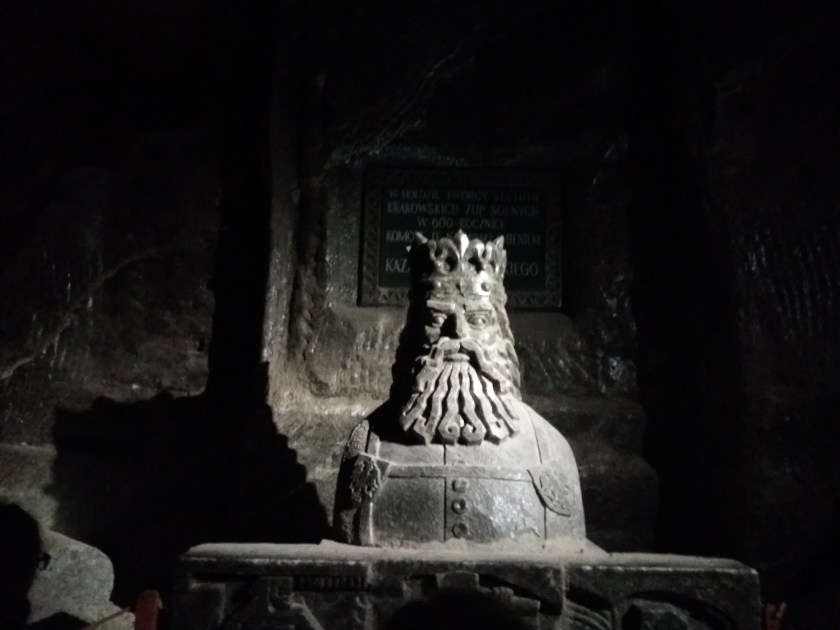
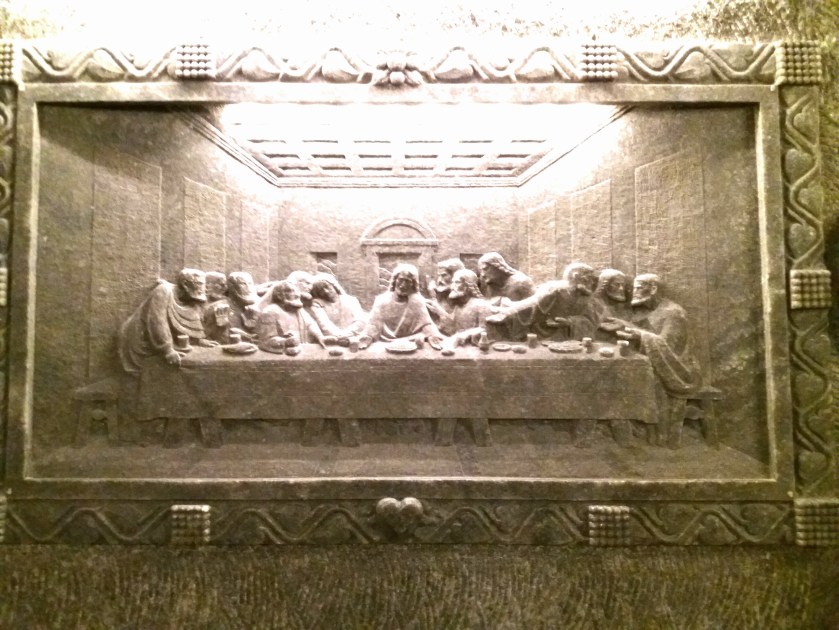
At the end of the tour is a restaurant, where I had a bloody lovely goulash and fried potatoes. It is also 130 metres below ground, the deepest meal I have ever eaten. Naturally, it was well seasoned.
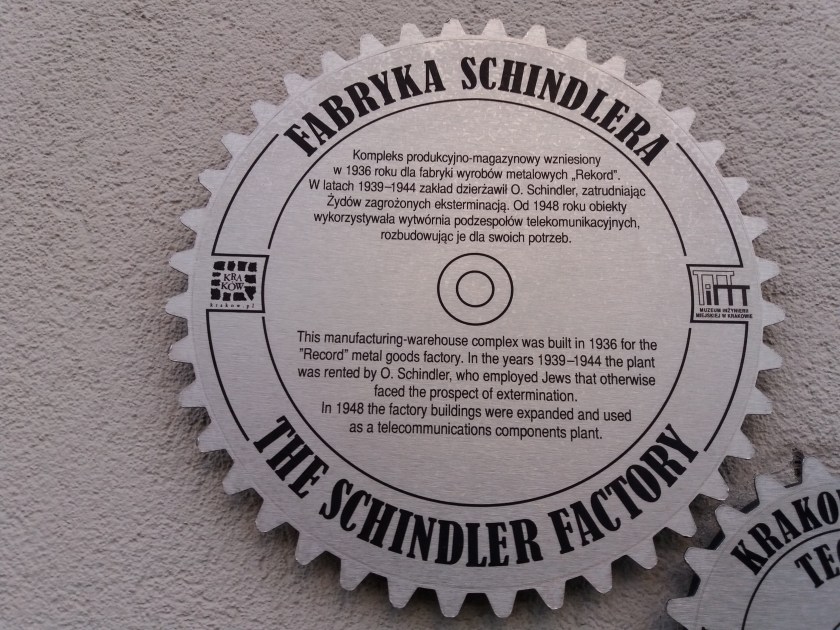
After lunch, we got the train back to Krakow and then a number 3 tram across the Vistula to Oscar Schindler’s factory. It is now a museum about the history of the Nazi occupation of Krakow. The story is inventively presented, but it is a not a comfortable experience. There were many atrocities and the Jewish population, 50,000 before the war, were almost all murdered. It is thought that Schindler may have saved 1,200 people by giving them work in his factory.

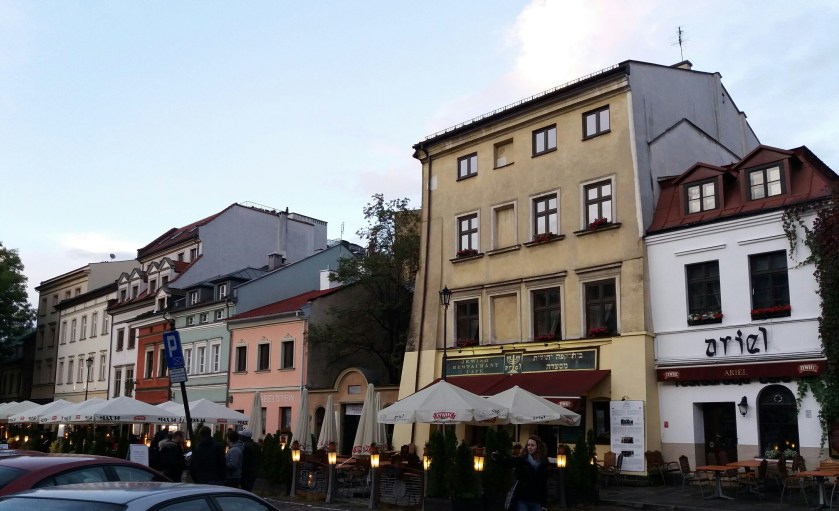
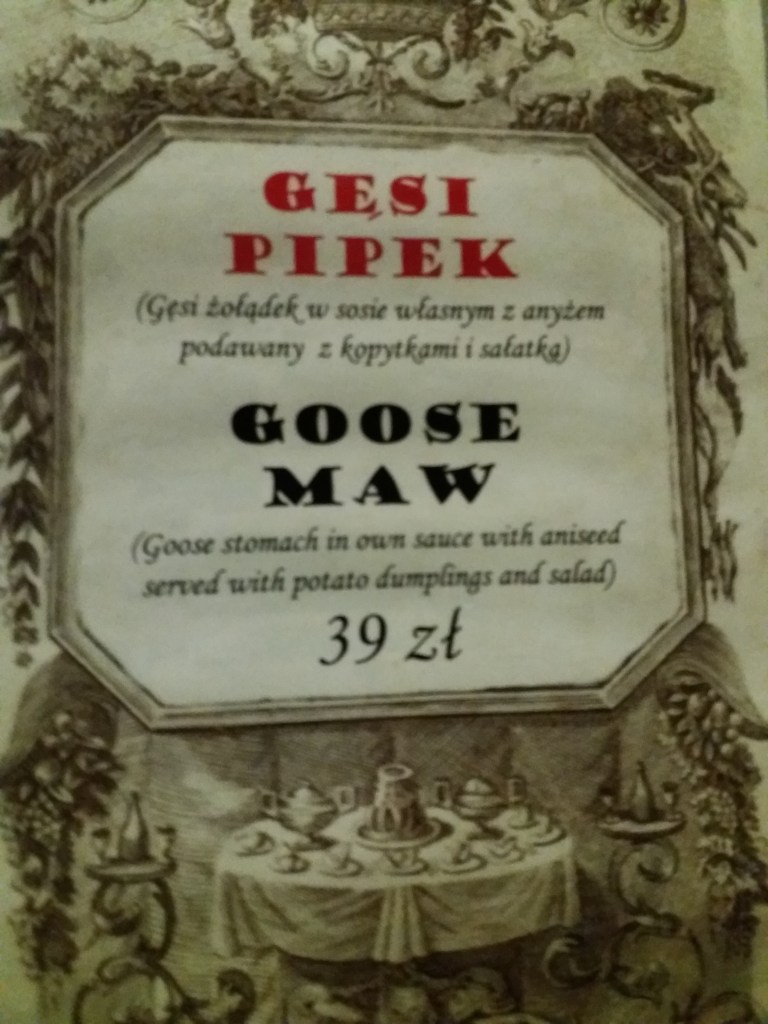
We walked back towards our flat over the river and through the area where the Jewish Ghetto used to be. At the centre is Jewish Square, which is lined with Jewish restaurants, and no bacon sandwiches. There was an opportunity to eat a delicious goose stomach, but I didn’t fancy it tonight.
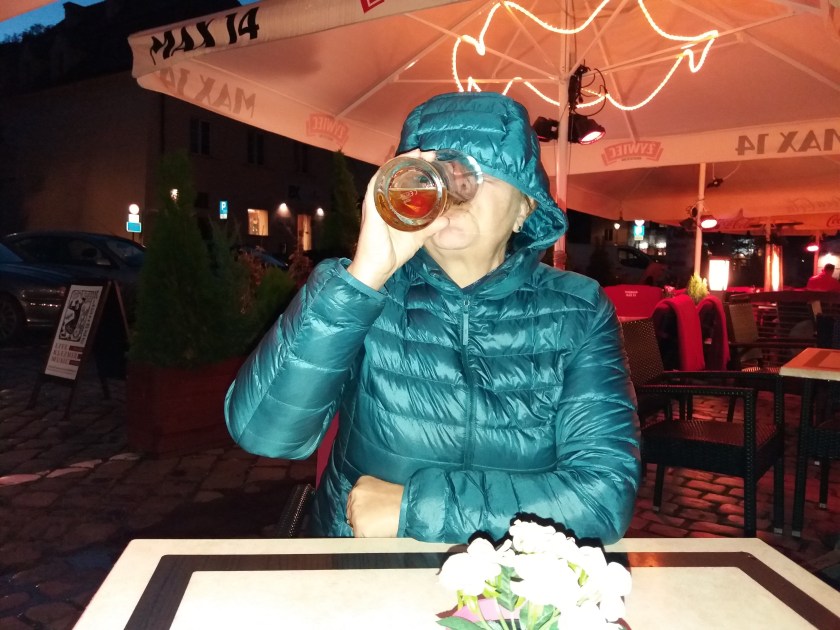
Being exhausted from too much culture, we had a beer and shivered at an outside table as it got dark. We ate dinner in a cafe on Krakowska street, I had bigos (beef stew with sausage and cabbage), beer and Julie ate pierogi. I’m getting a taste for Polish food, it reminds me of school dinners, good sold fare.

 timharnesstravels