Motor City Modena
Friday 4th May 2018
On our final day in Italy, we took another train trip, a short distance to Modena. It’s about as far as from Twickenham to Waterloo, but Bologna and Modena were rival cities in the Middle Ages and fought several battles. In Modena town hall they still have a bucket they captured from the Bolognaise, it must be one of the oldest buckets in the world and a very unusual battle trophy.

The city is much smaller than Bologna, and it not so much on the tourist trail, but it deserves to be. It has the same style colourful old houses that Bologna does, all in shades of orange and yellow, and some porticos running down the streets. One of the main streets is a covered canal, Modena was once an inland port like Bologna. I visited Milan a couple of years ago, and it has kept some of its canals, which are now lined with bars and cafes.
Oh, I forgot to mention that there are factories that build Maserati, Ferrari and Lamborghini cars near Modena. But I’m not interested in cars so I didn’t visit the Ferrari museum. Yeah I know they are all red and pretty and fast and all that, but no use at all for shopping at Asda.
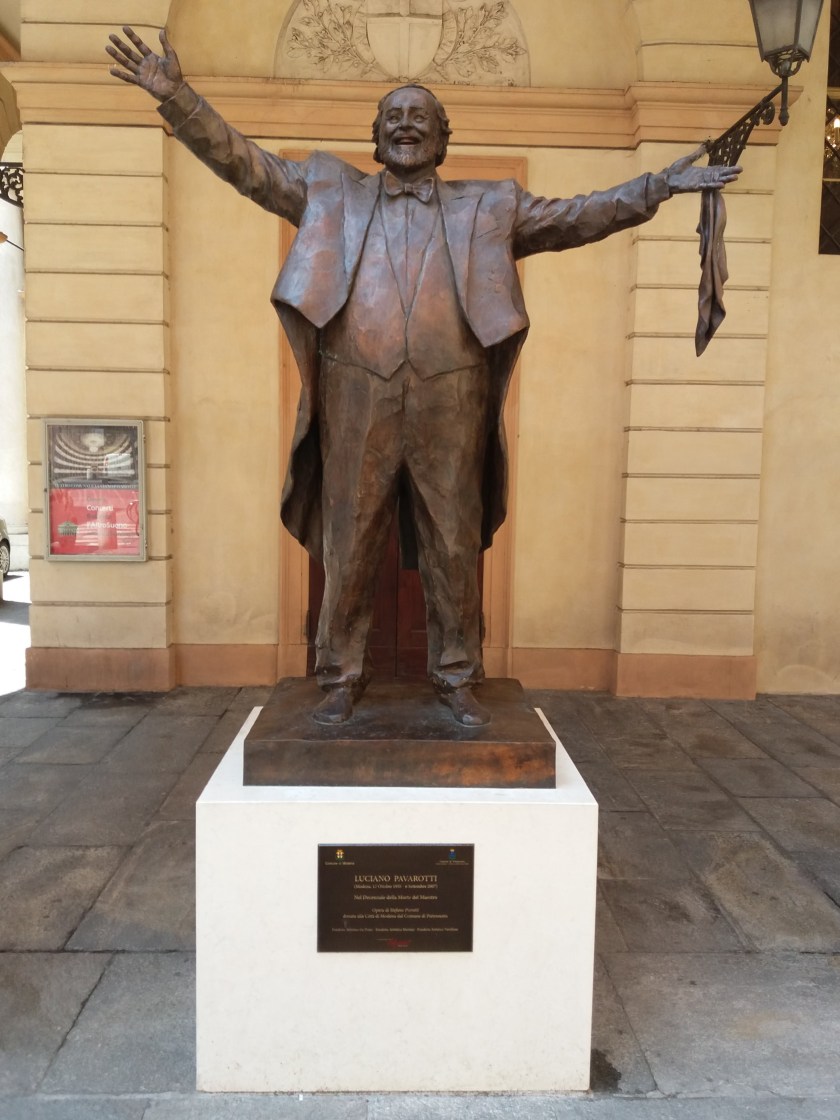
On Corso Canalgrande a group of middle-aged men stood in front of a statue singing Nessum Dorma. The statue was of a big man wearing a tail suit, it was Luciano Pavarotti. He was a local boy who did pretty well as a singer, although he never actually advertised Cornettos.
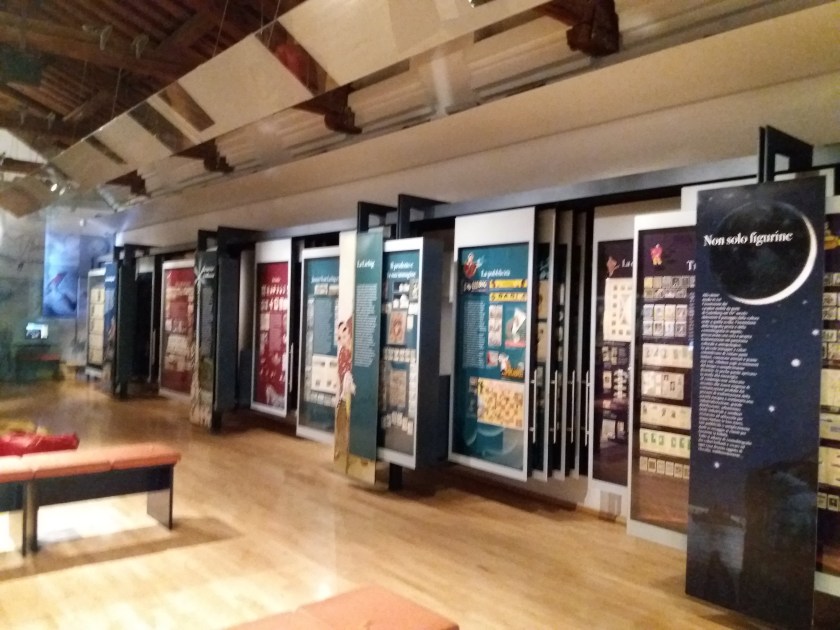
Close by the statue was the municipal library which also houses a museum of Figurina. I had never come across that word before, but it means small printed images of people. The museum was created by Signor Panini, the guy who sold sticker albums to the world. He clearly liked small printed images of people and sold gazillions of cards featuring footballers and pop stars to generations of children. It was a small museum, but worth a look around. One of the biggest collections was adverts for Liebig beef extract. Herr Liebig invented a method to turn cows into the liquid beef extract and built a big factory in Fray Bentos in Uraguay to make it. In the days before refrigerated ships, it was a way of turning meat into a product that could be shipped to Europe.
The tourist information office is in the ancient townhall in the main piazza of Modena. It has a very peculiar smell, because several square metres have been excavated to show archeology beneath. Consequently, the office smells strongly of soil and old walls, a bit unusual. The info told us that Modena is famous for Pavarotti, balsamic vinegar and the Ferrari museum, which I knew already.
The town hall is still home to civic functions, but also has a few historic rooms filled with old portraits, a huge Venetian chandelier and the famous Bucket of Bologna. It is safely enclosed in a thick glass case, they don’t want those sneaky Bolognaise stealing it back.

The other main attraction in the piazza is the Duomo, a Romanesque cathedral from the 12th century. It is clad in grey marble and has a soaring tower with a tall steeple. The cathedral is being restored, so the nave is full of scaffolding.
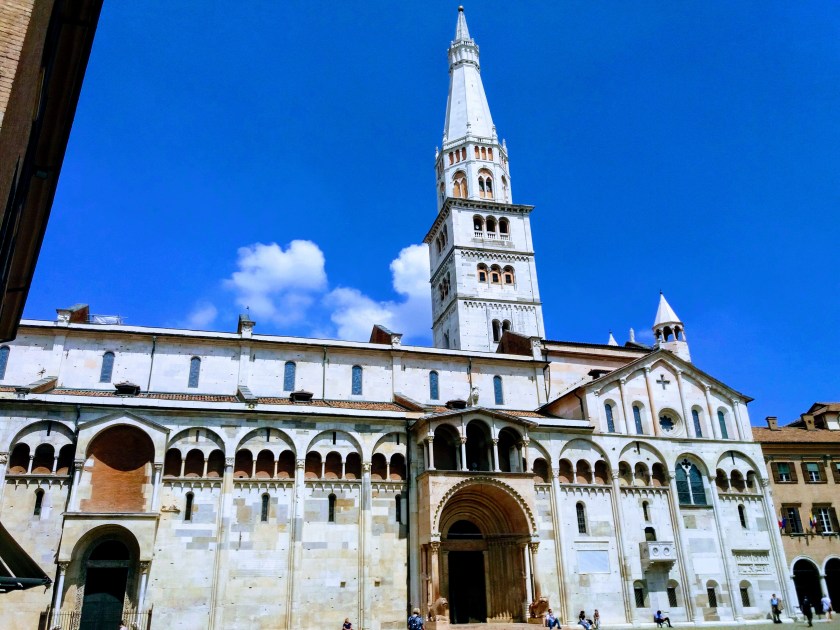
It has some exquisitely carved marble lions at the entrance, but the sculptor had obviously never seen an actual lion.
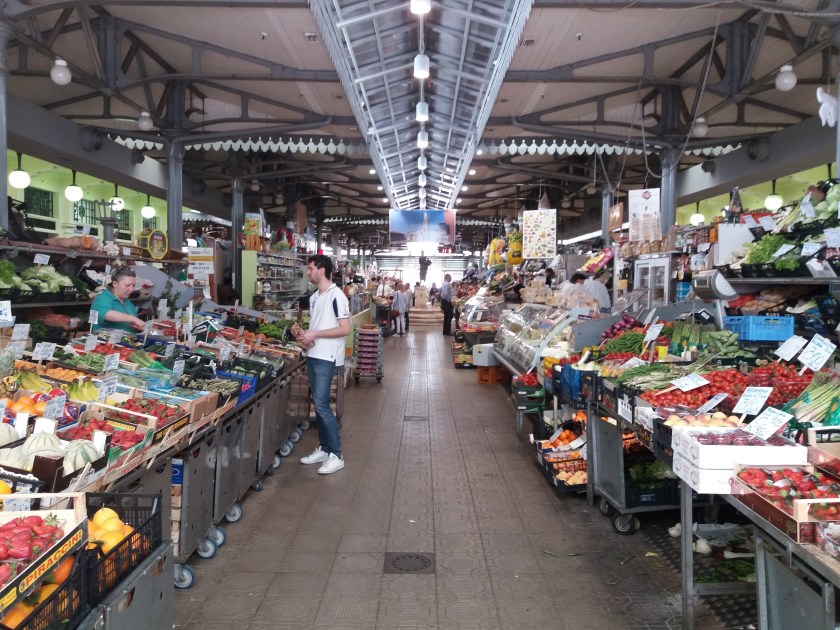
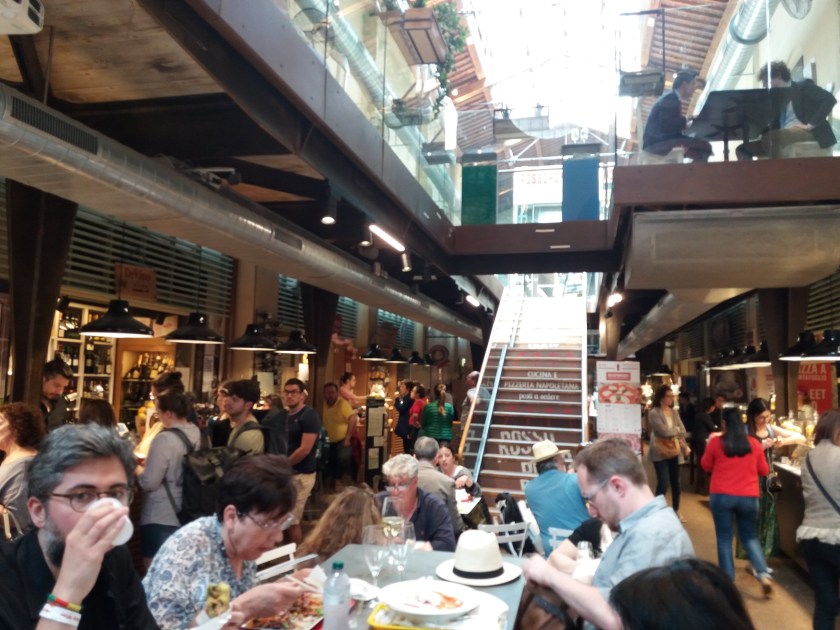
Modena has a superb indoor market with stalls selling fresh fruit, vegetables, meat, pasta, fish and everything looks so tasty!
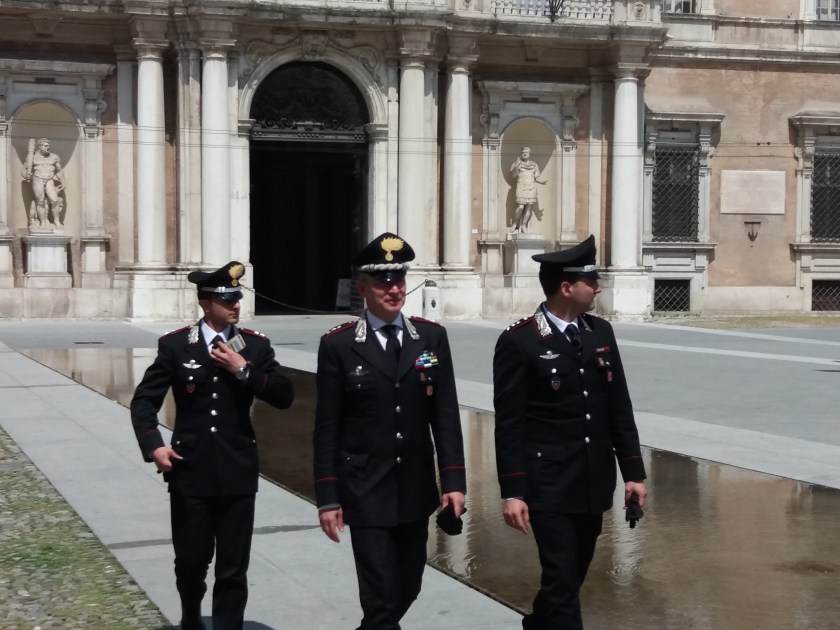
We stopped for an ice cream at a gelateria next to the Ducal Palace, a huge Baroque palazzo that was home to the Este Dukes of Modena between 1452 and 1859. It was lovely to look at while I licked my double scooper of lemon cream and ginger, mmmm. The palace is now a military academy, and while pretending to photograph the building, I snapped these officers. They looked very snappy, they are Italian after all!
We caught the train back to Bologna and collected our bags from a bike hire shop that doubles as a left luggage store. The airport bus took us out to catch our flight back to Heathrow, and to complete our adventure we took the 490 back home to Twickenham.










 timharnesstravels