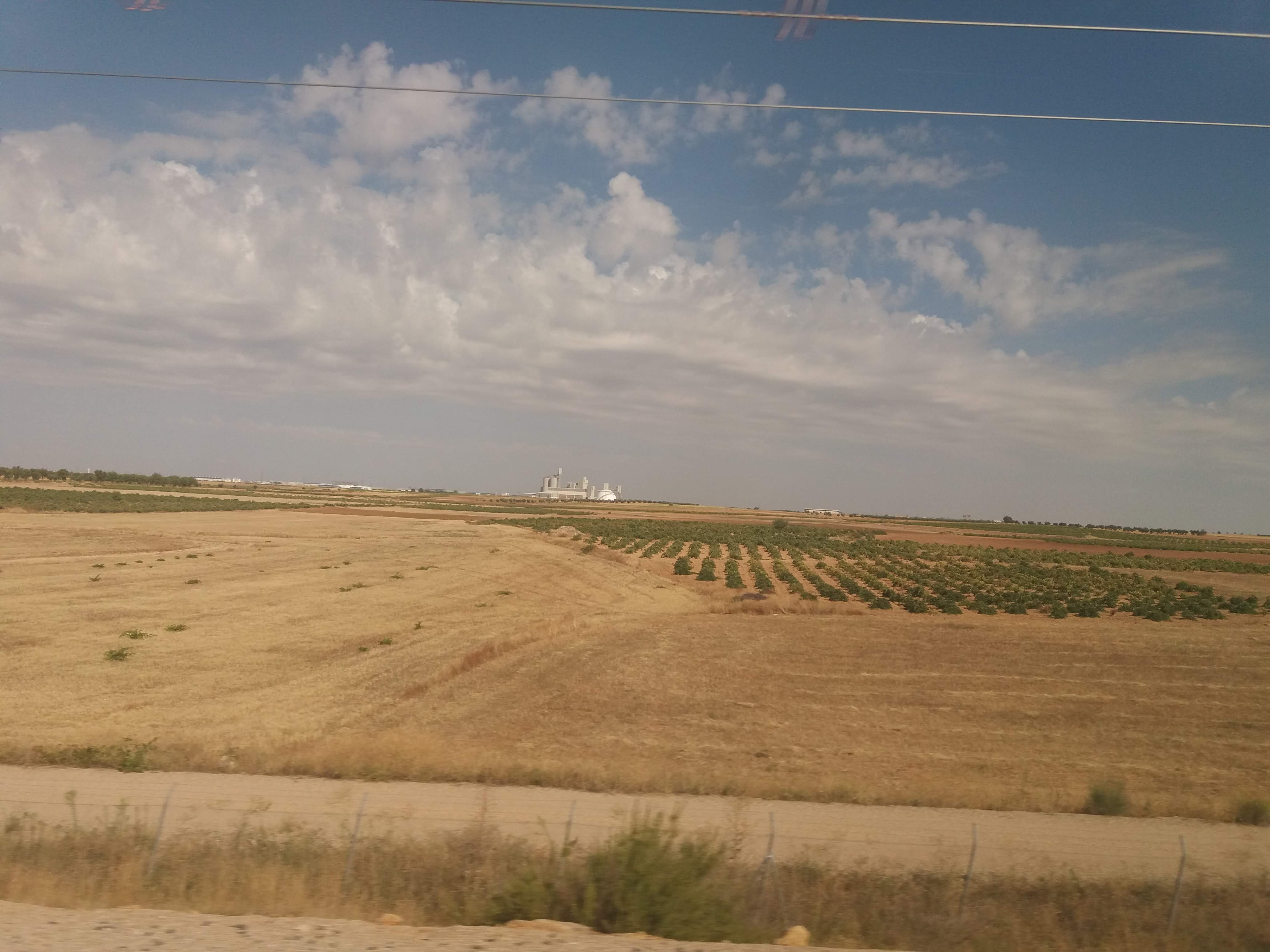
On Tuesday morning we walked across the river to the Renfe station to catch the 8.58 train to Madrid. In Spain they have airport-style security for long-distance trains, and we had to put our bags through a scanner before we boarded. The train was to Madrid was slow and took about five hours to chug down to Madrid. The countryside was quite dull, lots of low hills, brown fields and small pine trees. We passed through no pretty towns at all, no wonder Don Quixote got bored and chased after windmills.
Spanish countryside – not interesting
We arrived at Charmartin station and got the Metro (which is extensive and very good) to Tribunal station and walked to our next AirBnB at 17 Calle Fuencarral. Our hostess Julia had a big flat on the fifth floor above a very trendy shopping street, it was like living above Kingston High Street. Julia was a slightly scruffy and bohemian and worked in a theatre. Her English was poor and my Spanish is non-existent, so we didn’t talk much, but she was kind and helpful.
Palace of Communications on Gran Via
After settling in, we walked to the Gran Via, which is Madrid’s equivalent of Oxford Street. The weather was about twenty-five degrees when we arrived and got hotter during the day, which is what happens in a city in the middle of Spain. We walked about a mile from the flat to the Prado art gallery, which (according to the guidebooks) one of the best in the world. In the evenings it is free to get in, so we joined a long queue and waited for the 6pm opening. It’s like London’s National Gallery, very big and very full of old masters. If you like picture of Jesus, Mary and men in frilly collars, then it’s the place for you. The pictures are very good, but the subject matter is limited, mostly religious, mystical or dead aristocracy and their dogs.
I saw the Garden of Earthly Delights by Hieronymous Bosch, it had the biggest group pf people looking at it. That Bosch guy must have been on drugs when he painted it, it’s very surreal.
The Garden of Earthly Delights by Bosch
After a couple of hours of high culture, we needed a drink and found our way to Chueca Plaza and sat in the first cafe with a spare table. I ordered Ham Hock, which was large and filling, but tasted a bit unusual like it had been in the fridge too long before they cooked it. But like most food, if you wash it down with enough beer it’s fine.
Whenever we visit a new city we are disoriented for the first day or two, and then get our bearings and understand where one part of town is in relation to another. The centre of Madrid is not so big, and most of the main sites are with a half hour walk of the flat. It turned out we were staying in quite a cool part of town, like being in Soho.
Monday was our final full day in San Sebastián, and the weather was not so good. We walked across the Maria Christina bridge to the Zurriola surfing beach to watch the persistent young folk stand up for about five seconds on their surfboards before tumbling off and being tossed around like old knickers in a Hotpoint. But it’s just so much cooler than riding a bike or climbing a hill, and tight neoprene can look very good if you have the figure for it.
Zurriola beach
We had lunch in a cafe called Itturioz which is near the cathedral in the centre of the city. The cafe has the same name as Josie’s friend Amanda, whose family are from San Sebastián. It was recommended as a place with a great menu del dia (menu of the day), but when we got the last table in the restaurant, it didn’t have that menu, darn it!
Tommy and Josie got the four o’clock bus to Bilbao airport to fly back home, whilst Julie and I went to another AirBnB for our last night, which was just a room rather than a complete apartment.
On our second day in San Sebastián, we packed our beach gear and went down to La Concha for some marine relaxation. Josie and I swam out to one of the rafts anchored out in the bay, so we could use the slide and jump into the cool waters. Wherever I go I like to have a swim in the sea, even in Brighton! The fresh air made us hungry, so we walked away from the beach to find somewhere to eat. At the Ondaretta beach end of town there aren’t any cafes on the beach, so we walked inland to look for somewhere on Google Maps. I found Kok, which proved to be a great source of childish jokes, my favourite kind. I can’t actually remember what I had to eat, so it was probably pintxos or tapas.
Tee hee, the sign says it all
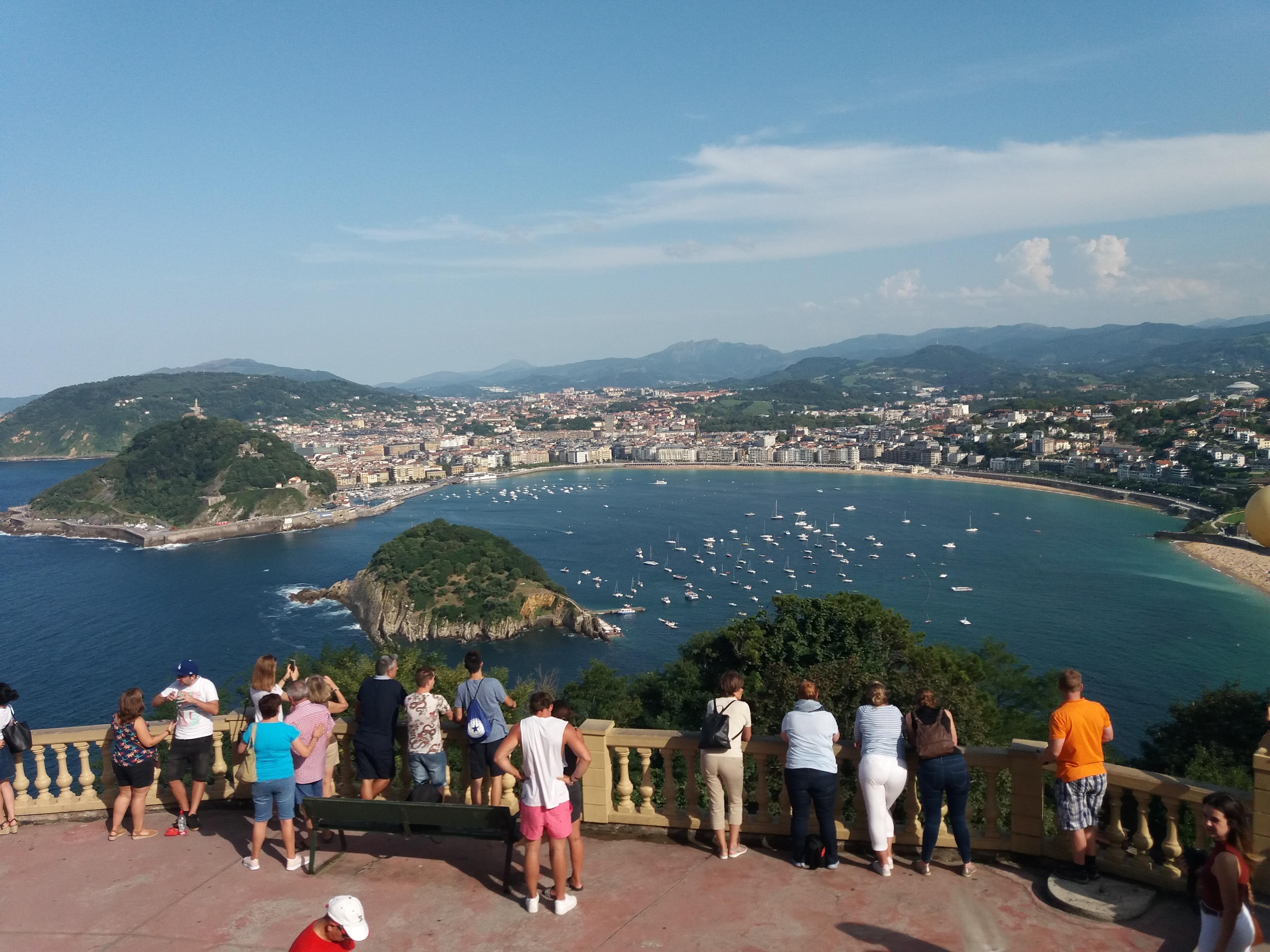
A short walk from our lunch stop is the funicular railway that was built in 1912 to take fun-lovers the top of Mount Igueldo. It is a single track with a passing place half way up for the up and down carriages to pass. It is delightfully old-fashioned and practical, and considerably better than walking. At the summit is a hotel and cafe, and a small, quaint funfair. It’s a most peculiar place for a funfair and has a tiny boating pond for slow bumper boats that is about three hundred feet above the Atlantic. The chief attraction is the spectacular views over San Sebastián and out into the Bay of Biscay.
View from Mount Igueldo
Josie persuaded us to go on the little roller coaster which rises and plunges around the park. I said it then, and I’ll say it again, it’s a genuinely thrilling ride which made me squeal like a child several times when we hurtled downhill under a bridge. I thought my head would get knocked off and ducked as I went under!
Josie looking gorgeous
There is a hotel with a bar giving spectacular views over La Concha, so we had a beer to calm our shattered nerves. We didn’t fancy eating pintxos for dinner again, so we went to La Mafia Restaurant and had a very good Italian meal. When in Spain, do as the Romans do, and eat pizza.
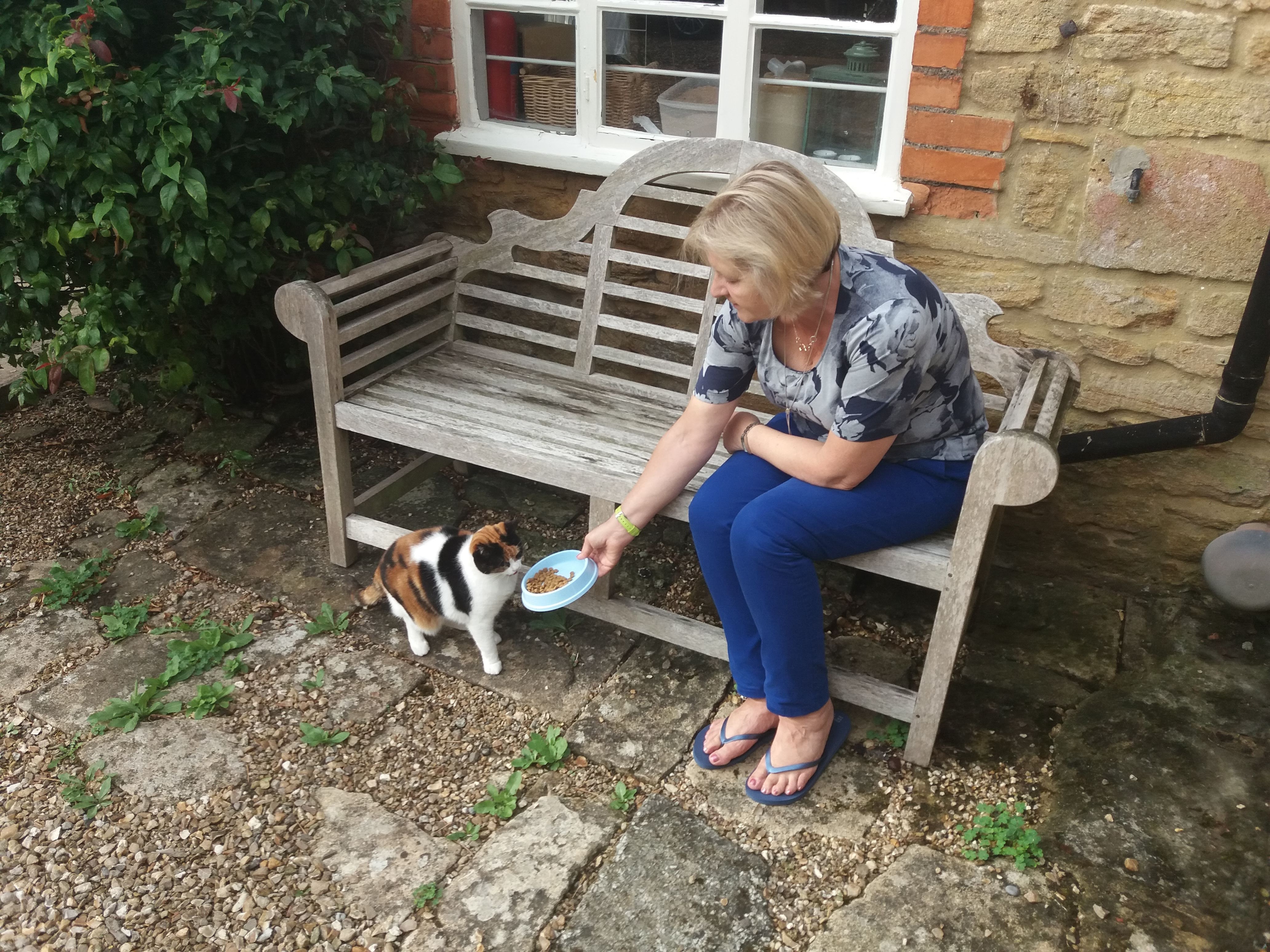
My old mate Tony Marshall asked if Julie and I could look after their cats while they went to Tuscany for their summer holiday: out of the English frying pan and into the Italian fire. At the time it was thirty degrees in London and about thirty-five degrees in Italy.
Julie feeding one of the cats with our left-over Vindaloo
Tony and I both worked as IT Trainers for a small company called Prince in the early Nineties. We taught people how to use Microsoft Office in the days when Microsoft ruled the (software) world and some people got genuinely excited about spreadsheets.
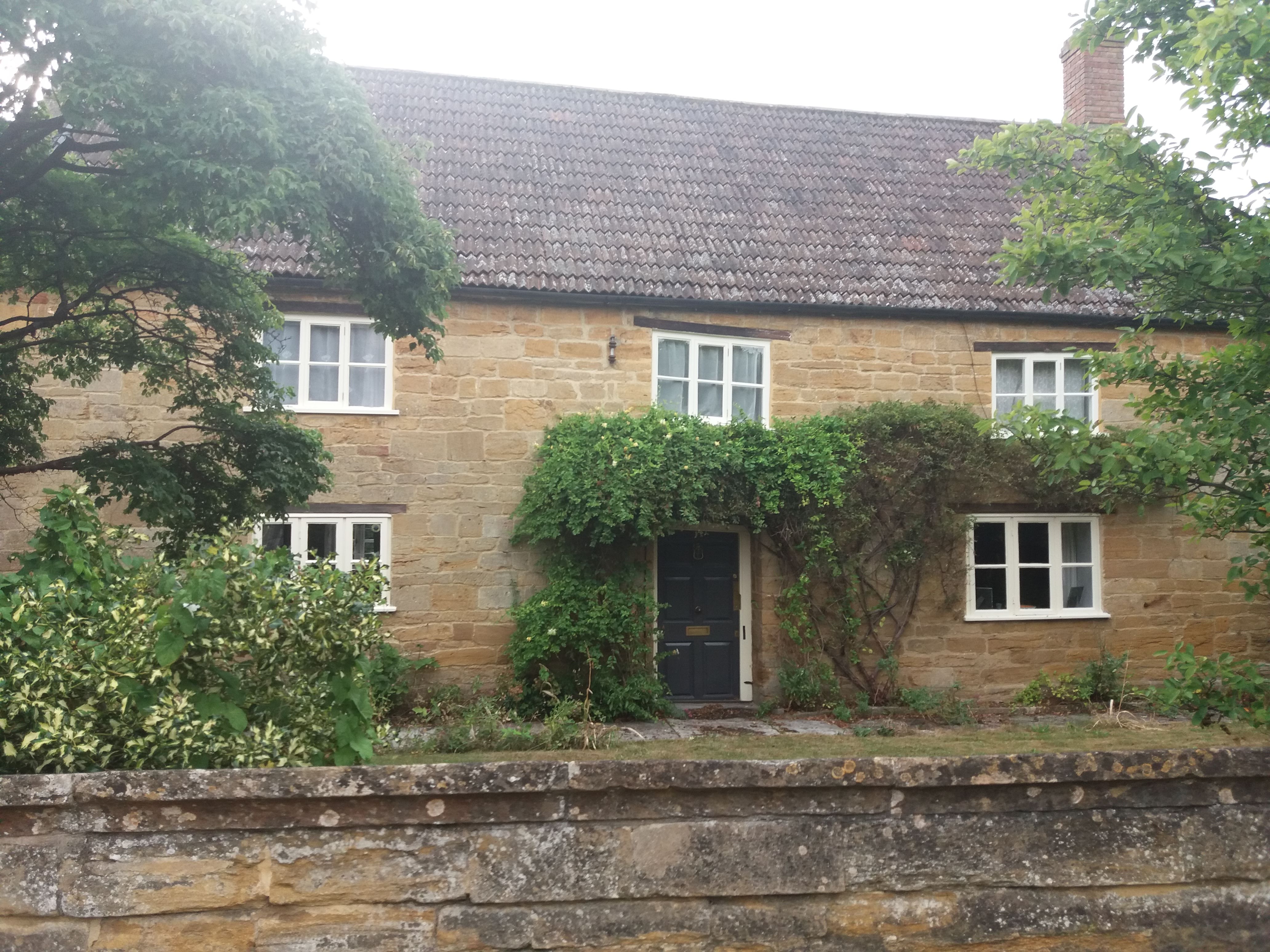
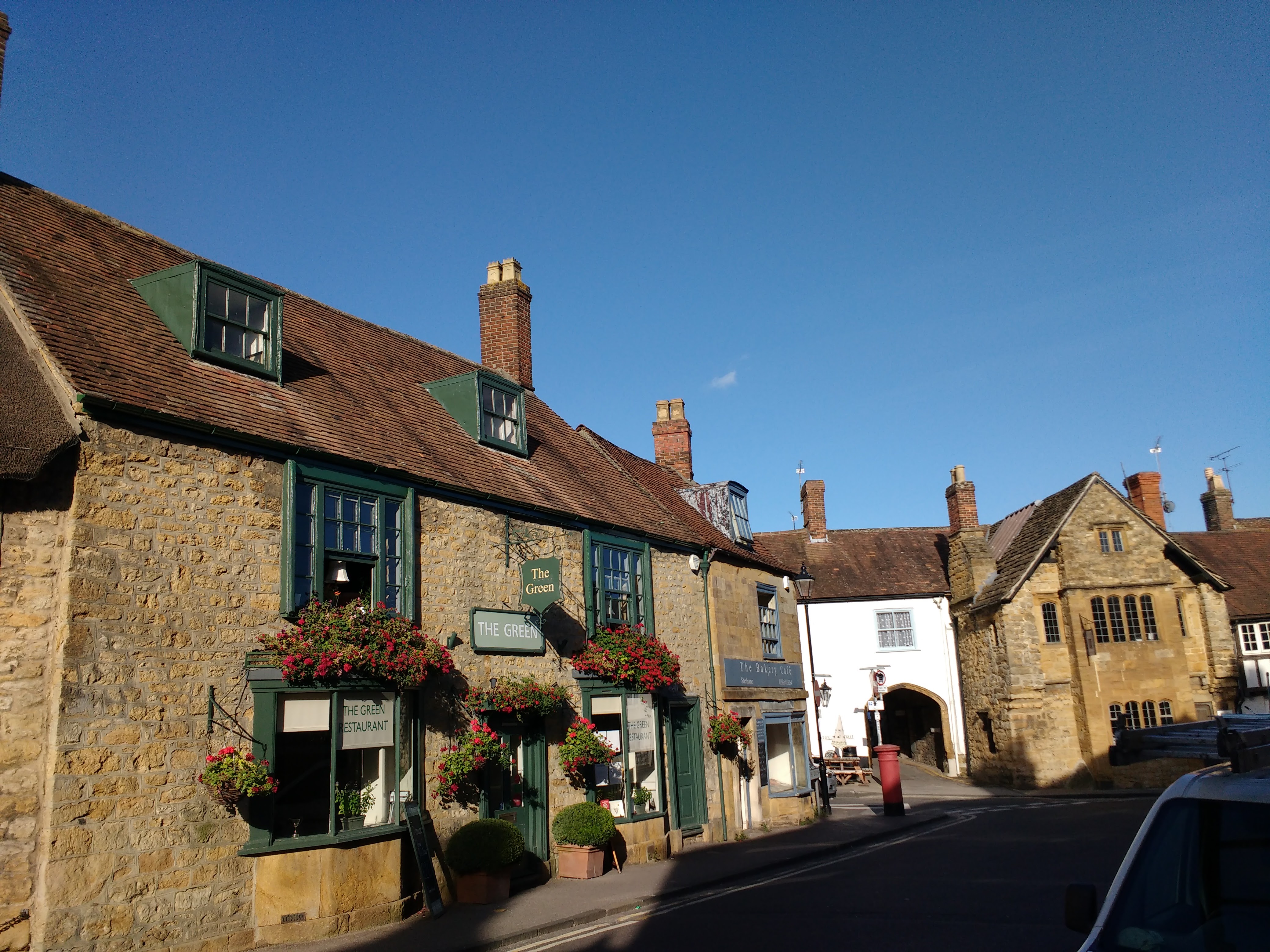
His house is in Martock in south Somerset and is exceptionally lovely. It’s a sturdy Ham stone residence with walls two feet thick that is at least three hundred years old. Martock itself is a pretty little town close to the A303 and both close to – and a world away – from Yeovil. All the villages around here are very old and very petty, the Roman Fosse Way ran close to Martock, and many of the villages have quaint names like Huish Episcopi, Shepton Beauchamp and Norton Sub Hamdon.
Tony’s house in Martock
Julie and I drove down to Martock on Saturday evening when the A303 was quiet, it only took two hours and we didn’t have to queue at Stonehenge.
Sunday 29th July
Montacute and Ham Hill
Half of June and all of July had been stupidly hot, but the weather broke on Friday night in London, just in time to cloud over completely for the much-heralded Blood Moon. That’s nothing to do with vampires and werewolves, but an eclipse of the moon when it turns red.
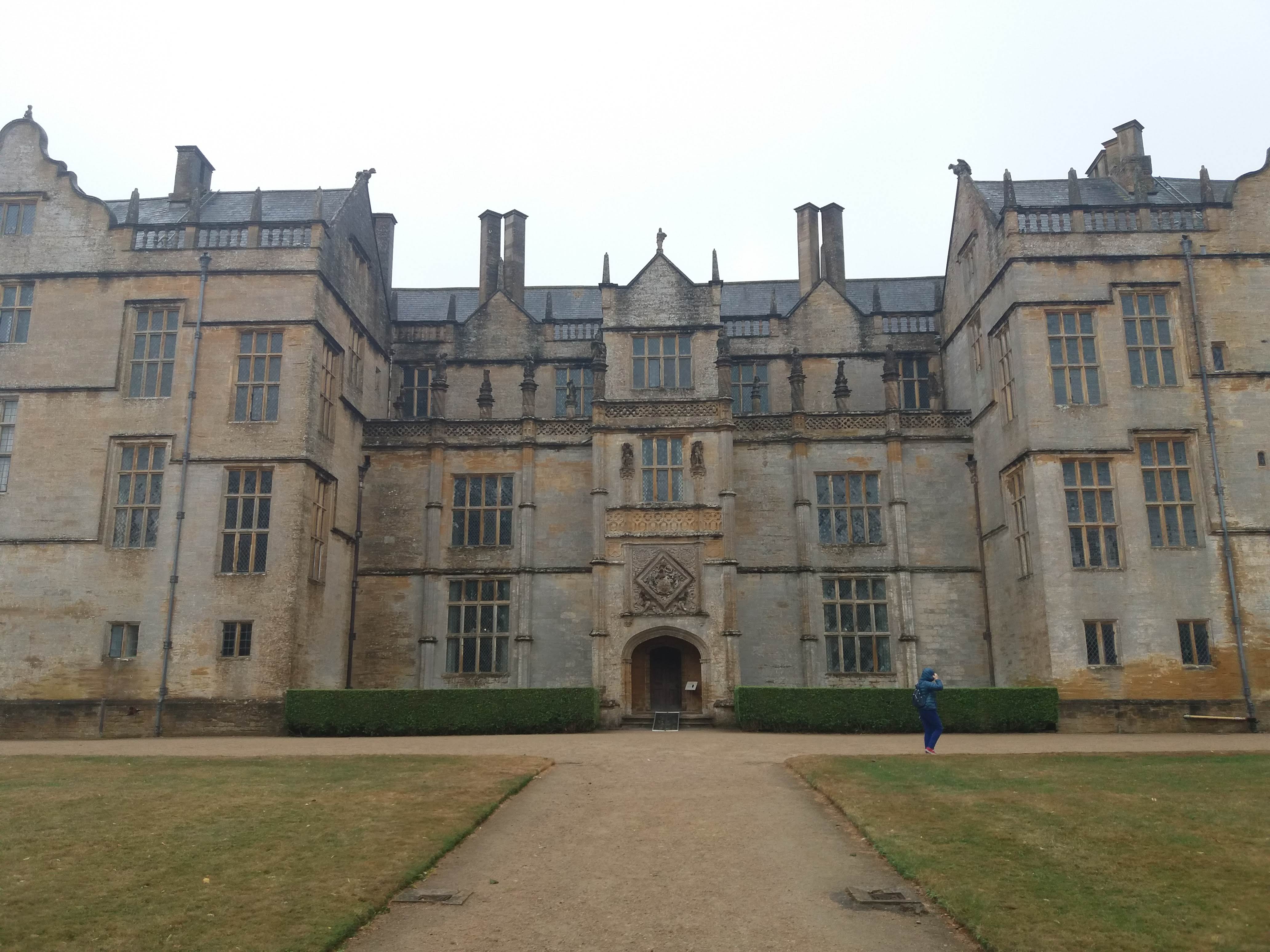
The weather on Sunday in Martock was drizzly, so we decided not to travel far and go indoors. Montacute House is about ten minutes drive away and is a late Elizabethan mansion built by Sir Edward Phelips, who was the Master of the Rolls to Elizabeth I. So to clarify, he didn’t actually get his hands dirty with the building, he wasn’t no brickie. Also, he didn’t work in Greggs and make Rolls, he was a top lawyer to Queen Elizabeth. Since it’s practically built on Ham Hill, it is built of Ham stone, a lovely fossiliferous limestone that’s been used since Roman times.
Montacute House
Montacute is a large and well-furnished house with lovely formal gardens. The Long Gallery has been converted into an art gallery, with many pictures borrowed from the National Gallery. I was particularly impressed with the portrait of Prince Rupert, the very epitome of a dashing cavalier. He was very good looking with his frilly shirt and long wavy hair, and wouldn’t have looked out of place in the Blitz Club with Spandau Ballet. I thought he looked remarkably like the actor playing Louis XIV in the TV series Versailles.
Prince Rupert, a good looking fella, and didn’t he know it
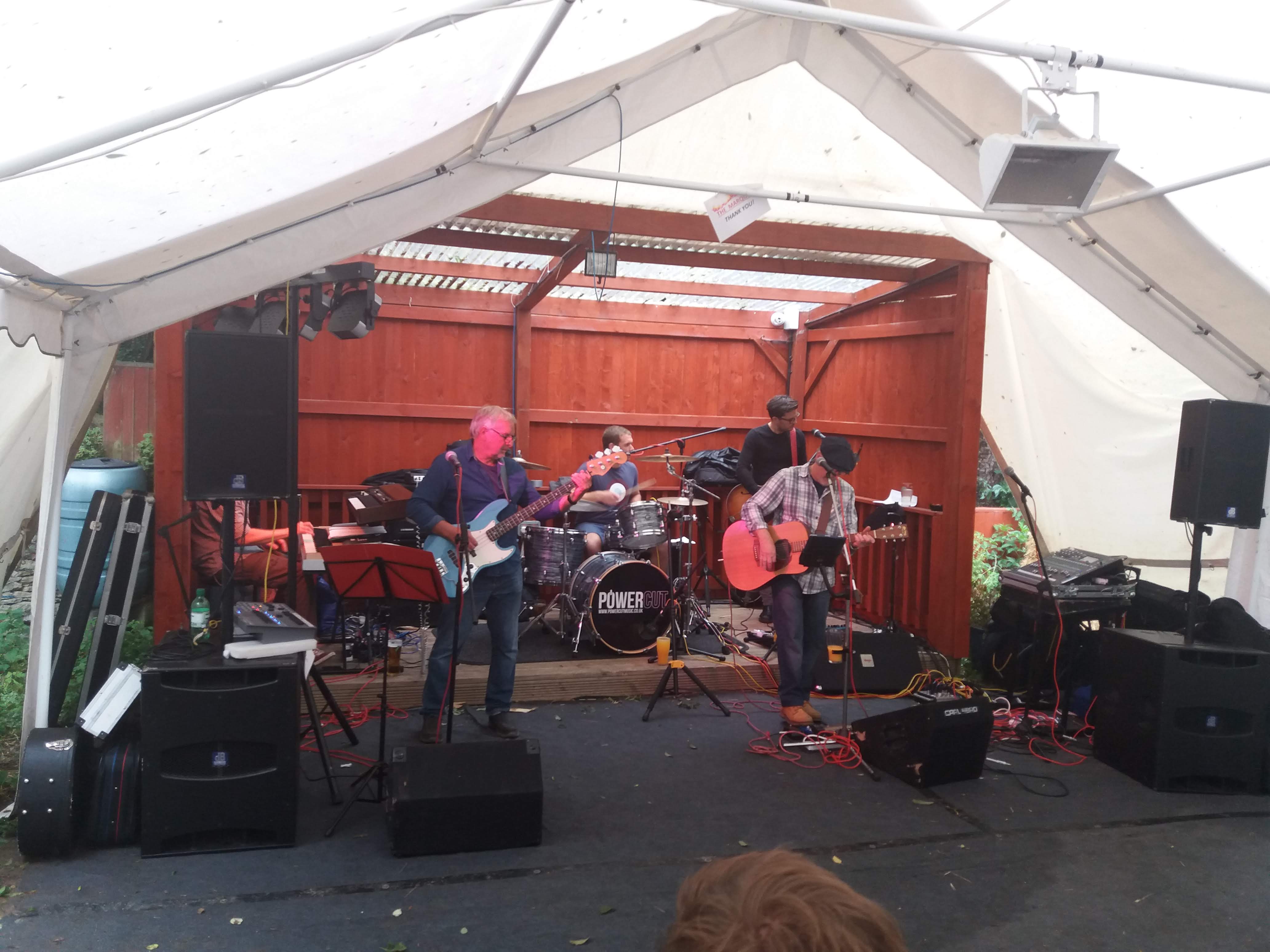
You can only admire so many portraits and settees, so we retired back to Martock for a cup of tea and a snooze on the squeaky leather armchairs. Thus refreshed we sallied forth again to Ham Hill, which has a big Country Park and fabulous views of the Somerset countryside. At the war memorial, there are great views to over Somerset, with the A303 rumbling at the bottom beneath the hill. Ham Hill was an ancient Iron Age hill fort and later a Roman fort. It also has a stone circle, but that was built in the 21st century by machines. We heard rock music close by and followed it to the Prince of Wales pub. In a marquee in the garden, a band called Powercuts were playing “classic” rock very loudly and not particularly well, but I enjoyed them long enough to drink a pint of Tribute.
Monday 30th July
Glastonbury and Wells
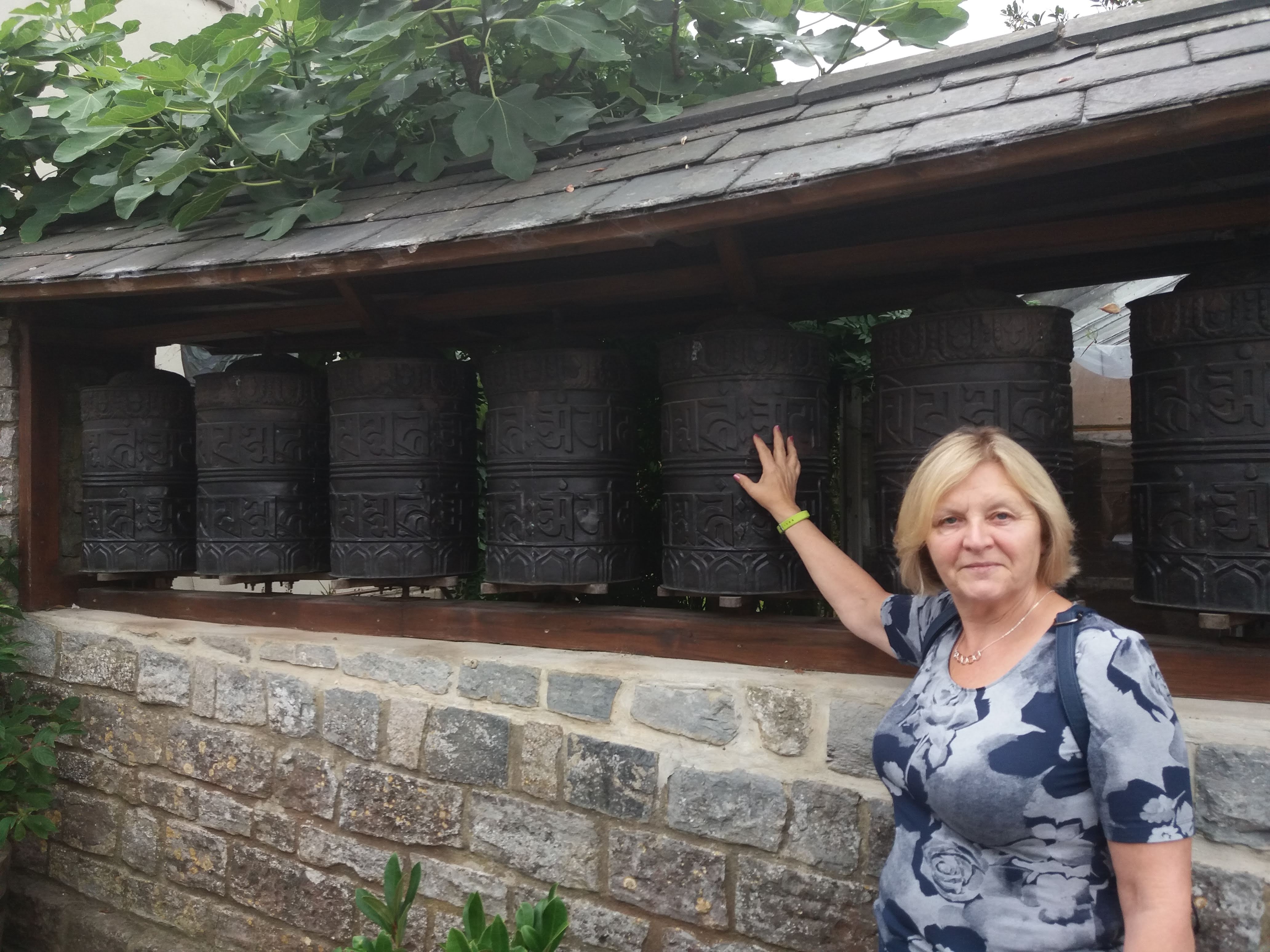
Glastonbury is most famous these days for hosting the music festival. I am (as you all know) a hip and happening guy, and went to “Glasto” in 1983 to see UB40 and the Fun Boy Three. I just turned up at the gate and bought a ticket. I believe it’s more tricky to get in these days. The town itself is attractive in a different way, in that it feels like a Seventies theme park. There are many (too many) shops dedicated to “alternative” lifestyles. Basically, hippy shops that died out everywhere else during the Eighties. If you like crystals, tie-dyes, yoga and incense, then Glastonbury is the place for you. Also, there is no shortage of over-priced fudge, biscuits and cider; but this is the West Country after all. There was even a street vendor flogging wands, unfortunately, they had no guarantees of effectiveness.
Spinning a Tibetan prayer wheel. Not unusual in Glastonbury
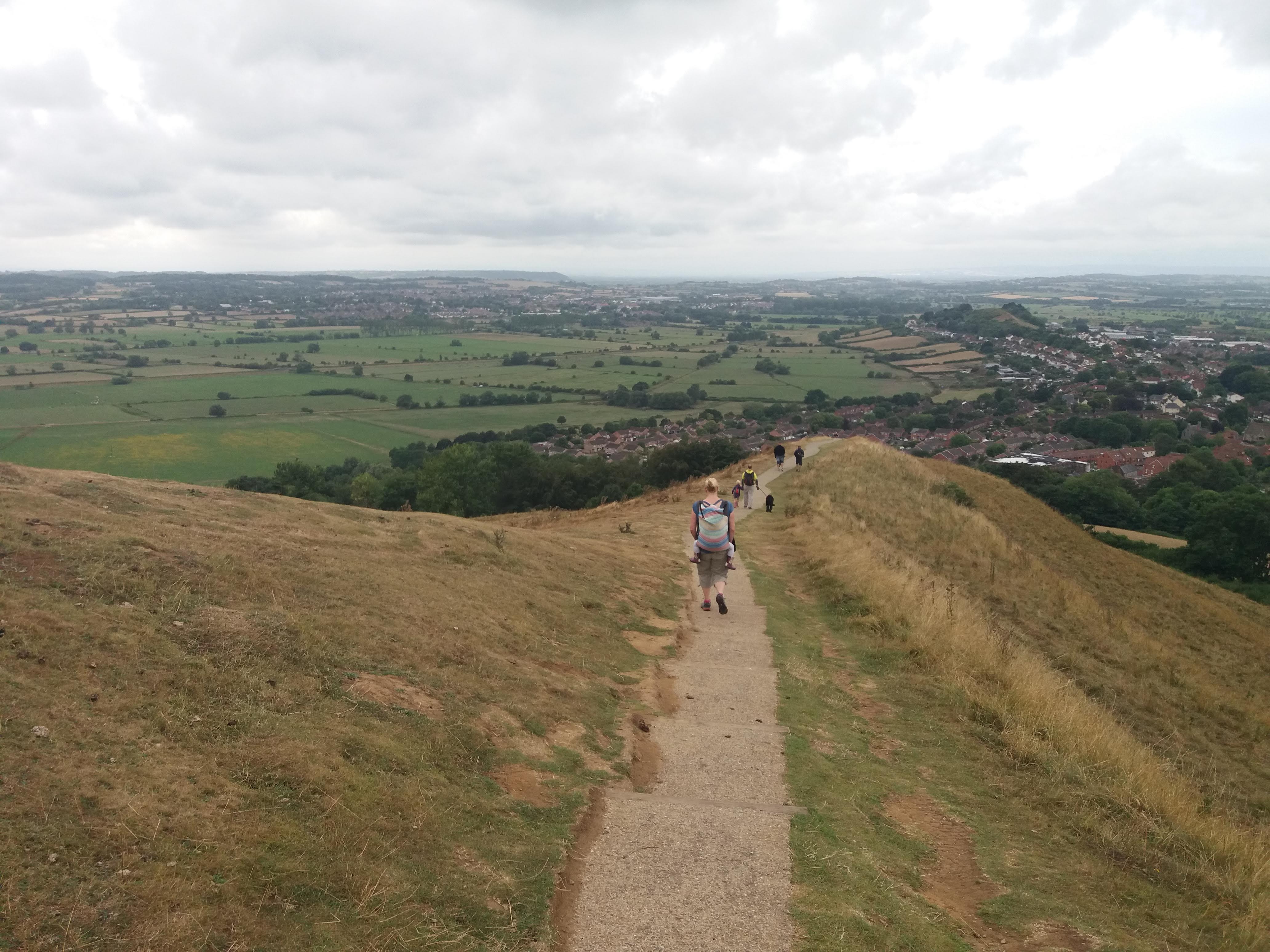
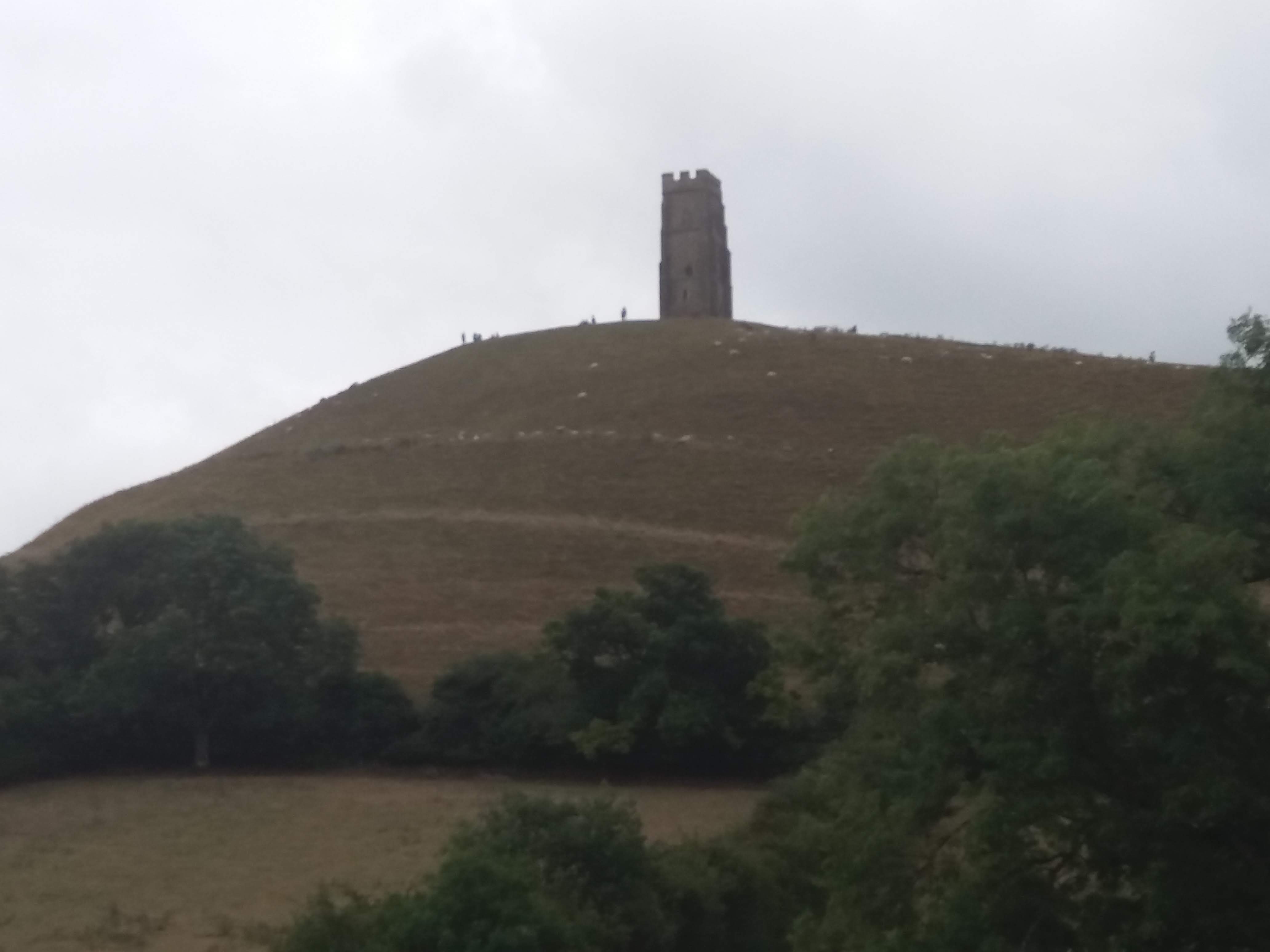
The best thing about Glastonbury is the walk up to the top of the Tor. It is a hill that rises out of the Somerset Levels (the local swamp) which is topped by a church tower dedicated to St Michael, the patron saint of socks and underpants. It was breezy at the top, but there are fabulous views of the Quantocks, the Mendips and much of the Levels. The town below was once called Avalon, named after an album ancient hippy band called Roxy Music.
The path up the Tor (and down again – obviously)
Glastonbury Tor
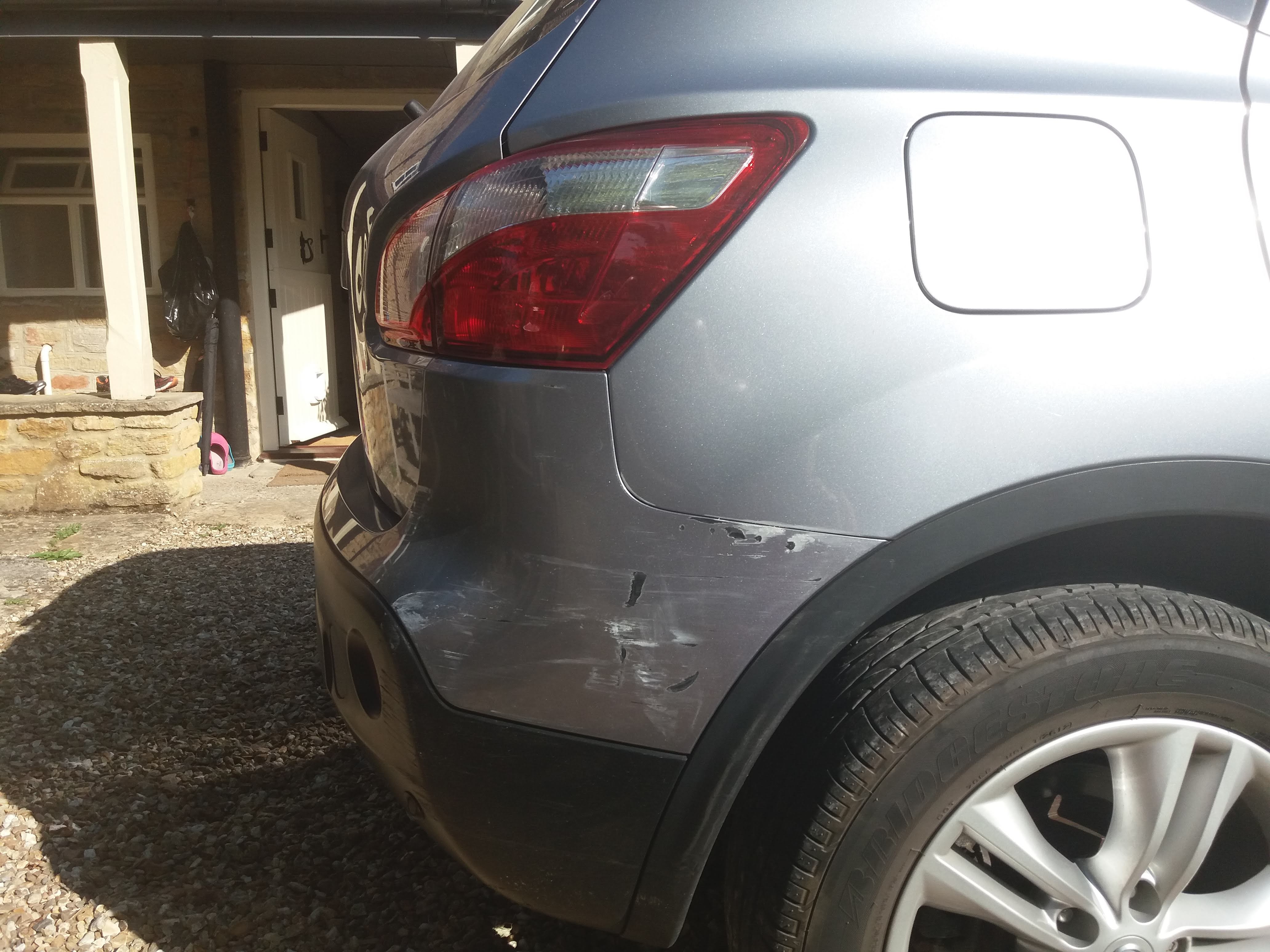
We ate our tuna rolls for lunch in the car park in the town centre near the Abbey. As we ate our fish delights, Mr Liam Kinseley (NVQ in Plastering Level 2) scraped our car down the side while parking. He left his business card under the windscreen wipers with an apologetic note on it, which was nice. But he will be receiving a bill for the paint job.
UPDATE – It cost £180 to fix by a nice man called Jason from Chips Away.
Thanks Liam (for leaving a note)
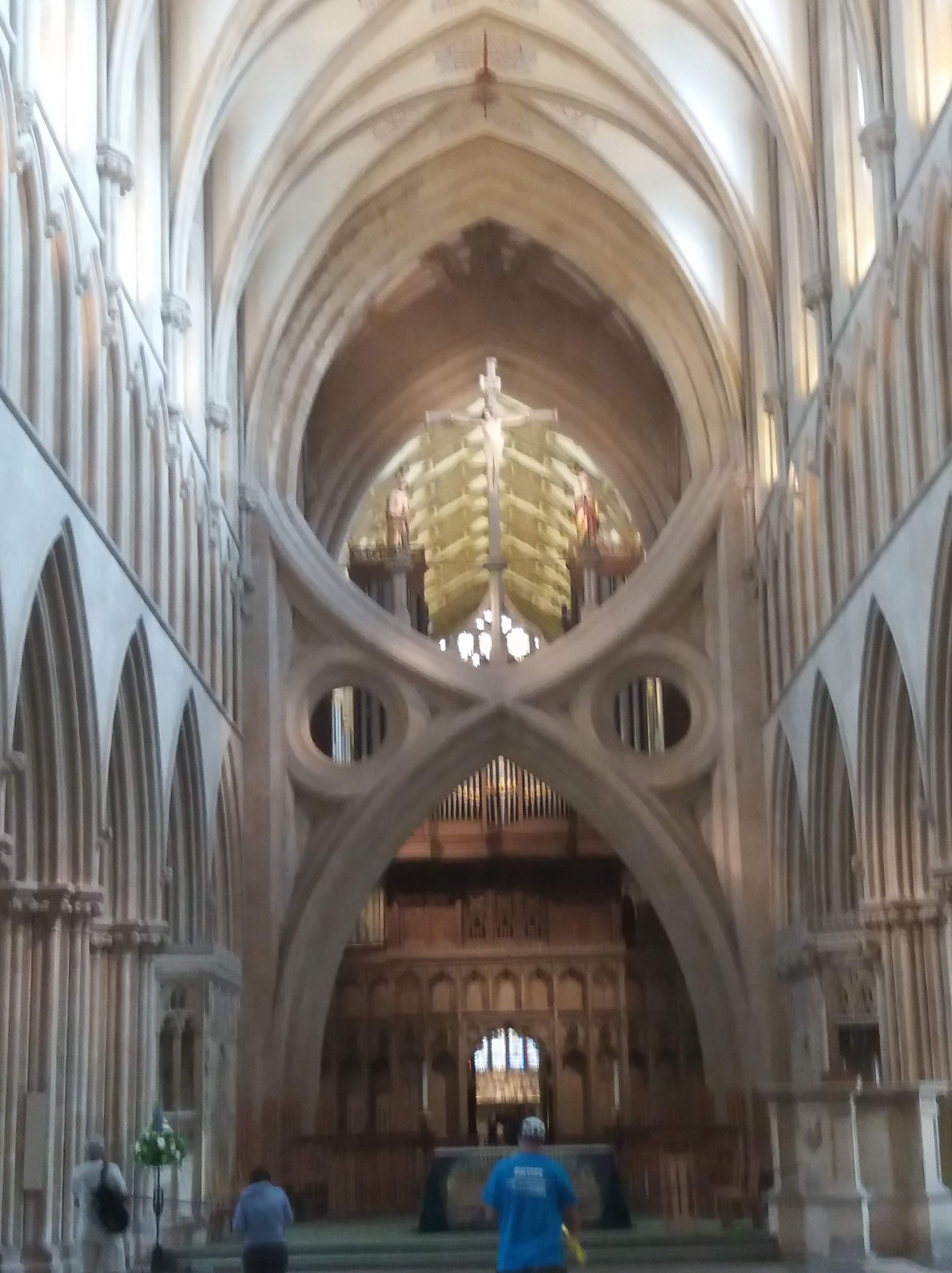
Wells is about five miles from Glastonbury and is a very different type of place. It is the smallest city in England because it has a beautiful cathedral and a population of about ten thousand people. You can tell it’s quite posh because of the up-market clothes shops and distinct lack of McDonalds or Poundland. The cathedral is beautiful, but then again have you ever seen an ugly cathedral? It has a wonderful arch inside which look like it was built yesterday but is eight hundred years old. A choir from Albuquerque were rehearsing, apparently, there is a different choir every week taking advantage of the acoustics.
Inside Wells Cathedral
In the High Street, we had our first Cream Tea of the week. It’s high in carbs, fat and sugar and that’s why it tastes so good. Wells looks familiar because it where Hot Fuzz was made, starring Simon Pegg and Nick Frost (who now lives in Twickenham and I see him in the White Swan)
The city is quiet and old and a lovely place to spend a few hours pottering around the shops and seeing the historic sites. There is a big moated Bishop’s Palace, which looked interesting, but we were too mean to pay to get in. We have National Trust cards that get us into a lot of old houses for the price of our membership, so we are reluctant to pay to go into others.
As you’ve probably worked out from my earlier mention of tuna rolls in the car park, I’m careful with my money, possibly even stingy. But money saved on cheap lunches comes back as extra money on the pub.
Tuesday 31st July
Knackered in Cheddar
When our kids were small children we had a holiday at Butlins in Minehead, and had a day trip to Cheddar to see the famous gorge and caves. So on Tuesday, we drove back to Wells and then just beyond it into the Mendips to revisit them. Google Maps took us a very weird route across the Levels but delivered us safely to that cheesy paradise.
FACT – in the USA in 2015, 3.4 billion pounds of cheddar cheese was produced. That is an unbelievable amount of cheese, but then Yanks eat cheese with everything. They even put it into an aerosol.
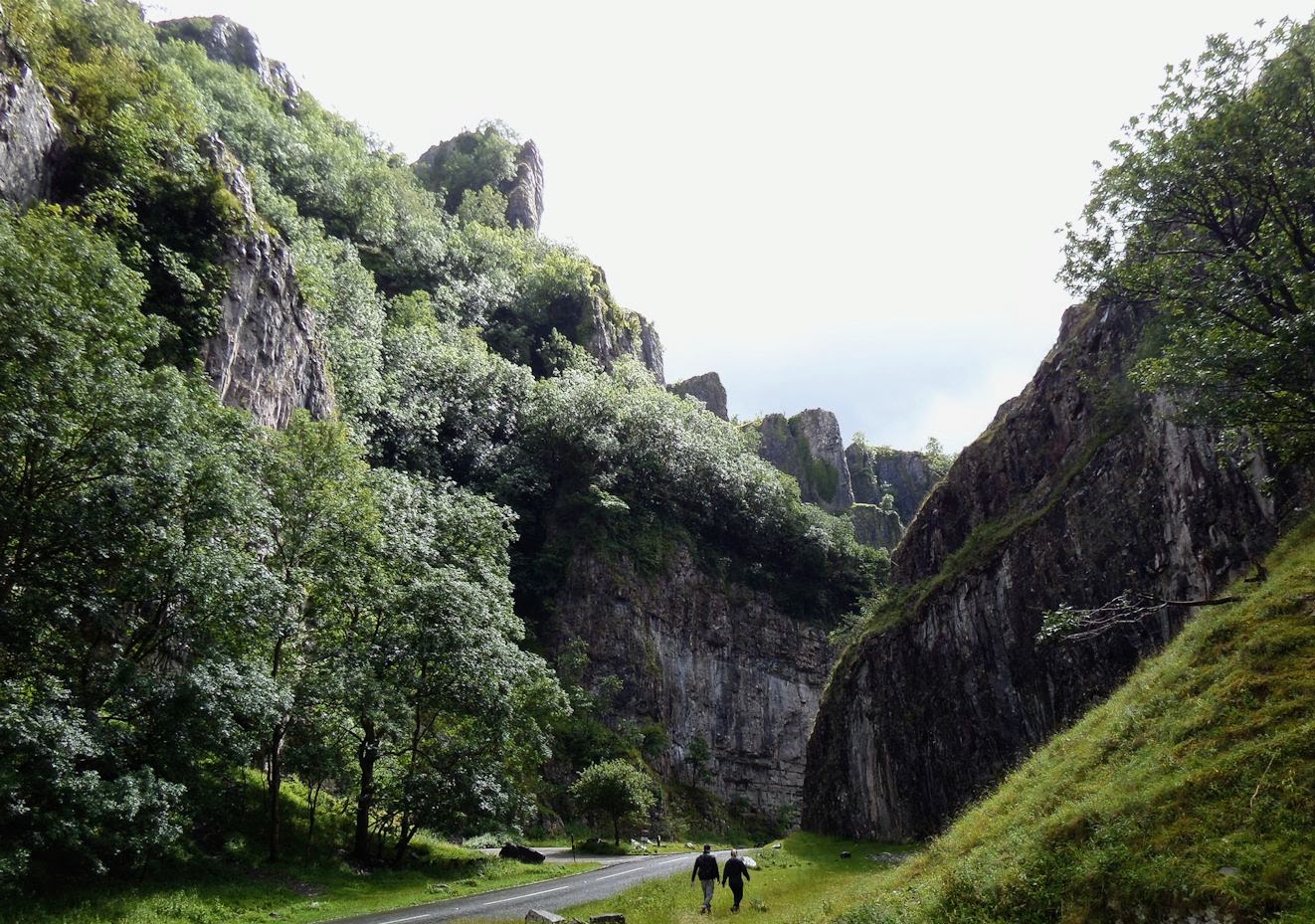
We parked up and bought our extortionately priced tickets for the Cheddar attractions from the Marquis of Bath, whose ancestors stole it off the locals not long after 1066. The mean bastards don’t even do a reduction for poor pensioners like me. I can barely afford to buy a decent Malbec these days! The first attraction is Dream Weavers, which weren’t nothin’ to do with dreamin’ or weavin’! It was a trail through caves with projections on the walls explaining about the people who live in the cave during the Neolithic Period. So that was quite good but a bit too poetic and magical bollocksy for my tastes. A little further up the Gorge are the main caves, known as Gough’s Caves after the man who opened them up. Mr Gough and his sons dug out lots of mud to clear the caves and put in floors and lighting to make them accessible to a public attraction. As soon as his lease ran out, the good old Marquis of Bath got them back and has been milking it for the last hundred years.
Cheddar Gorge
Goughs Cave is very impressive with several different chambers, stalagmites, stalactites and reflecting pools, all the stuff you expect from a cave. I’m pleased that they didn’t do that thing where they try to make you believe a rock looks like a witch or a rabbit or a VW Golf or something. I can never see those things like I could never see those Magic Eye pictures.
After emerging into the daylight I fancied a stomp around some hills. So we walked up Jacob’s Ladder about two hundred steps to the beginning of the Mendips. It isn’t a ladder, it’s a very long staircase, but you are cream-crackered at the top! Geddit! Jacobs! Cream-crackered! Oh, suit yer selves.
View from the top of the Gorge
From there it’s a three-mile walk around the top of Cheddar Gorge, quite a strenuous three miles, not a stroll. It’s all up or down, with very little along. That up and down is mostly over rocks, tree roots or nasty loose soil. There are some amazing views, but on balance it isn’t worth it. Julie threw a wobbly a couple of times, but there was no way back to the start apart from walking. It was March or Die. At the end of our death march we visited the very lovely Gorge Cafe and had another Cream Tea, which made everything better for as long as we were eating.
On our way home we stopped at the Lime Kiln Inn at Long Sutton for a pint, very nice and well deserved. The beer was instantly soaked up by the cream and carbs and sugar to make a very flatulent mixture, bang goes the ozone layer.
Wednesday 1st August
Dipping into Dorset
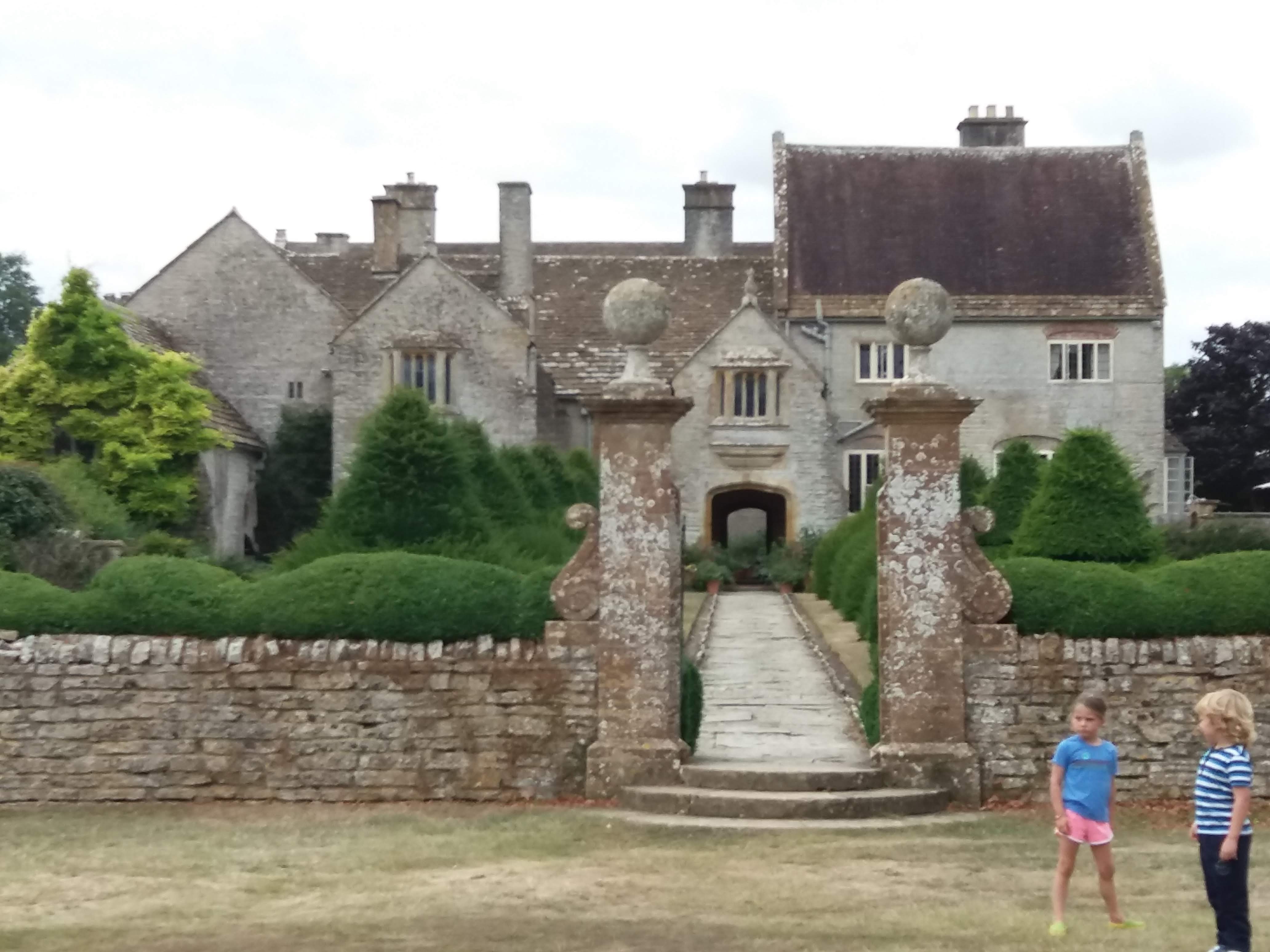
Having made two consecutive journeys up to the north of Somerset, on Wednesday we stayed local (ish) and went to a manor house called Lytes Cary, which is a short drive up the A303. Lytes Cary is a medieval manor house which was restored in the 20th century and given to the National Trust. It’s a small house compared to many NT properties but it has lovely gardens and a good cafe. In my mind “National Trust “and “Nice Cafe” are unbreakably linked, like Tony the Tiger and “they’re grrreat”.
I did start to suffer from old house burn-out having been to a glut of NT places. I could no longer get interested in Jacobean oak panelling or Flemish tapestries of men in camp Roman outfits. In days of old they seem to like showing ladies with one breast out, but never show men with a single bollock dangling beneath their togas.
Lytes Cary House
There is always charming elderly middle-class folk guarding the rooms and giving helpful information. I like to test them with awkward questions like “Is that the second or third Duke, and is it painted by Kneller or Lely?” which makes them rapidly leaf through their folders of useful information to find the right answer. They must have enormous patience standing in rooms all day waiting for some child to touch a Chippendale chair so they can tell them off.
Julie, in relaxed mode
Having exhausted the delights of Lytes we drove on to Sherborne. When I say “we”, I mean Julie since we can’t both drive the car at the same time, obviously. I’m better at navigating and like looking out the window for interesting birds and passing celebrities. I spotted Mark Ellen, former editor of Q magazine, putting out his bins in Teddington yesterday. Julie had never heard of him, but she never watched Whistle Test religiously like I did.
Sherborne is just into Dorset and is a very pretty town with a big abbey church and a posh public school. Consequently, there are lots of teenagers around who look like they might be from Singapore or Leningrad. Actually, I made up the bit about Leningrad, I don’t know what they would look like. It’s a perfect place for a slow mooch around overpriced galleries and gift shops. Our house does not have much shelf space for accumulating knick knacks, so we don’t have many. Having said that, I’m a bugger for a nice fridge magnet, and our LG fridge freezer is covered with them. If I feel the need to hide from spies, I will get into the fridge and bamboozle them with the intense magnetic field.
The best way to re-energise in Dorset after window shopping is to have yet another Cream Tea, good for the stomach and good for the soul, but bad for the digestion and waistline.
My natural environment
Thursday 2nd August
Over the hill and back to the pub
My friend Andy lives in Blandford, which is about an hour’s drive from Martock, so he drove over to see us with his partner Amanda and their little dog. I’m not a “dog person”, so I can’t remember its name, but do remember that it was a yappy Jack Russell. We met them at the Prince of Wales on Ham Hill, and the weather was fine and sunny and ideal for a hike around the park. Some of the country park is uppy downy old quarry workings, but most of it is huge open fields with grand views of Somerset spread out below.
Dog owners always think that their dogs can understand English and have conversations with them like “come on Boris we have to get home for daddy’s tea”. I have also noticed that they refer to dogs as girls or boys, which is an anthropomorphic step too far for me. It would be much more entertaining if owners spoke like Ripley in Alien 2, “Stay away from her you bitch!”
After a healthy yomp around the park, we returned the Prince of Wales pub for some lunch in the garden. As I was eating my sandwich, two people rode their horses into the garden like it was a normal thing to do. They dismounted and took the saddles off, while the horses walked around the garden benches grazing. Andy’s little bitch didn’t like the horses and barked at them, so she had to be removed in case an annoyed horse stepped on it. The horse riders were dressed in jeans and tee shirts and behaved as though grazing their beasts in the pub garden was perfectly normal, maybe it is normal for Somerset.
Our friends departed and we drove to yet another historic property, Muchelney Abbey. Most of the abbey was destroyed by Thomas Cromwell’s henchmen during the dissolution of the monasteries, but the Abbot’s house remains. The house is well restored but mostly empty apart from the English Heritage shop where samples of mead were available, something for nothing is always welcome.
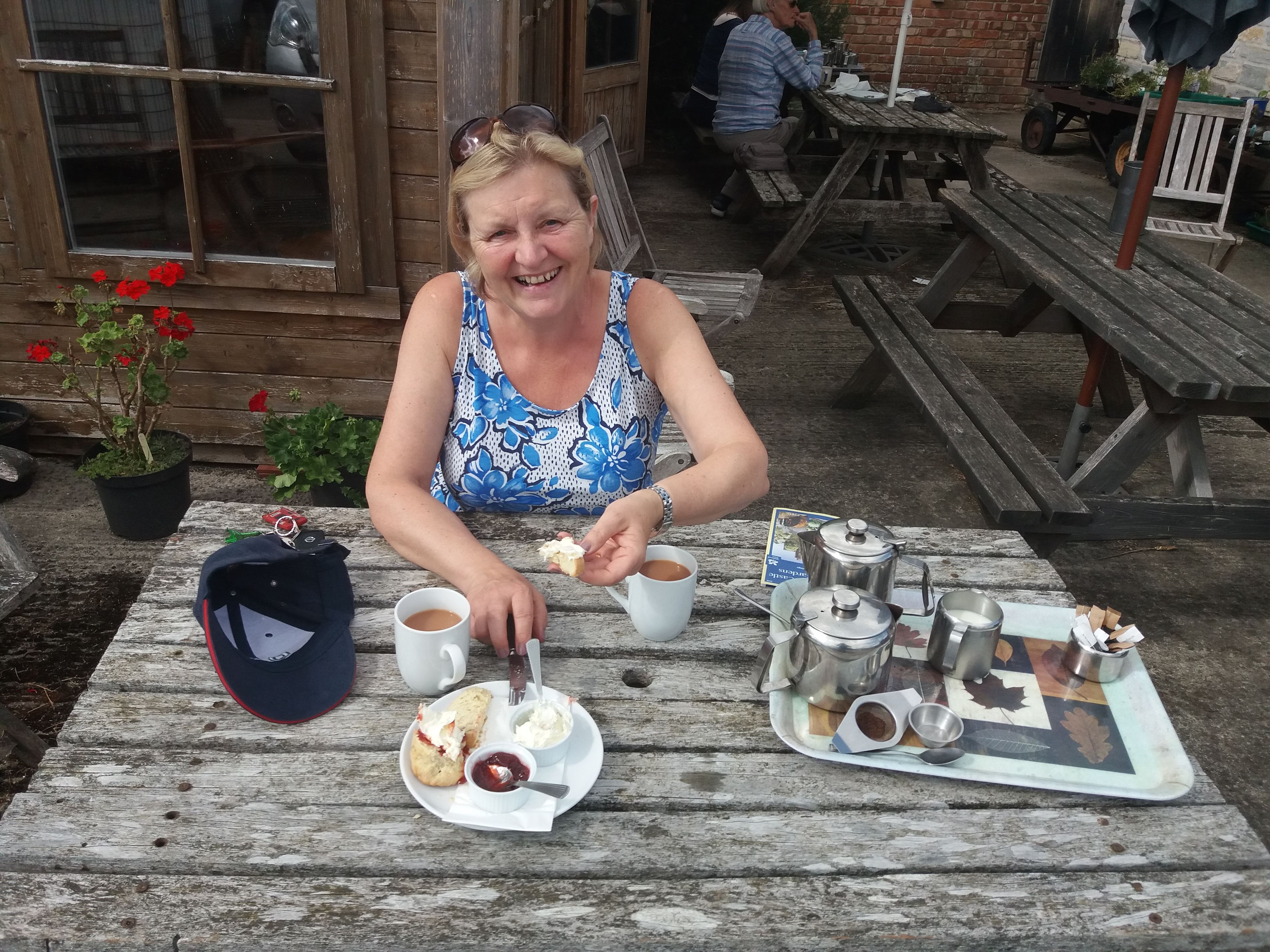
In the village of Mulchelney I had a look in the pottery which was featured in a leaflet I picked up in Wells. The pots were brown, heavy, and looked like the monks would have used then five hundred years ago. I looked at the price sticker and decided that my Tescos stoneware was perfectly adequate and actually more attractive. At such a time the only sensible course of action is to have another cream tea, so School Farm got the benefit of our custom and I stuffed my face with more heart-attack-on-a-plate. Roddas Clotted Cream has probably taken years off my life expectancy.
Yet another cream tea
Friday 3rd August
Watchet you Dunster!
I fancied going to the seaside for my annual dip in the chilly waters around our fair isle. The Dorset coast is closest, but we visited that extensively in 2016, so the next closest was North Somerset, the Costa Del Butlins! The last time we visited north Somerset was 1994, when we took Tommy aged four and Josie aged two to Butlins at Minehead. Even back then we were fully paid-up members of the Guardian-reading metropolitan elite, so going to Butlins was an unusual choice that would cause tongues to wag at our NCT group. We had a marvellous time, and Josie enjoyed herself so much she projectile-vomited over our chalet. I still have happy memories of the variety shows and the distinctive (and very reasonably priced) Butlins Bitter.
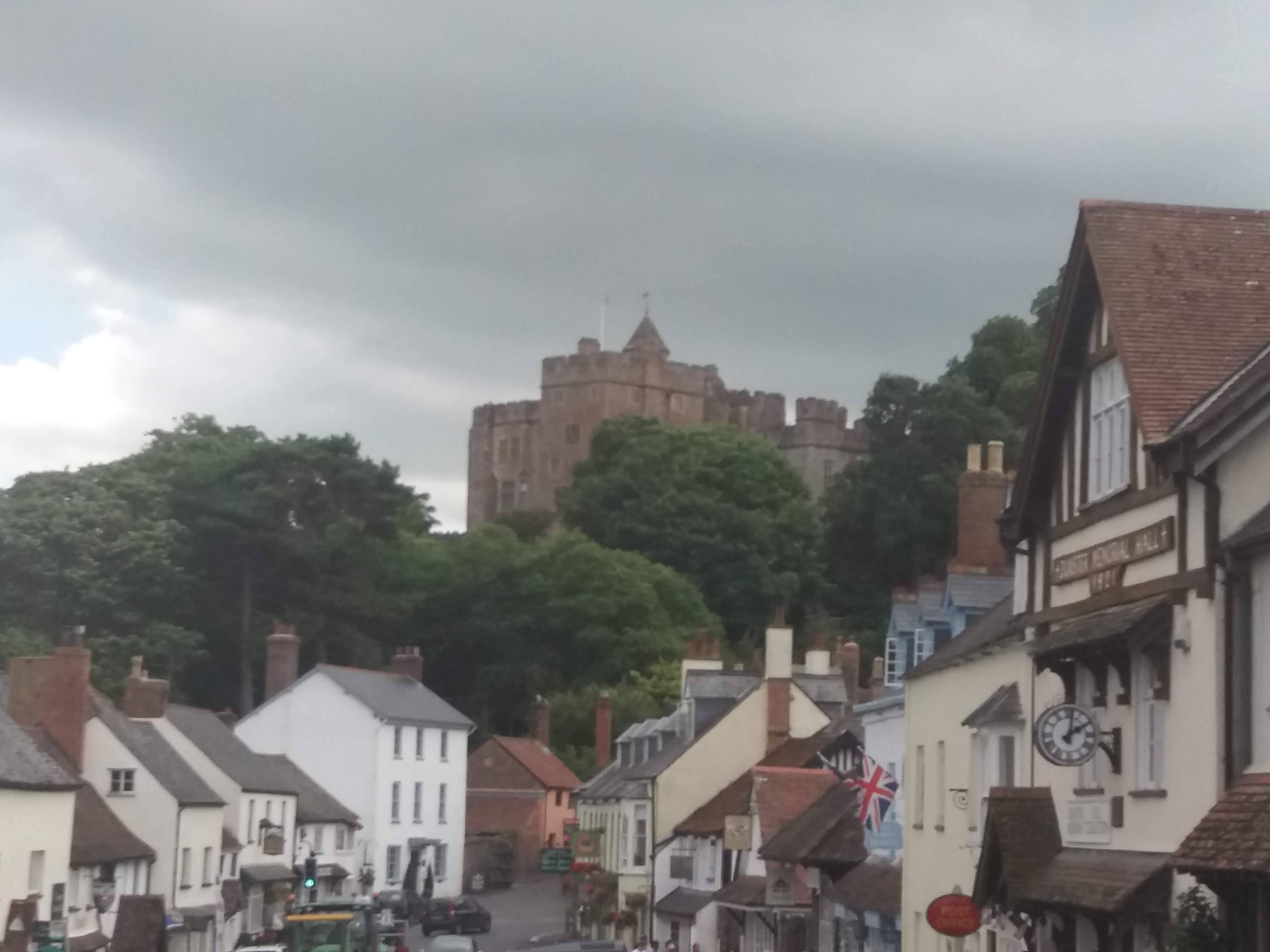
It’s a long and windy drive through Taunton to get to the north coast, but well worthwhile. Our first destination was Dunster Castle, a few miles from Minehead. It is beautifully located on a hill surrounded by lovely gardens and woodland, and it made me grateful for the punitive Death Duties that forced the aristocratic former occupiers to give it to the National Trust. The actual Norman castle was knocked down by the forces of Oliver Cromwell, and what remains is the mansion that the Tudor lords built in the grounds. Having seen a few old houses already this week, we toured the house quite quickly. Lovely paintings and furniture and all that, but boy did those nobles have an inflated sense of their own self-importance! My favourite bit was the watermill, but I do love any sort of moving machinery. I bought some muesli from the shop, but quite honestly it wasn’t as tasty as Alpen.
Dunster Castle Mill
Just outside the gates of the castle is Dunster village, which is very pretty and suitable for a Disney film location. In the past, it was probably occupied by milkmaids and the bastard sons and daughters of the lords, but today is entirely souvenir and gift shops.
Dunster Village and Castle
We made a very brief visit to Dunster beach, about thirty seconds is enough time there and continued on to Minehead.
We had tea in the cafe at the West Somerset Railway, a steam heritage railway with twenty miles of track between Bishops Lydeard and Minehead. Julie looked at her phone while I watched the engineers fix an engine boiler to a chassis with a big crane. I do like a good steam engine, and the WSR has some beauties.
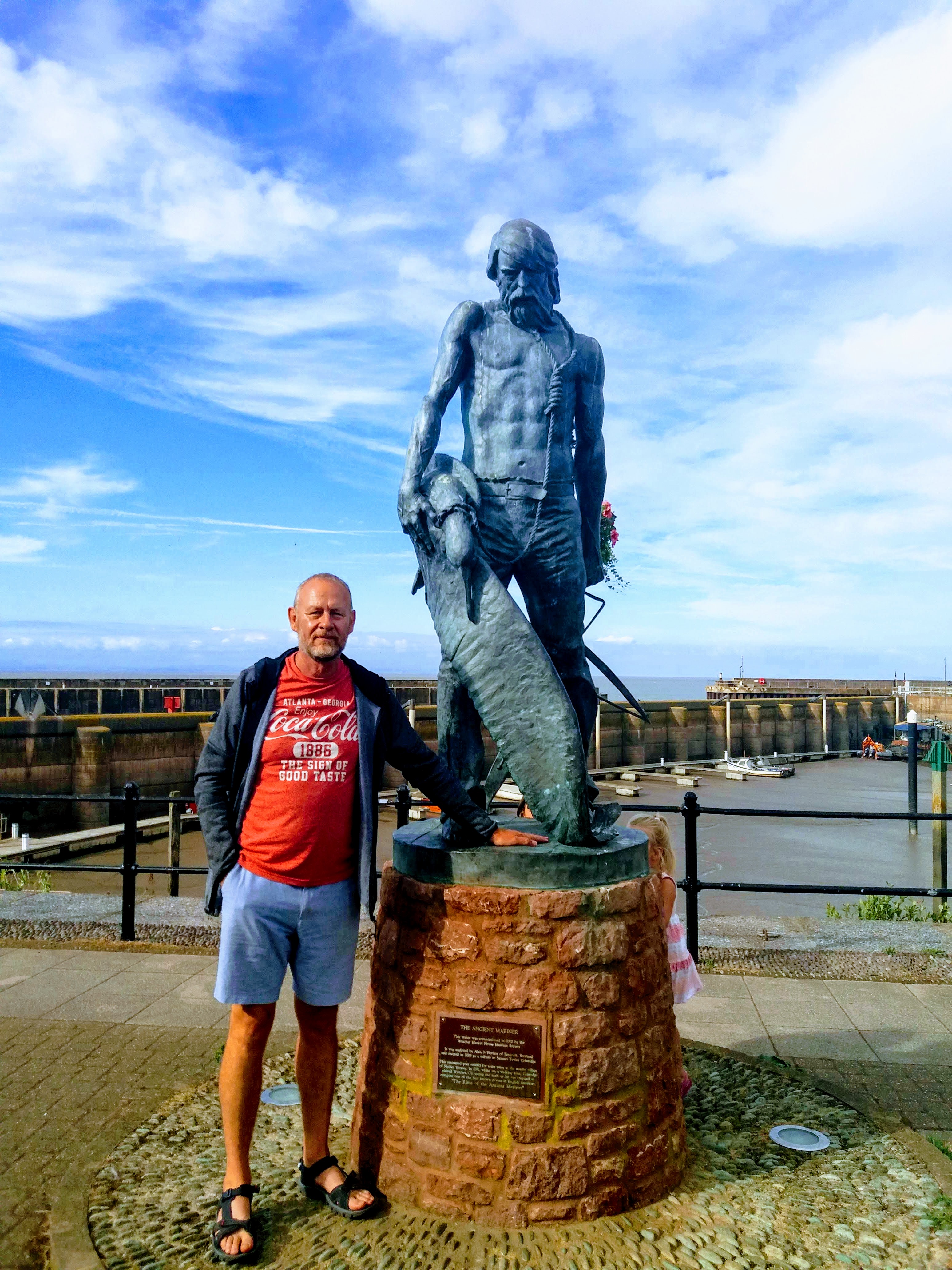
The Ancient Mariner (on the right) at Watchet Harbour
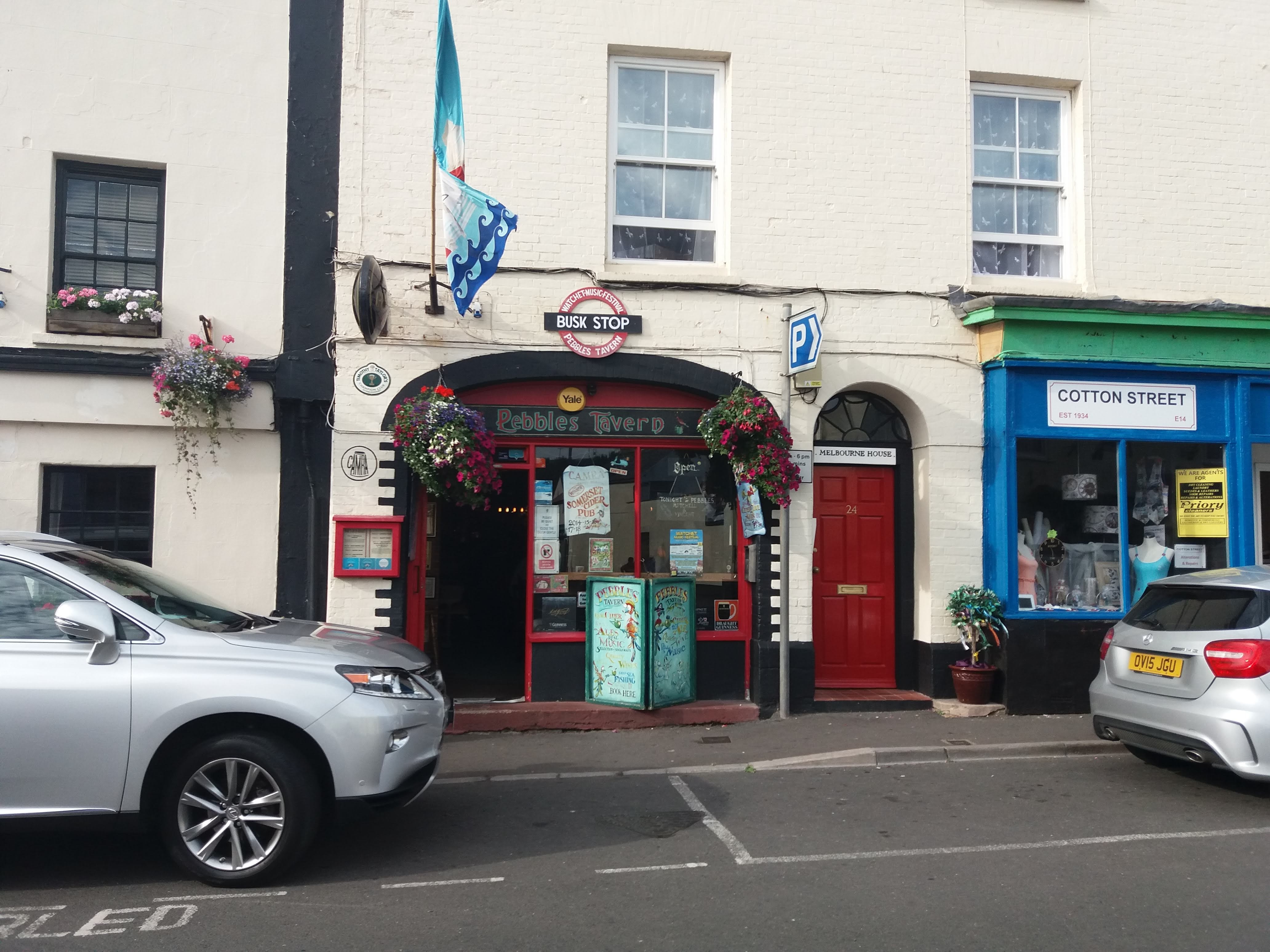
On our way back to Martock we stopped at Watchet a few miles along the coast from Minehead. Its impressive harbour was once used for shipping ironstone excavated from the Brendon Hills to Ebbw Vale steelworks across the Bristol Channel, it is now a marina. The village has a few pretty streets and a characterful cider pub called the Pebbles Tavern. You won’t get Kopperberg dancing-around-your-handbag fruity ciders, but you will get some excellent local brews that should be consumed with caution.
Pebbles Tavern
Saturday 4th August
Tint’n’ull swings
By the end of our week in Somerset it felt like we had seen every site on historical interest within forty miles. That wasn’t true, but we had got a bellyful of old houses and dead aristocrats posing with their guns and dogs. Still, it’s a lot better than Italy when most of the pictures in galleries or houses are either:
Jesus
Mary, or
Mary and Jesus
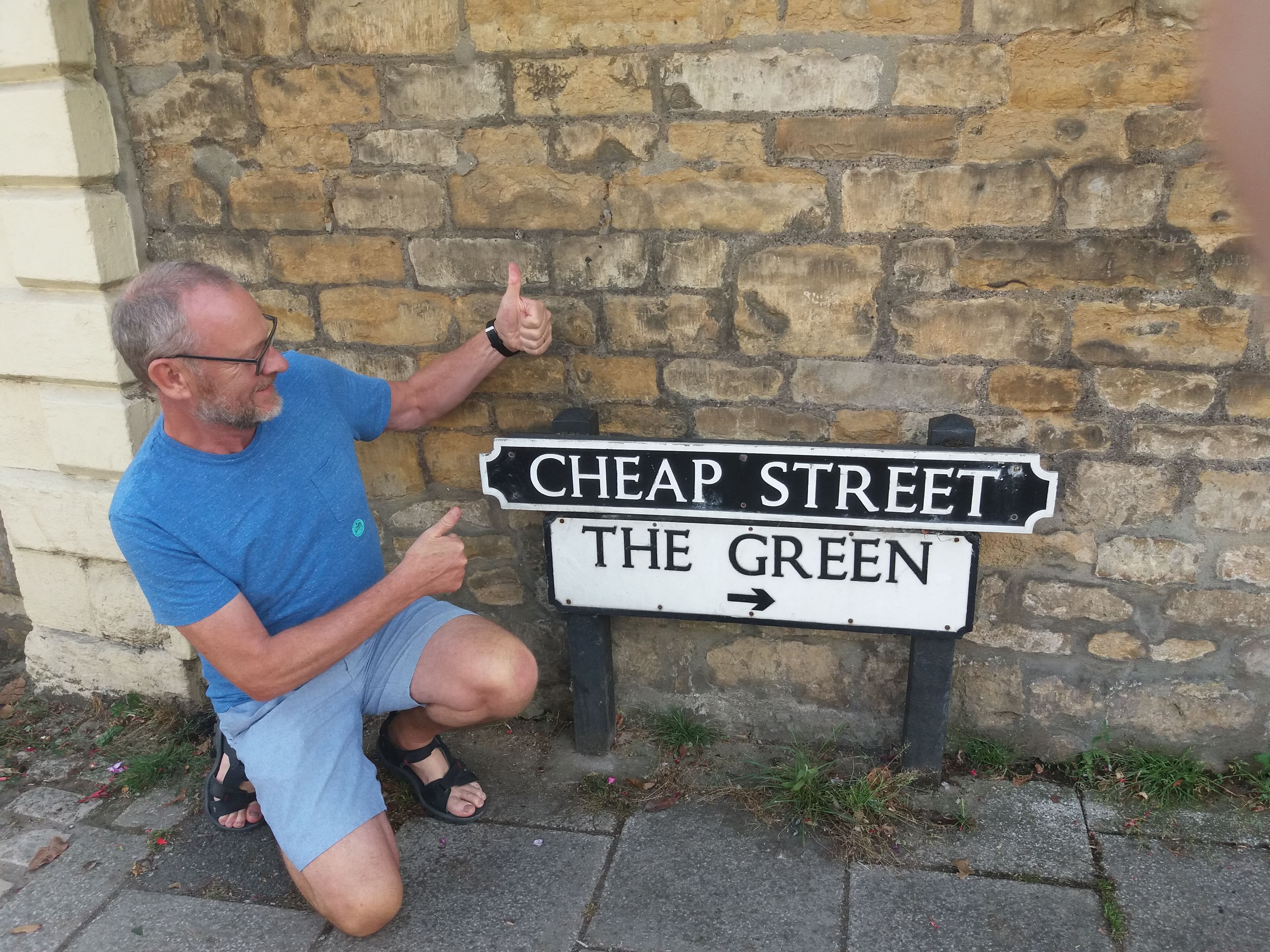
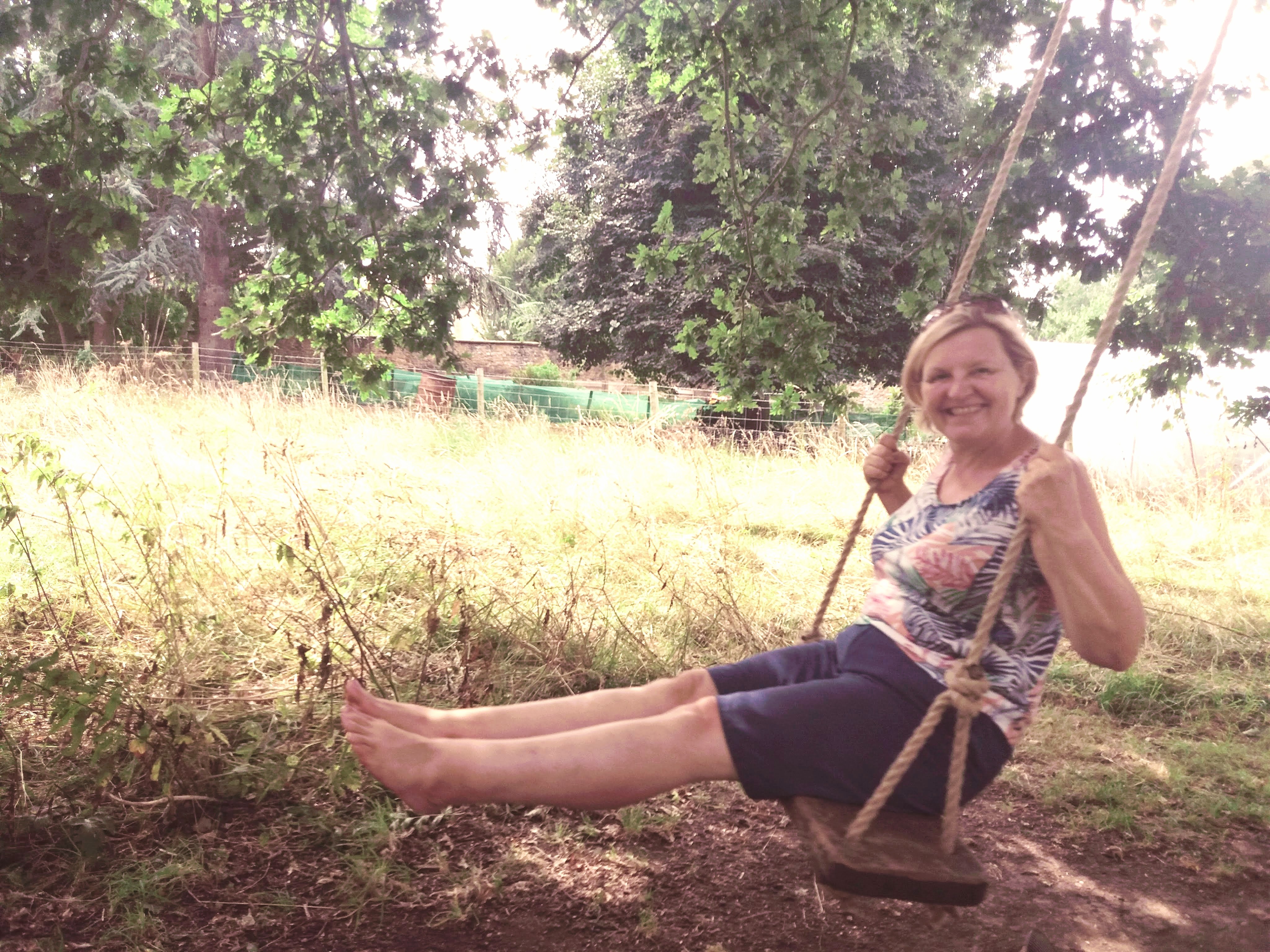
We had enough curiosity left for one last National Trust blow-out, Tintinhull Gardens. The main reason we went was that it was very close, and no doubt would have a nice caff. Tintinhull is a very pretty village built of Ham stone which looks very prosperous. The big house is a lovely 17th-century mansion with some well-maintained gardens originally set out by a gardener called Phyllis Reiss. It’s certainly a lovely place to spend a couple of hours sniffing roses and trying to steal raspberries without being spotted. There is a small wood with a swing suspended from a tree. I sat carefully on the swing and it didn’t immediately collapse, so I went back and forth a few times. I then felt a bit queasy, so I think my swinging days are over (in more ways than one). Tintinhull is quite a mouthful, and I’m told the locals sensibly call the village Tintnul. I
looked on the map for CaptainHaddockhull and Snowhull, but they don’t exist.
Swinging at Tintinhull
In the afternoon I cooked a veggie curry and tidied up the house ready for the return of Tony, Sarah, Lucy and Alice back from Italy. When they returned we ate dinner in the garden and Lucy entertained us on the piano.
Somerset is a lovely county and is well worth visiting, rather than just driving through it on the way to Cornwall. It has a massive advantage in that it’s only two hours from London and it doesn’t rain as much as Cornwall.
Spain is a big country with many provinces and complex history, so it is well worth visiting again. Our last tour was in Andalucia in 2016, just after I had turned sixty and retired from the BBC. That was four cities and ten days, this time it’s three cities in twelve days, a more relaxed journey.
On September 7th we flew from London Heathrow T3 to Bilbao in the Basque Country of Spain, accompanied by our son Tommy and daughter Josie. It was our first family holiday together since Lake Garda in 2008. At Bilbao airport, we caught a coach to San Sebastián, a beautiful city that Julie and I last visited in 2013. Josie had been there as a teenager to stay with her Spanish friend Amanda, so it was quite a nostalgia trip for us.
Our accommodation was a modern AirBnB near Amara railway station. The apartment was up a steep hill, and could be reached via an outdoor escalator, which saved our legs San Sebastián is a chic seaside city with three beautiful beaches, Concha, Ondaretta and Zurriola. The sand is soft and clean, and the views are simply gorgeous.
Once we were settled in we walked through the elegant streets to La Concha and found a seat at the Narru bar overlooking the beach for a G&T. At the end of the nineteenth century, the city was a favourite holiday destination of the Spanish Royal family. So it has something in common with the grander parts of Regency Brighton. The Spanish got the gin habit from English sailors when we owned Menorca after the battle of Trafalgar, and they drink it in small glass buckets with loads of ice. Just for clarity, they are not literally buckets (although they probably do in Benidorm) but big stemmed balloon glasses.
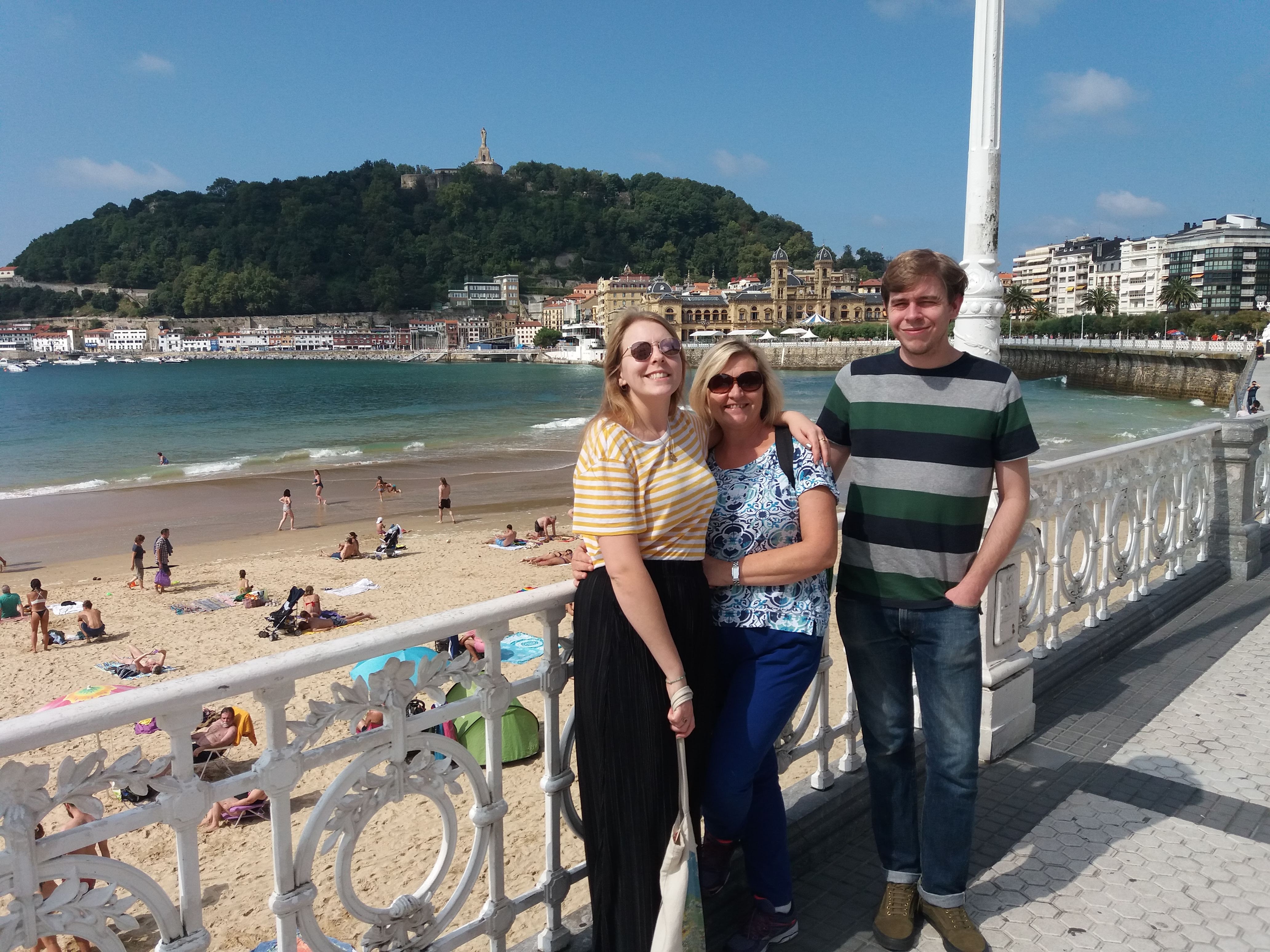
On the prom overlooking la Concha
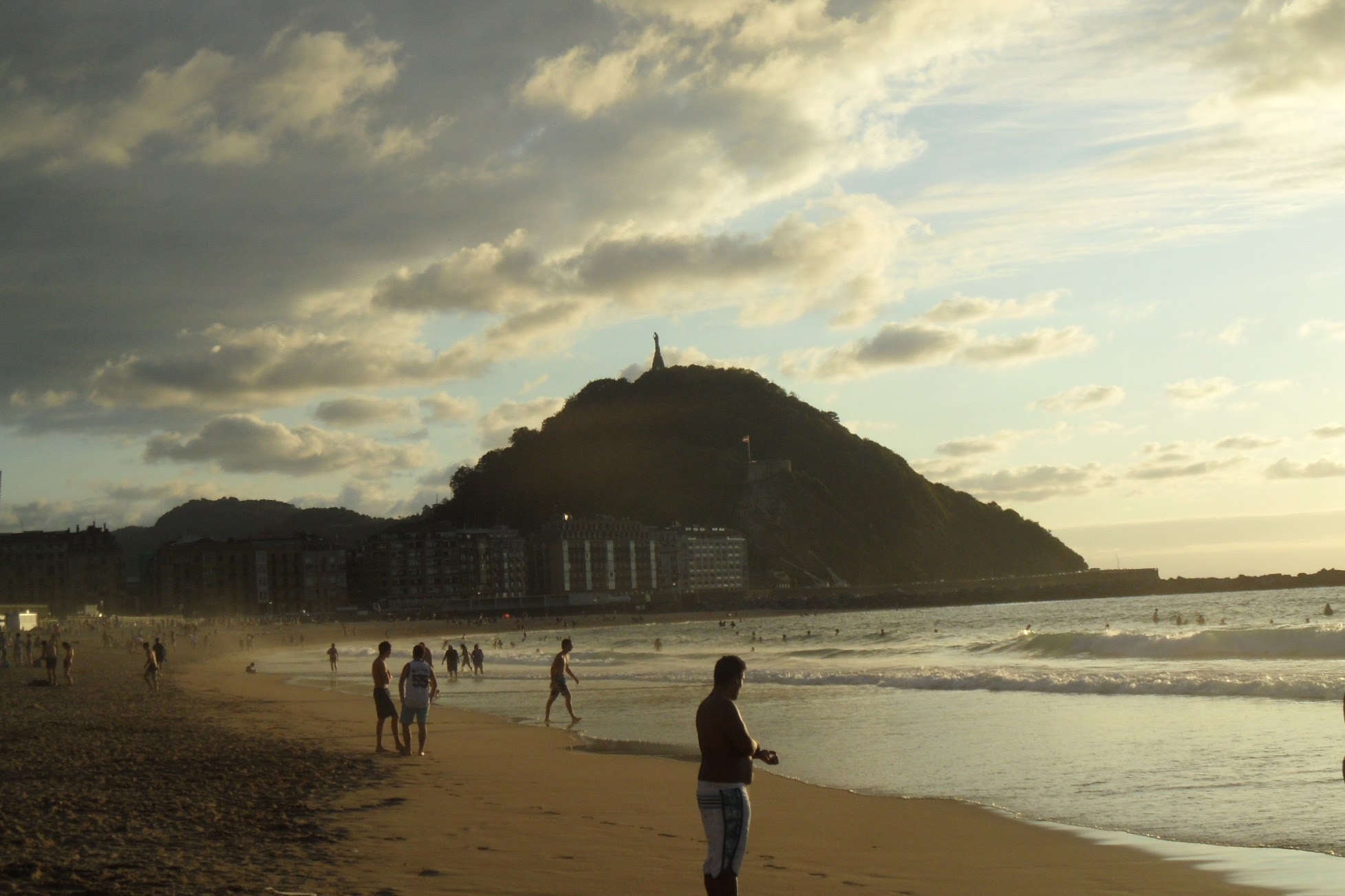
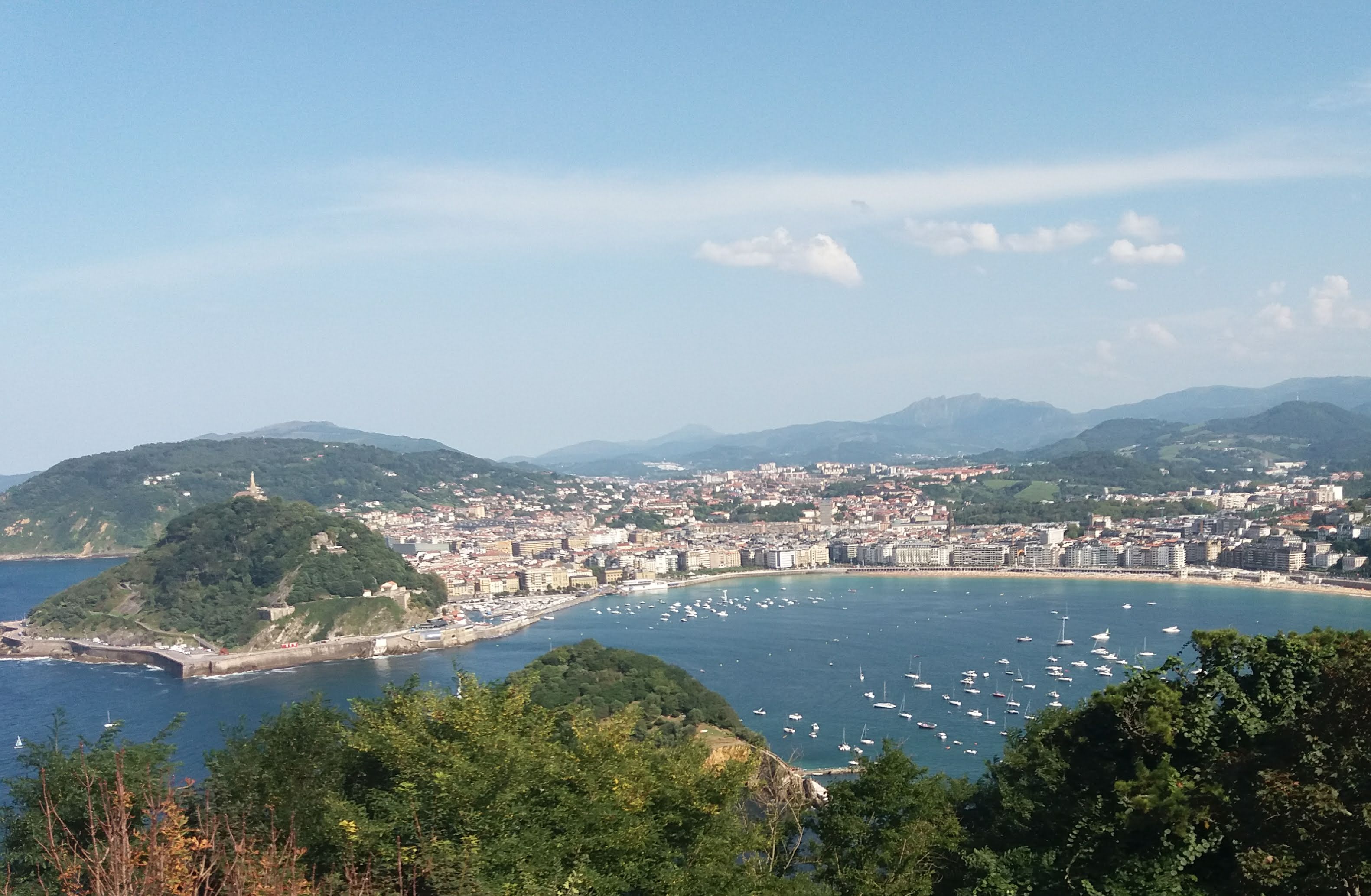
The view is hard to beat, Mount Igeldo on the left, Mt Urgull on the right, and Santa Clara island in the middle of the bay. On a sunny day, the beach is teeming with holidaymakers sunbathing and parading through the surf. It really is my favourite beach in the world, (although I have yet to go to Blackpool).
After loosening up at Narra, we strolled along the beach Tom the Old Town at the foot of Mt Urgull. It was originally much older, but in 1813 the Duke of Wellington with his British and Portuguese troops burnt it down after they took it from Spanish troops fighting for Napoleon. Now it is a grid of nineteenth-century buildings which are mostly pintxos bars. Pintxos (pronounce Pinchos) are Basque tapas, small food to have with your drink. Many of them are cold and come on slices of bread, others are hot and need heating up. They cost two or three Euros each and the bars are covered with them. You help yourself and the barman magically remembers what you have taken. The bars are very lively, but not places for heavy drinking like British pubs. The servings are much smaller, a glass of wine might only cost two and a half Euros, but is only about a hundred millilitres. The beer generally comes in small glasses for small prices, rarely in pints.
La Concha beach and Mount Urgull
We visited four or five bars in the Old Town and ate numerous pintxos made with tortilla, chorizo, cod, ham, anchovies and other savoury delights. If you want a bigger portion your order raciones, which is a plateful of Serrano ham or Calamari. It really is foodie heaven, and if you prefer fine dining there are some superb restaurants.










 timharnesstravels