San Sebastian
Spain is a big country with many provinces and complex history, so it is well worth visiting again. Our last tour was in Andalucia in 2016, just after I had turned sixty and retired from the BBC. That was four cities and ten days, this time it’s three cities in twelve days, a more relaxed journey.
On September 7th we flew from London Heathrow T3 to Bilbao in the Basque Country of Spain, accompanied by our son Tommy and daughter Josie. It was our first family holiday together since Lake Garda in 2008. At Bilbao airport, we caught a coach to San Sebastián, a beautiful city that Julie and I last visited in 2013. Josie had been there as a teenager to stay with her Spanish friend Amanda, so it was quite a nostalgia trip for us.
Our accommodation was a modern AirBnB near Amara railway station. The apartment was up a steep hill, and could be reached via an outdoor escalator, which saved our legs San Sebastián is a chic seaside city with three beautiful beaches, Concha, Ondaretta and Zurriola. The sand is soft and clean, and the views are simply gorgeous.
Once we were settled in we walked through the elegant streets to La Concha and found a seat at the Narru bar overlooking the beach for a G&T. At the end of the nineteenth century, the city was a favourite holiday destination of the Spanish Royal family. So it has something in common with the grander parts of Regency Brighton. The Spanish got the gin habit from English sailors when we owned Menorca after the battle of Trafalgar, and they drink it in small glass buckets with loads of ice. Just for clarity, they are not literally buckets (although they probably do in Benidorm) but big stemmed balloon glasses.
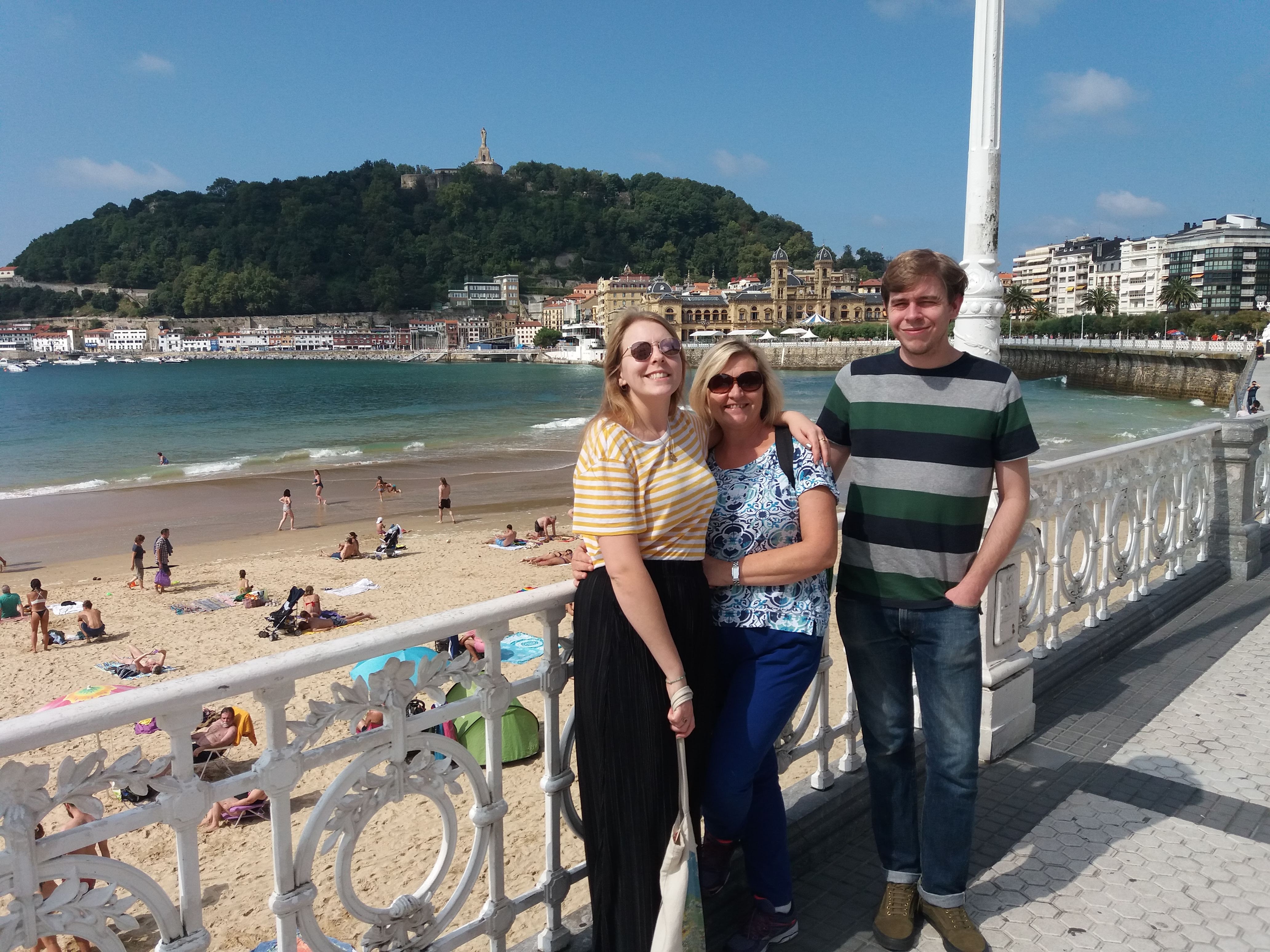
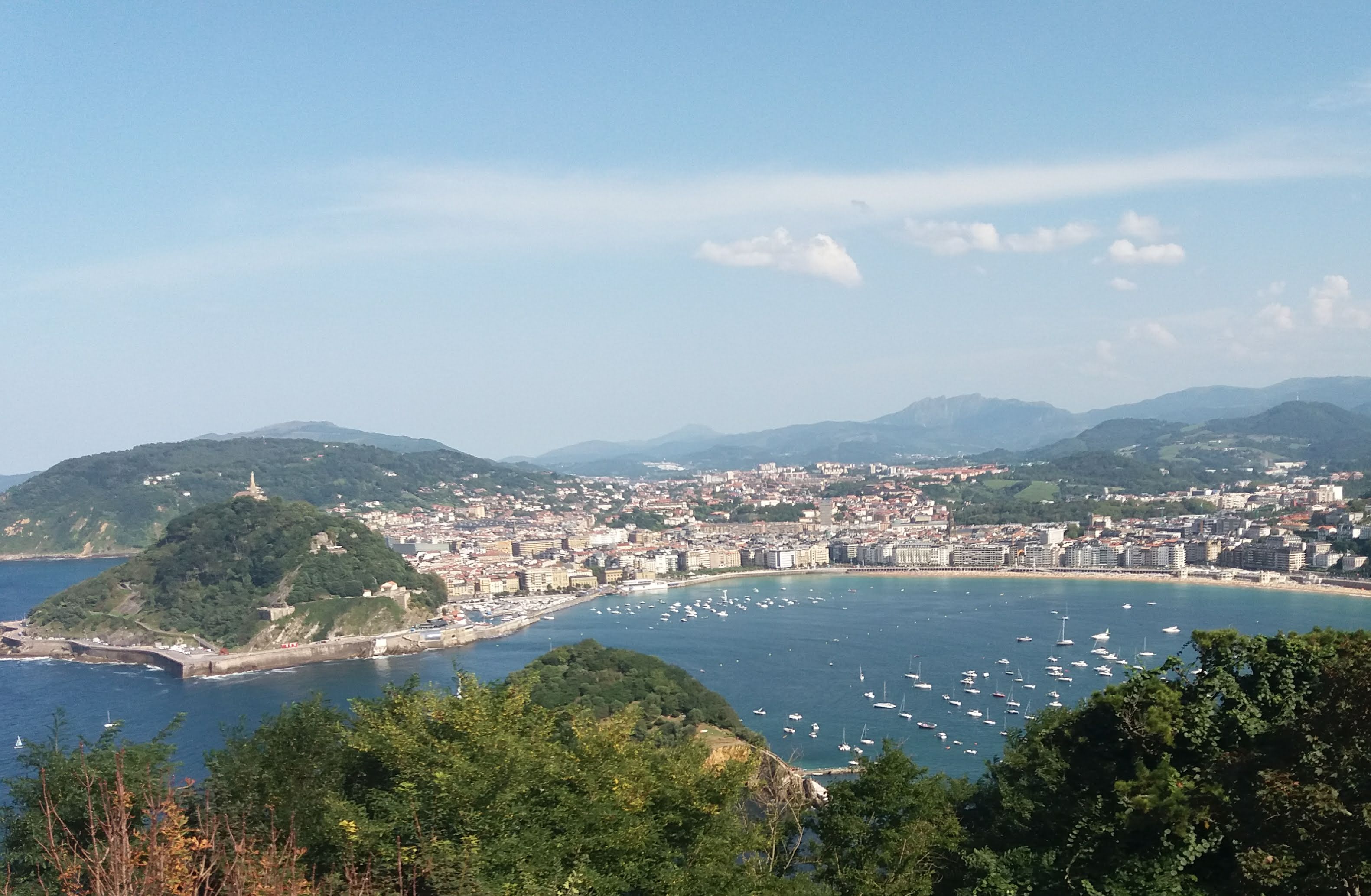
The view is hard to beat, Mount Igeldo on the left, Mt Urgull on the right, and Santa Clara island in the middle of the bay. On a sunny day, the beach is teeming with holidaymakers sunbathing and parading through the surf. It really is my favourite beach in the world, (although I have yet to go to Blackpool).
After loosening up at Narra, we strolled along the beach Tom the Old Town at the foot of Mt Urgull. It was originally much older, but in 1813 the Duke of Wellington with his British and Portuguese troops burnt it down after they took it from Spanish troops fighting for Napoleon. Now it is a grid of nineteenth-century buildings which are mostly pintxos bars. Pintxos (pronounce Pinchos) are Basque tapas, small food to have with your drink. Many of them are cold and come on slices of bread, others are hot and need heating up. They cost two or three Euros each and the bars are covered with them. You help yourself and the barman magically remembers what you have taken. The bars are very lively, but not places for heavy drinking like British pubs. The servings are much smaller, a glass of wine might only cost two and a half Euros, but is only about a hundred millilitres. The beer generally comes in small glasses for small prices, rarely in pints.
We visited four or five bars in the Old Town and ate numerous pintxos made with tortilla, chorizo, cod, ham, anchovies and other savoury delights. If you want a bigger portion your order raciones, which is a plateful of Serrano ham or Calamari. It really is foodie heaven, and if you prefer fine dining there are some superb restaurants.

Day 2 Thriller on Mount Igueldo

 timharnesstravels