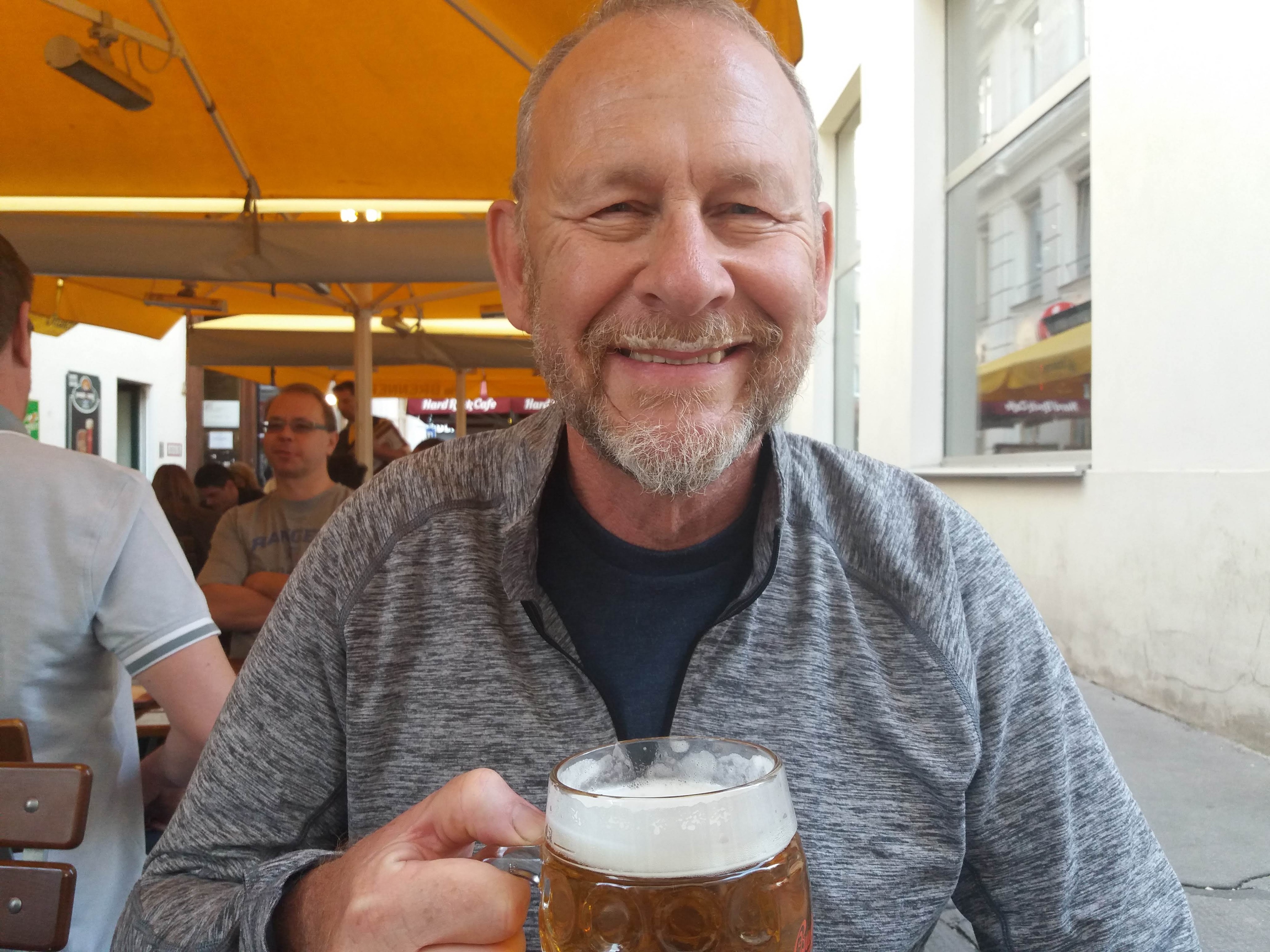
I have to come clean and admit that I am a weak person, I have bought a beer in Stockholm. All my online research told me that Stockholm is an expensive city, and beer is a particularly pricey. So I (foolishly) told Julie that I wouldn’t drink while we were in Sweden.
My resolve lasted about four hours, which isn’t quite the forty days in the desert that Jesus managed. But he had his dad to back him up, which must have helped.
My excuses are:
- The sun is shining
- I have done my statutory ten thousand steps
- The beers was only about three quid for 400ml and was crying out to be drunk
So if you want a reasonably price beer visit Cafe Sten Sture which is between the Storkyran Cathedral and Stortorget square in central Gamla Stan, the old town of Stockholm.
So I’m sat here sipping my reasonably priced beer while tapping away ineptly on my iPad mini.
Day 1
Getting to Stockholm
We flew with Norwegian Air from Gatwick in just over two hours, and the sun was shining when we arrived. Clearly the Almighty wanted us to visit Stockholm and offered up reasonably priced lager. Or it might have been the Devil, you decide.
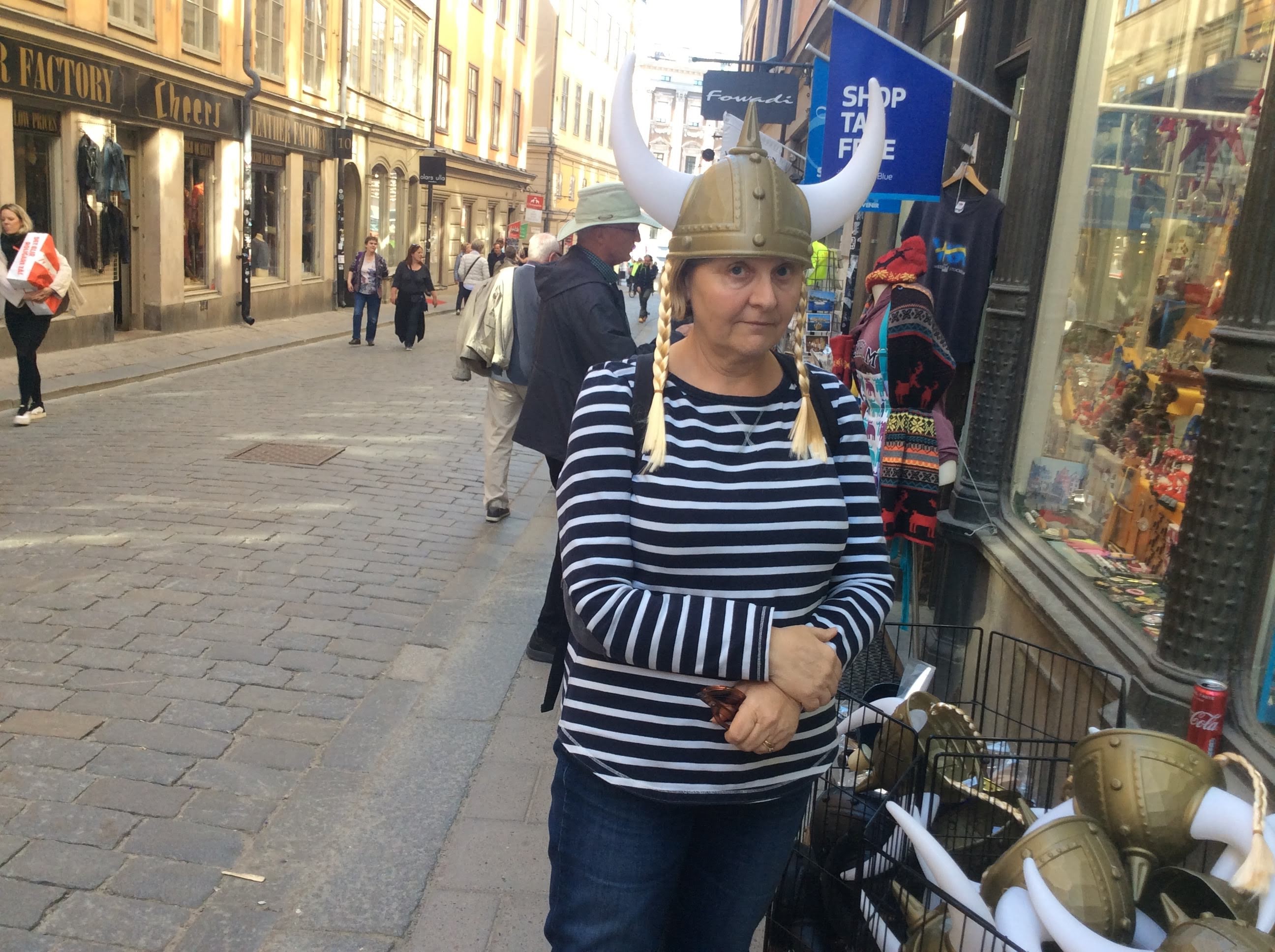
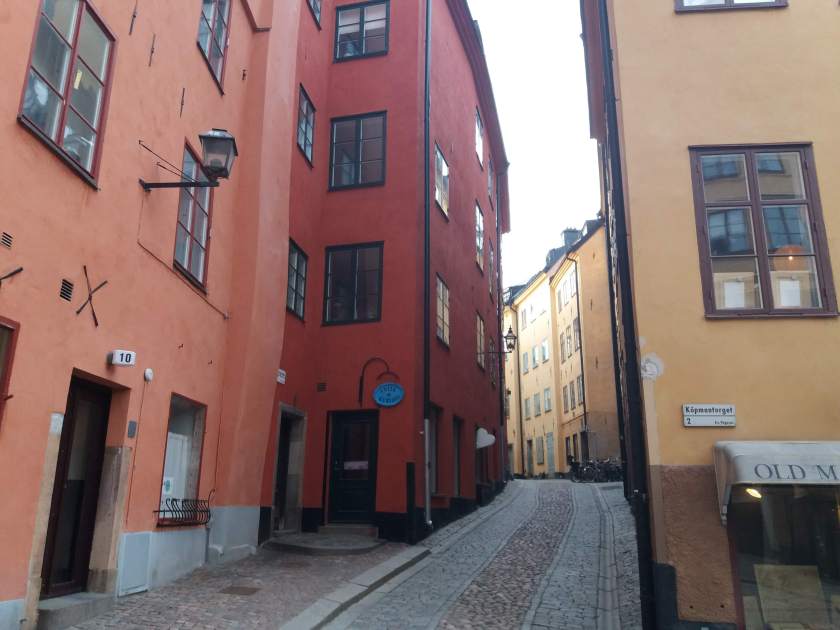
The Airport bus took us to the Central Station, where we locked up our luggage and walked to Gamla Stan. This is the medieval heart of Stockholm, on one of the many islands of this beautiful city. It has cobbled streets, tall ochre buildings, and is very neat and tidy. It’s also swarming with tourists, and has a plentiful supply of souvenir shops.
The Royal Palace is a monster of a place with over a thousand rooms, but it isn’t very beautiful on the outside. I have seen palaces in Madrid, London, Fontainbleau, Potsdam, Cintra, Krakow, Vienna and Hammersmith (Palais de Danse) and this wasn’t in the running for Palace of the Year.Sweden was going through an imperial phase when it was built in the eighteenth century and wanted to be seen as a Major Power. It had conquered many of its neighbours in the Baltic, and the Kings of Sweden (mostly called Gustav Adolphus) wanted a big palace like the French and Spanish. Eventually the Royal family have moved out to a smaller palace at Drottningholm, they couldn’t afford the gas bill in the old palace.

Away from the main streets, Gamla Stan is very pretty, with narrow cobbled streets pretty restaurants.
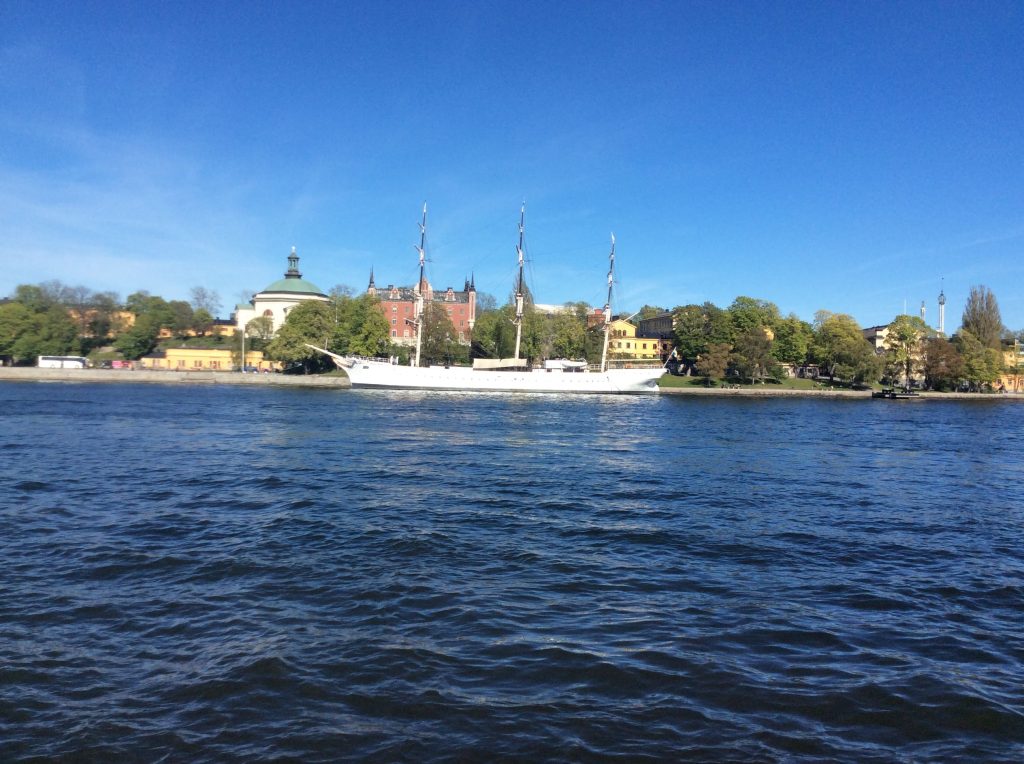
The weather was great so just strolling in the sunshine looking at ships in the harbours was a good way to spend time. Stockholm is a very watery place, with eighty bridges connecting different islands.

Our AirBnB was in Bjorkhagen, a suburb of mostly public housing a few miles out of the city centre on the metro. The house was in an estate of wooden homes in an “eco-village” built in the nineties. Our house keys were left under the doormat, so we let ourselves in and made a cup of tea.
Our host was Ufe, who was so hands-off, we never actually met him. At one time there were seven guests in the house, and the owner trusted us with all his stuff! The house was triple glazed and had a wood-chip boiler in the entrance hall, all very Swedish. Most of the breakfast food he supplied was from Lidl, very reassuringly familiar.

Day 2
Vasa Museum and Scansen
We took the metro to the central station called Central, and then a tram to Djurgarden to visit the Vasa Museum. It is probably the best maritime museum in the world, because it has a complete wooden warship on display.
In the seventeenth century Sweden was flexing its muscles in the Baltic, and needed a powerful navy to fight the Poland Lithuania Commonwealth. King Gustav Adolph ordered the construction of a new warship with sixty four guns, and asked a Dutch ship builder to lead the construction. He had never built a ship with two gun decks before, so just built the Vasa like one of the ships he had built, but with an extra gun deck. Big, big mistake.
On its maiden voyage in 1628 it sailed into the harbour, a gust of wind caught its sails, it heeled over and then the gun ports filled with water. In five minutes it was at the bottom of Stockholm harbour. Basically there wasn’t enough space at the bottom of the boat for ballast and the extra guns made it too heavy.

In 1961 it was raised from the harbour and spent seventeen years being soaked with poly ethylene glycol (PEG) to replace the water in its timbers and preserve it. It absorbed forty tons of PEG and shines like an oiled baby’s bum.
It was in such good nick I half expected to see Jack Sparrow to run around the decks being chased by ghosts.

The ship on display is ninety eight percent original timbers, which is amazing. The other displays give a very thorough insight into to building and sinking of the vessel. There is also a gallery dedicated to the many women who were involved in it, who are often overlooked.
There are even some sails which were found in lockers, and are now on display in giant picture frames
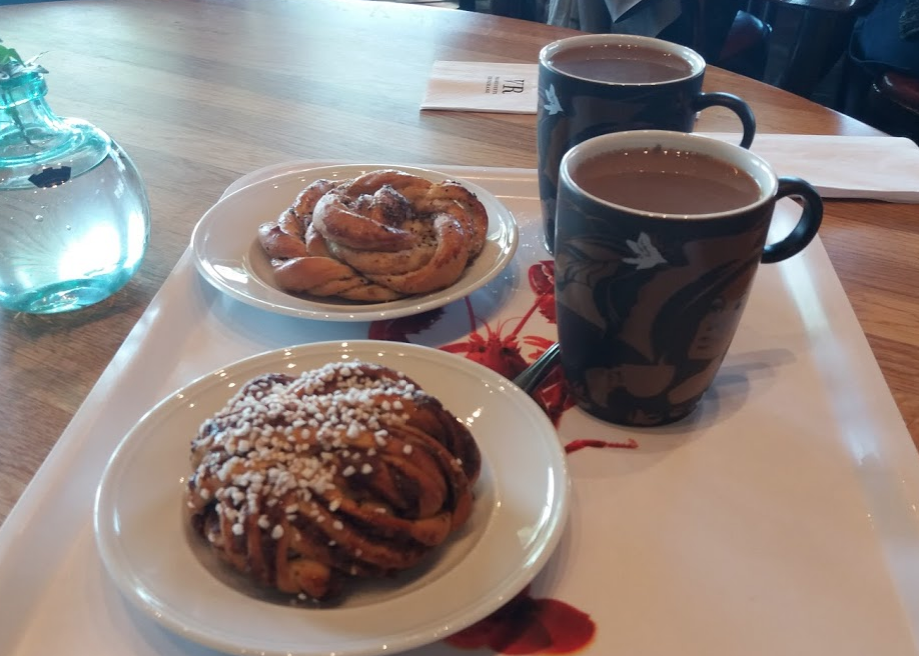
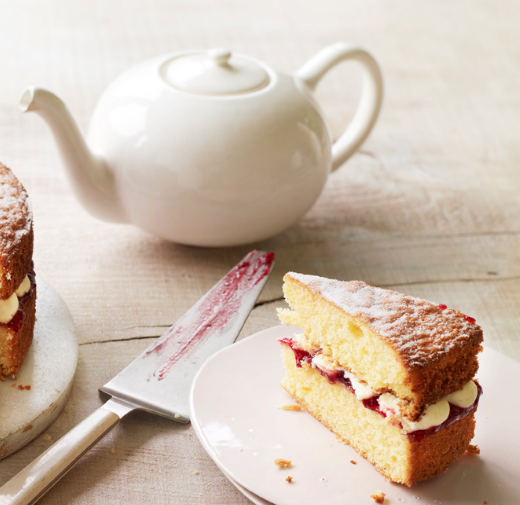
The Vasa Museet has an excellent cafe where we partook of fika. Fika is an institution in Sweden, and essentially it’s taking a break for coffee and a kanelbullar (cinnamon roll). The Swedes make a big deal out of it (like the Danes go on about Hygge) but it’s what us English have been doing in our own, understated way, for at least two hundred years at teatime with a slice of Victoria sponge.
I also bumped into Chris Coveney from the Skiff Club, who is on a three month tour of Scandinavia. The chances of him going to see the Vasa is quite high since it’s the most popular tourist attraction in Scandinavia. But being there on the same day at the same time is really lucky.
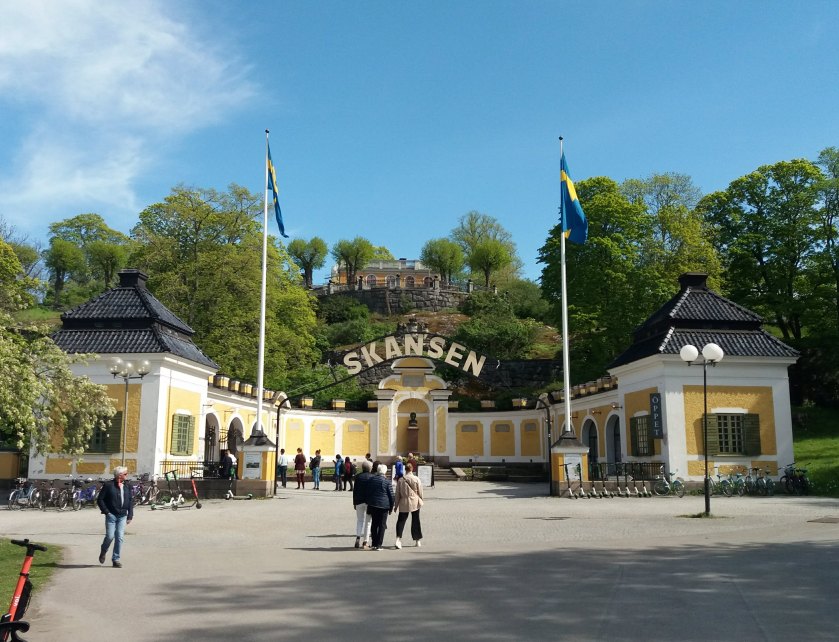
A short walk from the Vasa is Skansen, which is an open air museum with hundred of buildings brought from all over Sweden. On a sunny day it is a perfect place to visit. The old buildings are varied and attractive and some of them have guides acting’s as the original occupants. I spoke at length to a man pretending to be builder who moved to Chicago, but he hadn’t actually left Sweden yet, on his imaginary journey The site of Scansen is on a hill overlooking water in two directions, with great views of the harbour and Stockholm.
There is a small zoo with animals native to Sweden including wild boar, moose, bison and bears. The boars were not very wild, but I did see a bear eat an egg. It didn’t climb a tree it find a next, it just dug it out of the sand. I think it had been planted by the zoo keepers. Fake News!
In the Eagle Owl cage, there was a row on neatly lined up dead mice for their dinner. If you are a Vegan, don’t visit the zoo at Skansen

It was Norwegian Independence Day on that day, celebrating their split from Sweden in 1905. So there was a band playing in an outdoor auditorium, with an audience wearing Norwegian national costume. I didn’t join in with the singing of the national anthem.

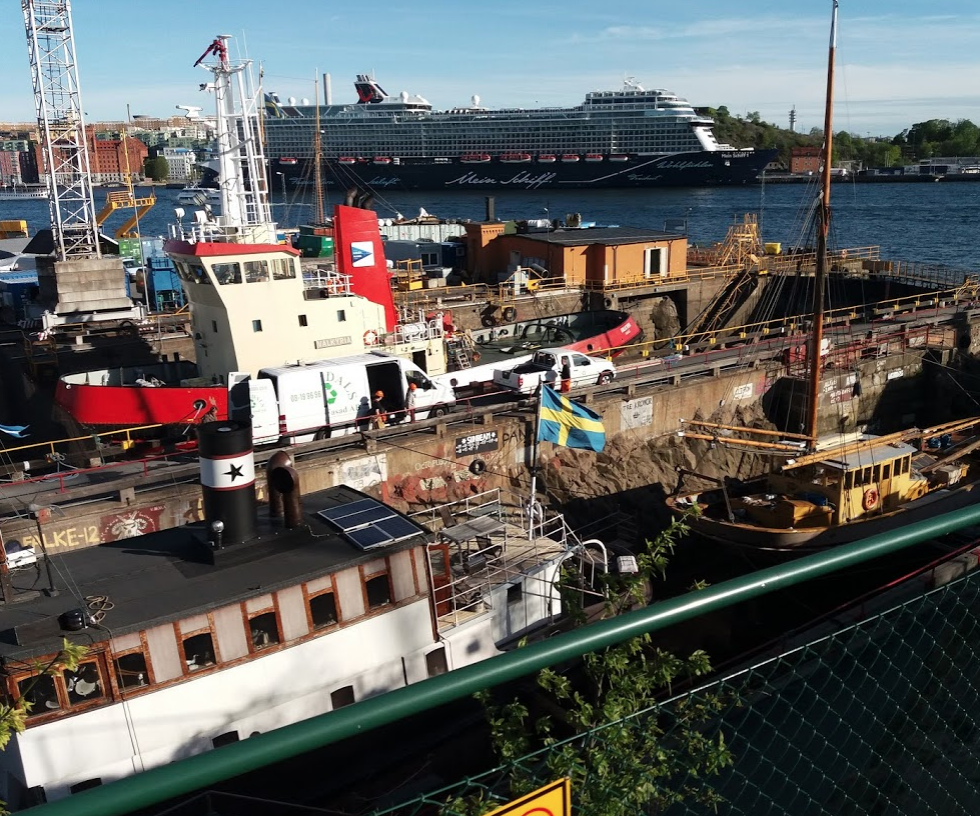
After leaving Skansen we had a look round the very pretty village of Djurgarden and the island of Beckholmen. It is a small island but has several dry docks for repairing ships. I love a good industrial site, especially with ships.
Beckholmen has a small hill which gives great views of the Gronen Fun Fair next door. Carriage loads of teenagers screamed as they clattered their way around the roller coasters or plummeted from great heights on plumetty things.
We took the No. 7 tram back to T Central station and then the metro to our stop at Bjorkhagen. Our dinner was purchased at the Coop near the house, a frozen lasagne with salad and some Sir Taste-A-Lot beer. The lasagne was not great, but it was substantial. The faux English lager was quite good, but I wouldn’t select it in the Sussex Arms in Twickenham.
Day 3
Stadshuset and Drottingholm
A short walk from T Central station is Stadshuset, Stockholm City Hall. It is a big brick building (eight million, I counted them) constructed in the twenties and thirties, but in an Italian Renaissance style. Unusually for that period, it is a beautiful building and a big tourist draw. You couldn’t say that for London’s City Hall.
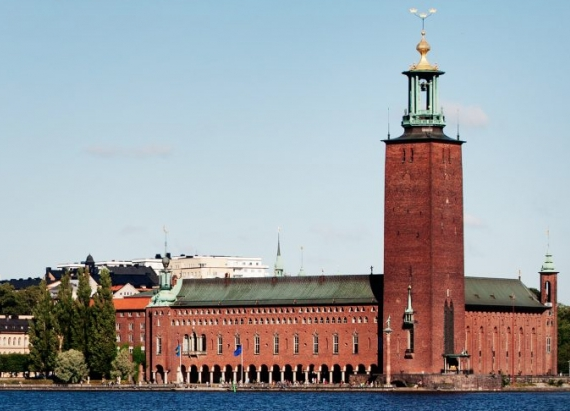
The tour of Stadshuset takes about forty five minutes (120 SEK each) and it is mostly three huge rooms. The Blue Hall is a huge dining room that is the venue for the Nobel Prize dinner, where the King of Sweden invites twelve hundred of his closest friends for dinner. The architect originally wanted to paint it blue but changed his mind, so it is still faced with red bricks.
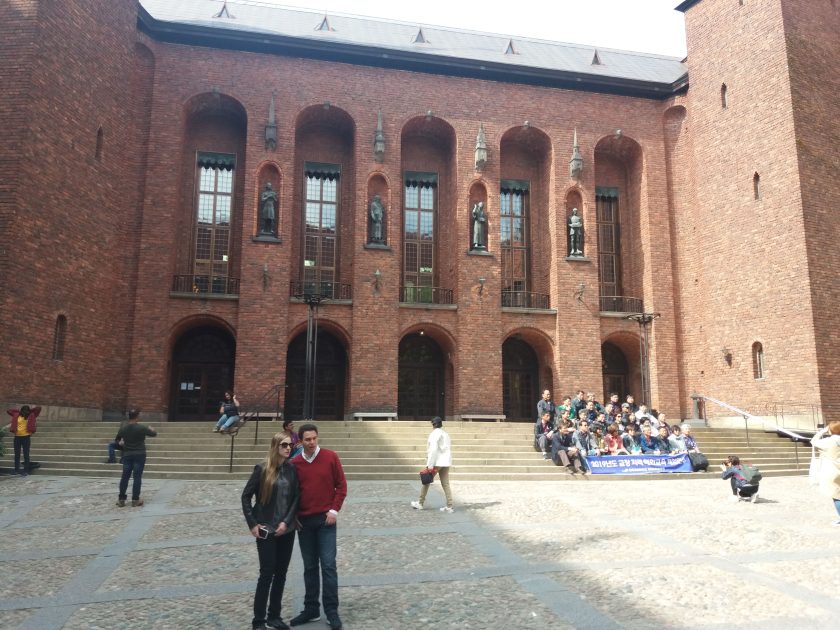
The council chamber is where the two hundred members of the city council meet, and isn’t that interesting. But I did learn that on average sixty couples a day get married in the city hall. It’s free for any Swedes, foreigners can marry for about fifty dollars. A long ceremony takes about two minutes, and a short ceremony takes forty seconds.
The highlight of the tour is the Golden Hall. It is another grand function room, which has walls entirely clad with golden mosaics. It is as beautiful as a Byzantine cathedral, the mosaics have ten kilos of pure gold in them, encased in glass. It was all designed by one young artist who had just two years to install it, and he did a fantastic job.

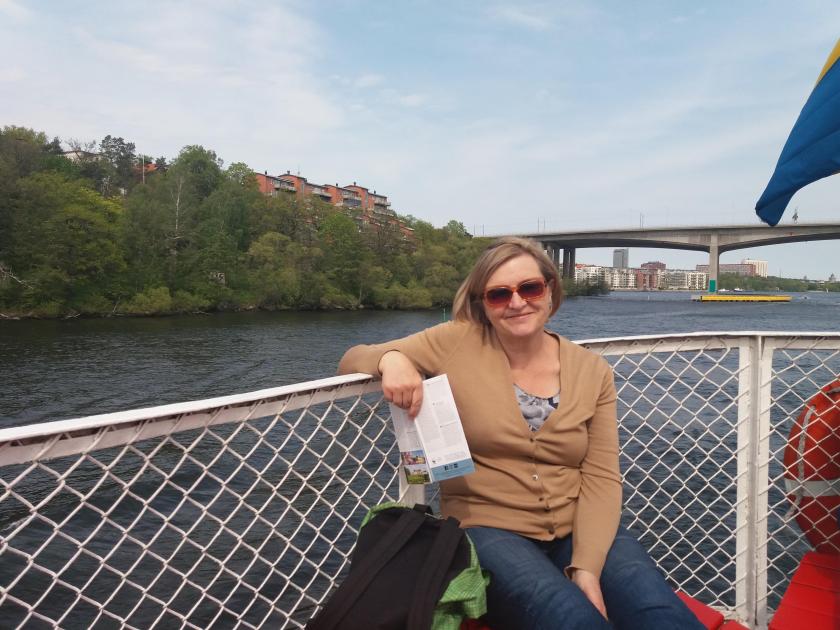
Stockholm is built on islands, and there are ferries and steamers operating on many different routes. One of the most popular routes is from just outside of the Statshuset to Drottningholm Palace on Lake Malaren. The steamer the Prince Karl Philip is probably over a hundred years old, and is looks like the Yarmouth Belle that runs between Kingston and Hampton Court.
The sun was out, and we sat on the rear deck and watched all the lovely riverside homes got by.
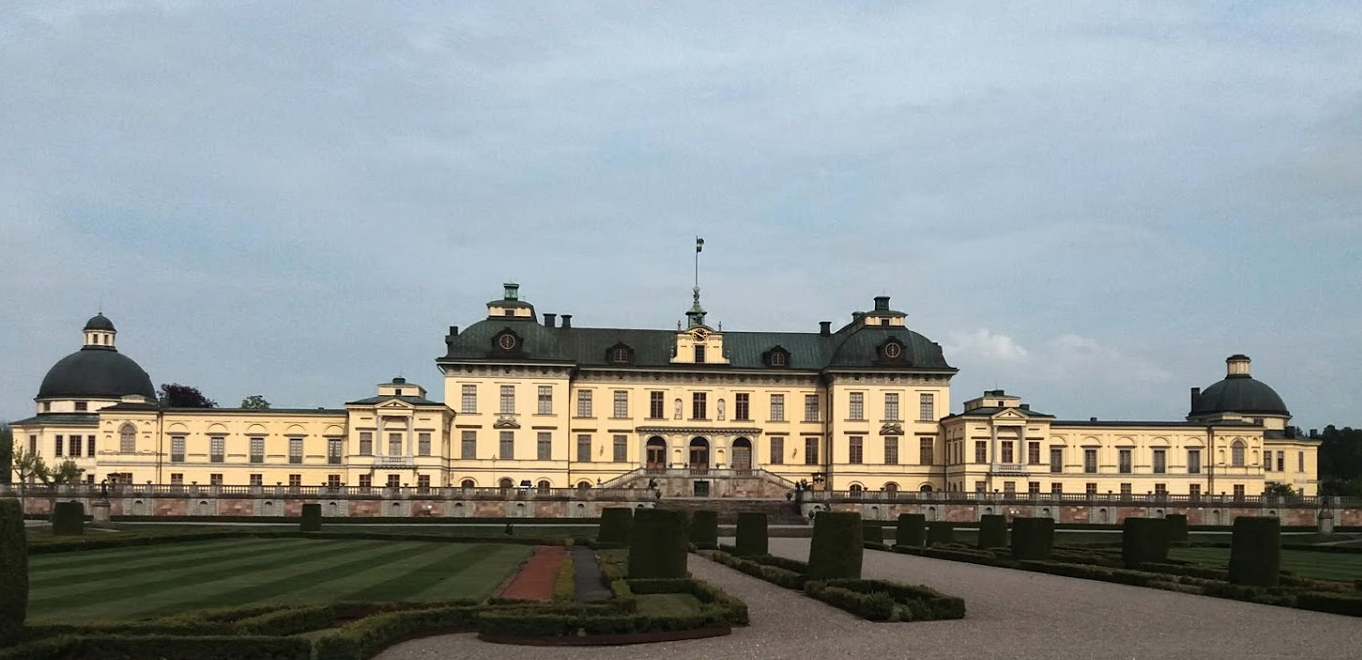
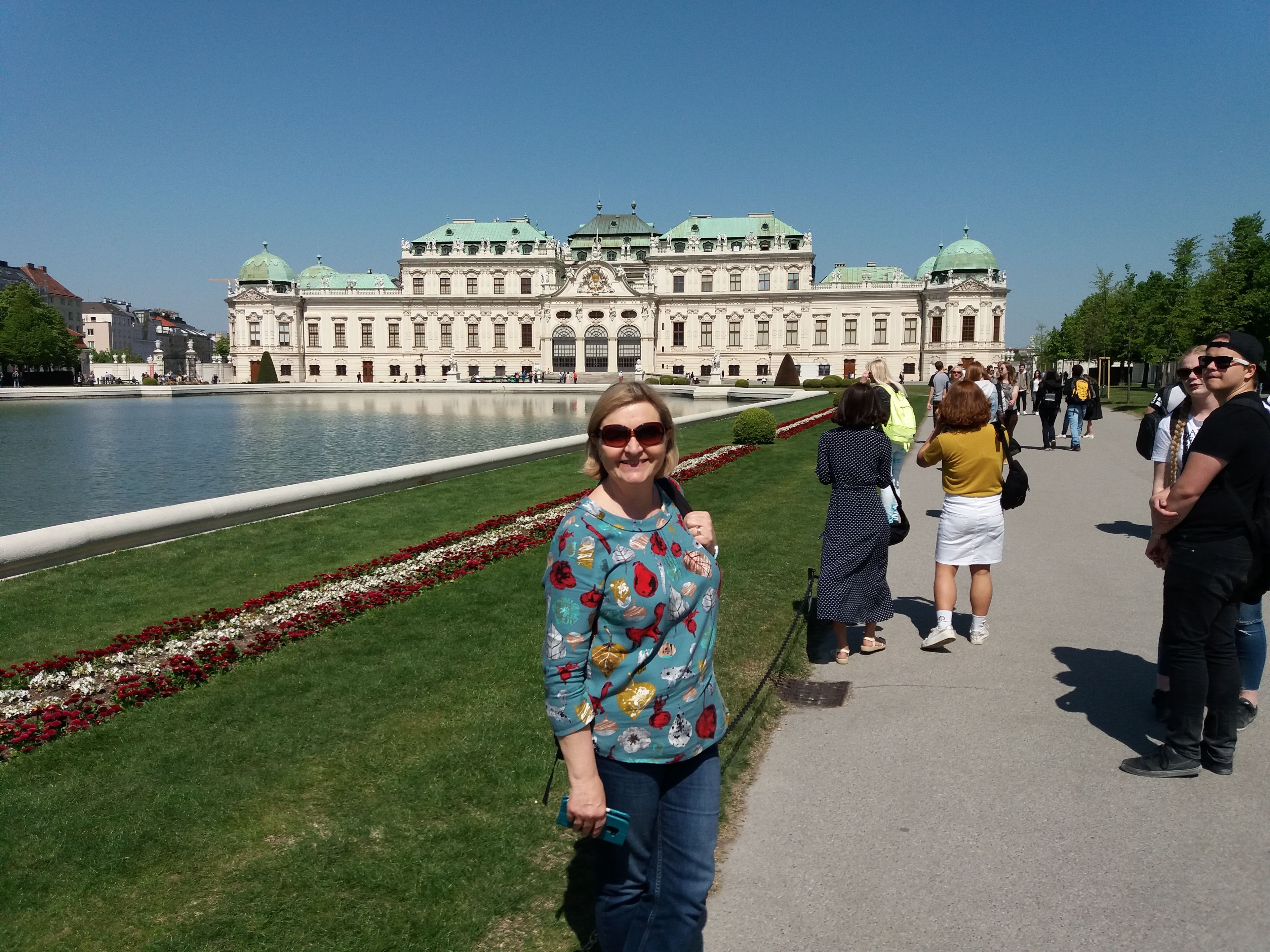
Drottningholm is an eighteenth century baroque palace where the Royal Family still live. As you know I have been to many palaces all over Europe. Since we have recently visited two palaces recently in Vienna, we didn’t want to repeat the experience in Stockholm. Yes, Palace burn-out is a real thing.
But outside of the palace There is an excellent cafe where we stopped for Fika, and I bumped into Chris Coveney once again! To be fair, there are a limited number of big tourist sites in Stockholm.

The palace (slot in Swedish) has formal gardens like at Schonbrun in Vienna, but also English style parkland with lakes.
Within the grounds there is a guards huts that looks like a Turkish tent, and a “Chinese” Pavilion. The architect probably got all his ideas about China from the designs on a Typhoo packet
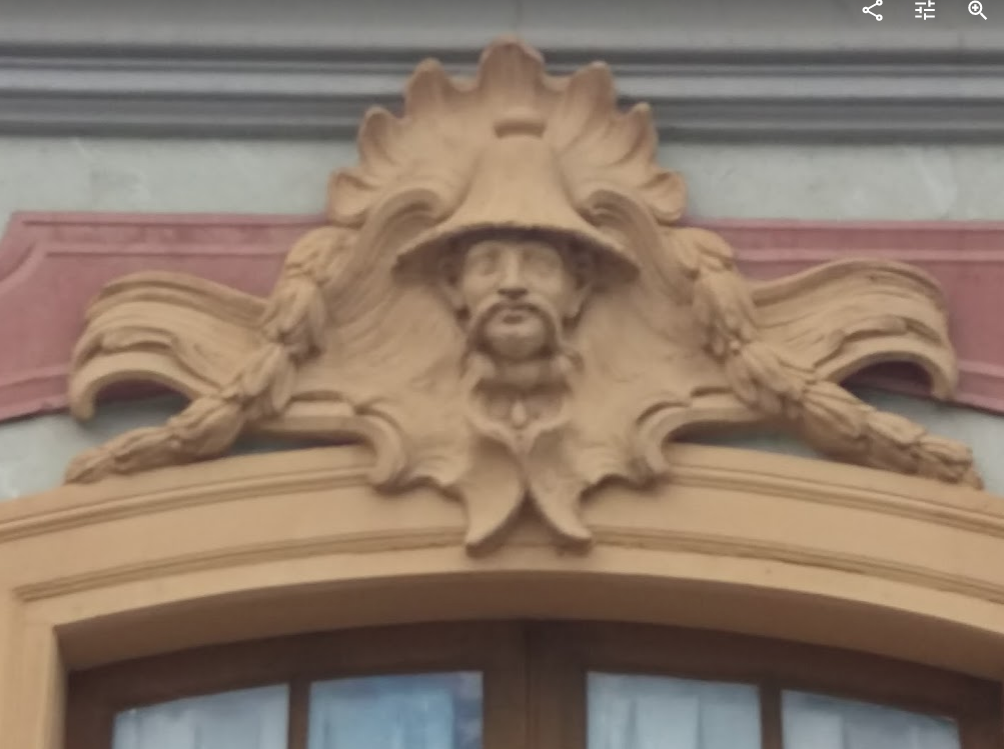
Returning to the city centre we did some more exploring in Gamla Stan. The main streets are full of souvenir shops and restaurants, but turn a corner and there are some delightful old streets in ochre colours. The old city is quite small, so one can wander around it and not be too far from a metro station.
Day 4
It had to rain sometime..
Our last day in Stockholm and the weather is gloomy, definitely a museum day and not a boat trip day. Another of the cultural attractions on Djurgarden is the Nordisk Museet (Nordic Museum). It is housed in a huge Victorian building which looks like one of the museums in South Kensington. Inside is an enormous hall which is mostly empty. It cries out for a punk concert (the Stranglers would be good) or at least a badminton tournament. Surrounding the hall are galleries containing the exhibits on three levels. The content is similar to the V&A, costumes, household stuff, pictures and decorative items.

To be honest it wasn’t really my thing, old Swedish wedding crowns and amber necklaces don’t interest me very much. Julie was mildly excited when she saw a cardigan on display just like the one she was wearing. But it was dry inside and there were plenty of signs to read.
It was drizzling when we came out, so we got the brollies up and walked along the waterside towards the Rosendal Slott. It wasn’t much of a slott more of a big pink house, and it was shut anyway.
On the way we passed a remarkably pretty statue of a girl which made a very pleasant change to the usual old men that get sculpted. Officially it is the The Lady Working For Peace In The World. I think she had better get a wiggle on, we need her services right now.

We followed everyone else walking with umbrellas and they took us to Rosedals Tragard, which is a posh garden centre with a cafe. It really reminded me of Petersham Nurseries near Richmond, with expensive plants on sale and a cafe in a greenhouse. It was a pleasant place to have a cuppa, and watch the Stockholm middle classes enjoy an open sandwich and a sticky bun.

Everyone speaks English in Sweden, I heard it spoken almost as much as I heard Swedish. Disappointingly no one was walking around in blue satin jumpsuits with trousers tucked into their boots, I guess things have changed since Waterloo (the song, not the battle).
The lowlight of our day was a meal in the food court of a shopping centre in Norrmalm, the modern shopping district. I chose a meal that looked like a yummy steak and chicken combo for a very reasonable 120 Krona. It turned out to be two varieties of boot leather served with vomit flavoured mayonnaise. It was like the worst Wetherspoons meal you have eaten that had been left in the oven for an hour. My stomach my never forgive me.
We returned to Bjorkhagen and went for a walk in the woods to try and find the lake that our host Ufe mentioned. It was about twenty five minutes walk away and was worth the effort. It looks like a Cumbrian lake, surrounded by pine trees, and was dead calm. At a small beach there were two hardy bathers enjoying the clear, but no doubt cold, waters. There were also a few mozzies buzzing around, so we’re didn’t linger for long, they love the taste of Julie.

Our AirBnB Ufe host never did make an appearance. While we stayed in the house there were eleven different guests, all of whom could have cleared out his collection of dull Swedish books and Lidl meusli. It does show that the system works on trust, and works very well.
You may notice very little reference to eating or drinking in restaurants in Stockholm. We were being careful with our money/stingy, so didn’t eat out. All the restaurants served meatballs, you could get about eight with some mash and gravy for about fifteen quid. I know what meatballs taste like, and it isn’t worth it.
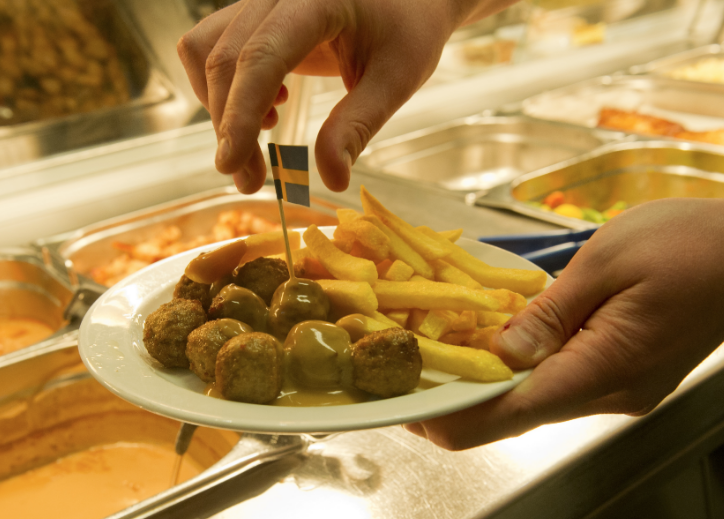
So when we returned home we visited Ikea and had fifteen meatballs, yes FIFTEEN, with chips and gravy for six quid. I love a bargain!
Stockholm was the first place I had ever been to where I didn’t spend any cash at all. We spent everything on the trusty Monzo debit card.
Remember having to find a bank where you could change Travellers Cheques, God, that was a pain in the arse!









 timharnesstravels