Day 2 Tuesday 5/3/24
We had a very languorous start to the day, mostly doing Sweet FA until about 11.30. We then ambled south along Calle Triana (Calle is pronounced Cayeh in Gran Canaria) and explored a few more of the side streets. There are some very beautiful old houses with wooden balconies, typical of the Canaries.

We crossed Calle Fuente to reach Vagueta, a major road that was once a river until the 20th century. The area we are staying in is called Triana which is 16th and 17th century, Vagueta is the original part of Las Palmas which was founded in 1473 by Castillian Juan Rejon. The Spanish fought the local people for five years before they were conquered by their better armed opponents. Guns, Germs and Steel win every time.
In Vaqueta we met Maria, a local guide who took us around the old town centre. She was an excellent guide and spoke ten to the dozen in a strong Spanish accent that I had to tune into. She loved the area and was enthused about the gorgeous old buildings. One of the first we saw was a little church where Christopher Columbus once prayed while one of his ships was being fixed on his first trip to China (that’s what he thought).
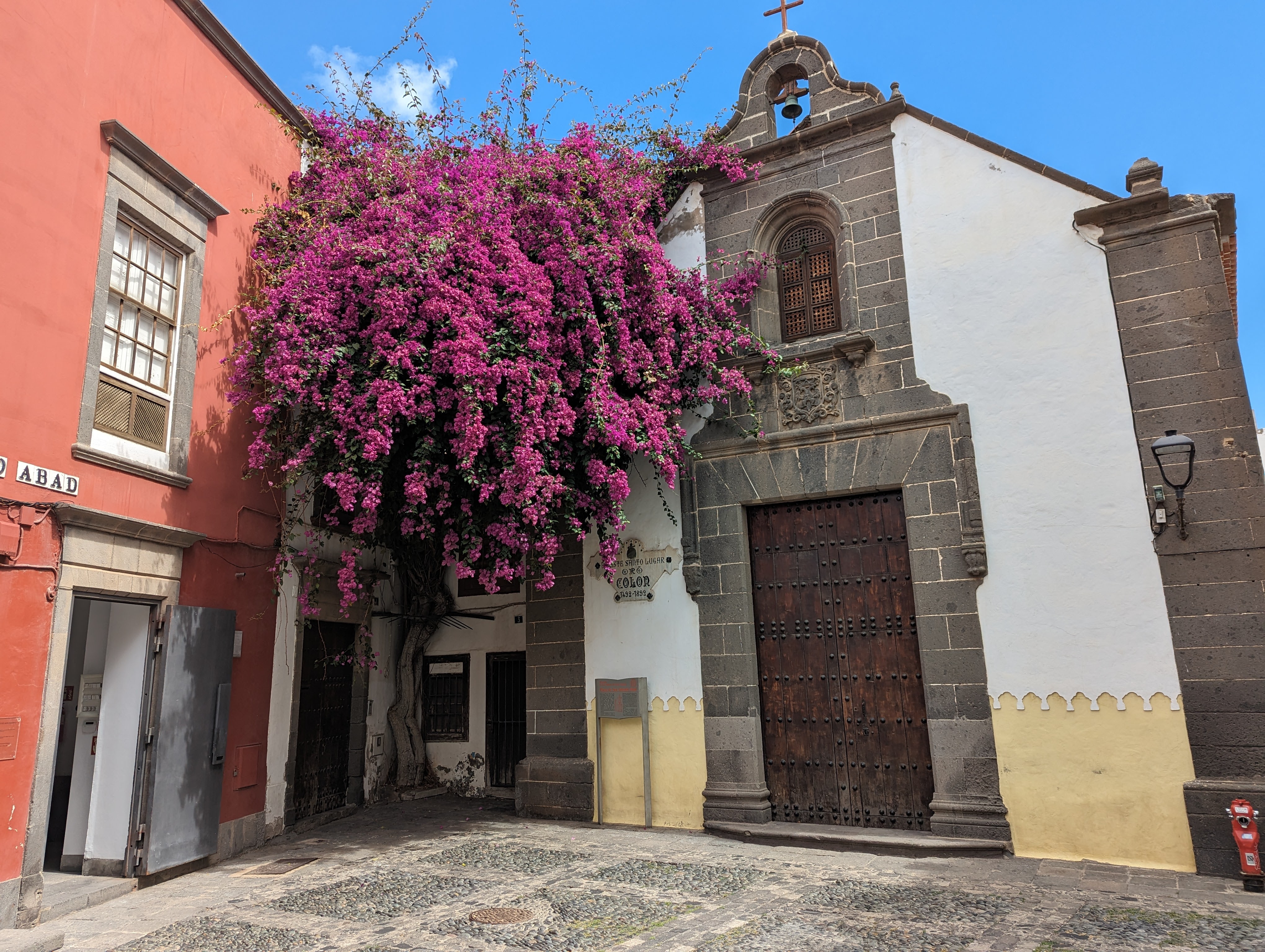
Next to the little church are some palm trees, not the original Las Palmas, but close to where they grew. Vagueta (which means a small piece of fertile ground) has several lovely museums and lots of cafes offering tempting pastries and cocktails (later in the day). Maria told us that Francis Drake had a go at Las Palmas in his usual piratical way, followed later by the Dutch having a pop. Gran Canaria is a very desirable location between Europe, Africa and America. The Canarians built narrow streets with tight corners, so they could pick off any invaders one by one.
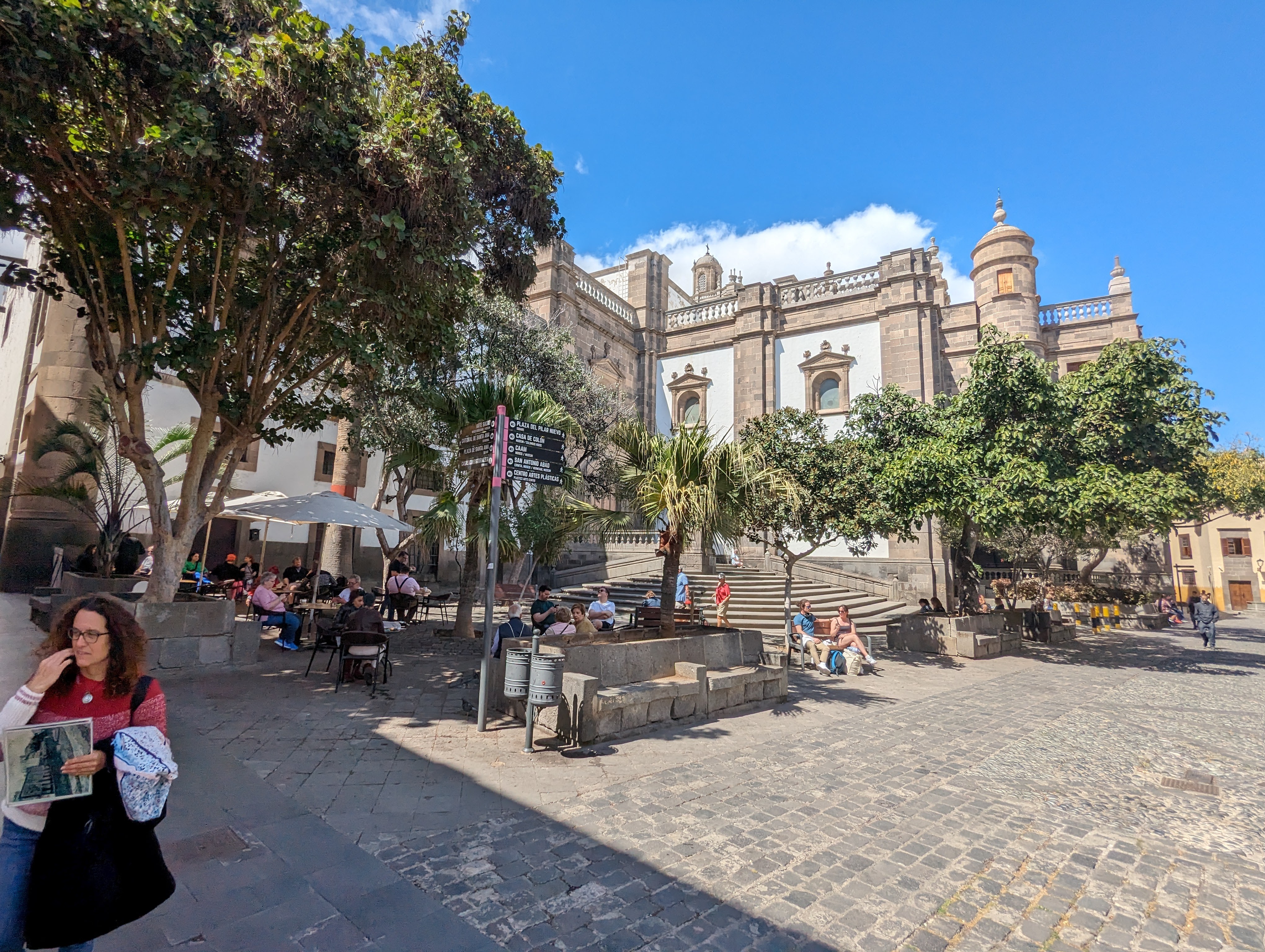
The grandest building is the Cathedral of Santa Ana. Apparently Saint Anne was Jesus’s grandmother, and his grandfather was called Joaquin, like Phoenix. Who knew that?
This picture is the back of Santa Ana, with Maria in the corner.
There’s a fantastic market in Vagueta selling local food. Pushing the culinary boat out we invested in some Iberico ham. The pigs are fed only on acorns, and it costs 20 Euros for 100g, that’s 200 Euros a Kilo my friends. Fuck it, we’re on holiday! To go with it, we got some spelt bread, and ate it at lunch in the flat. Needless to say, it was bloody delicious.
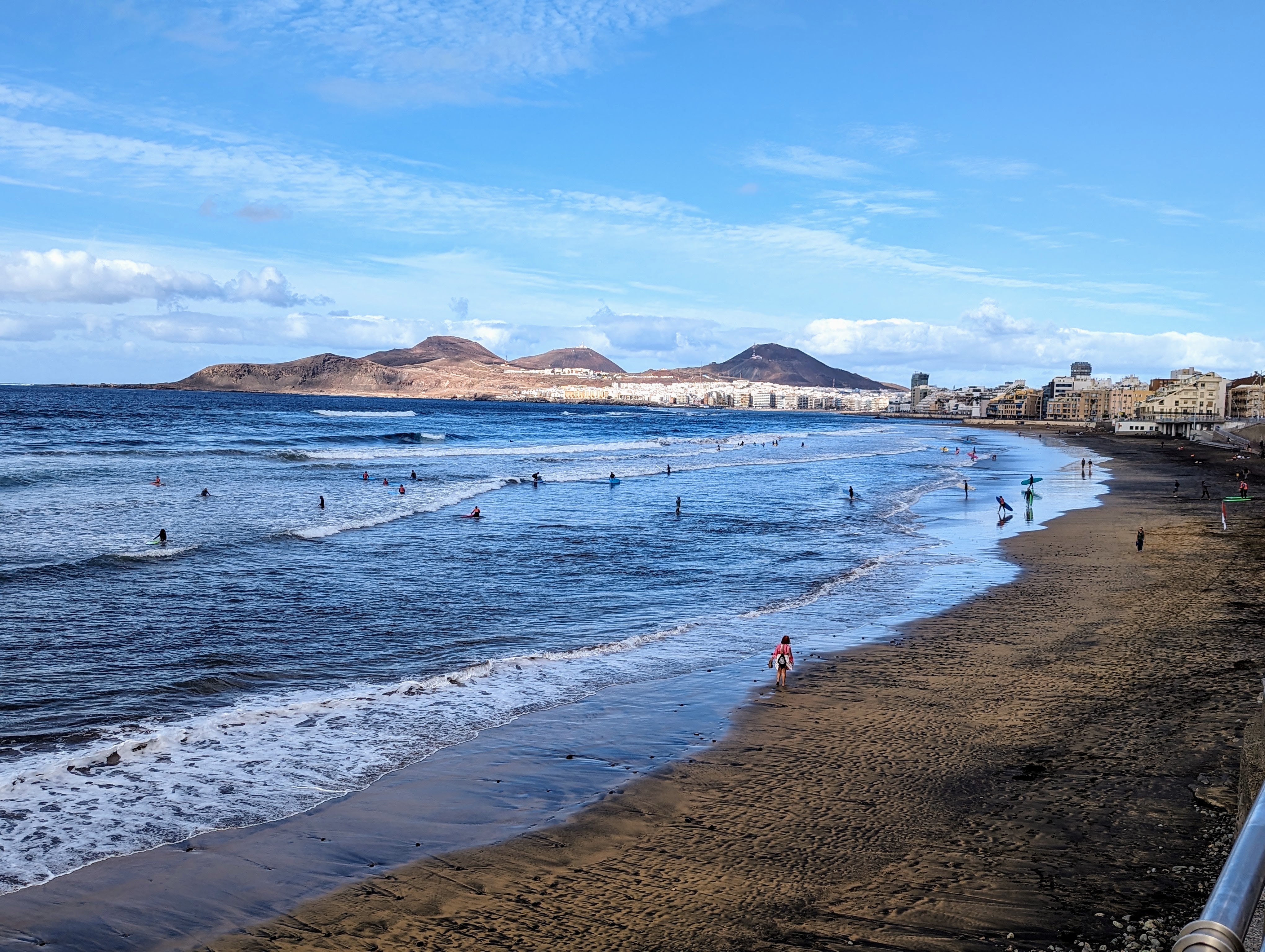
After lunch we got the 17 bus to Canteras beach. Las Palmas is a very big city, and the north of is shaped like a lollipop. There is a big peninsular sticking out at the northern end, which is made up of old volcanoes. This area is called Isleta, and is connected to the rest of the city by an isthmus. Dear reader this is the first time I have ever used the word Isthmus, and I’m proud of it. On the western side of the isthmus is a beautiful beach called Canteras, allegedly the best urban beach in Europe.
Its very popular with surfers, most of whom are enthusiastic but crap at surfing. But its a lovely place to hang out in the afternoon sunshine.
Isleta is the lumpy bit at the end of the beach.
Las Palmas is a lovely place, and I’m looking forward to exploring it more. It’s wine time for me now.
Day 3 – Into the Mountains and Down to the Dunes

 timharnesstravels