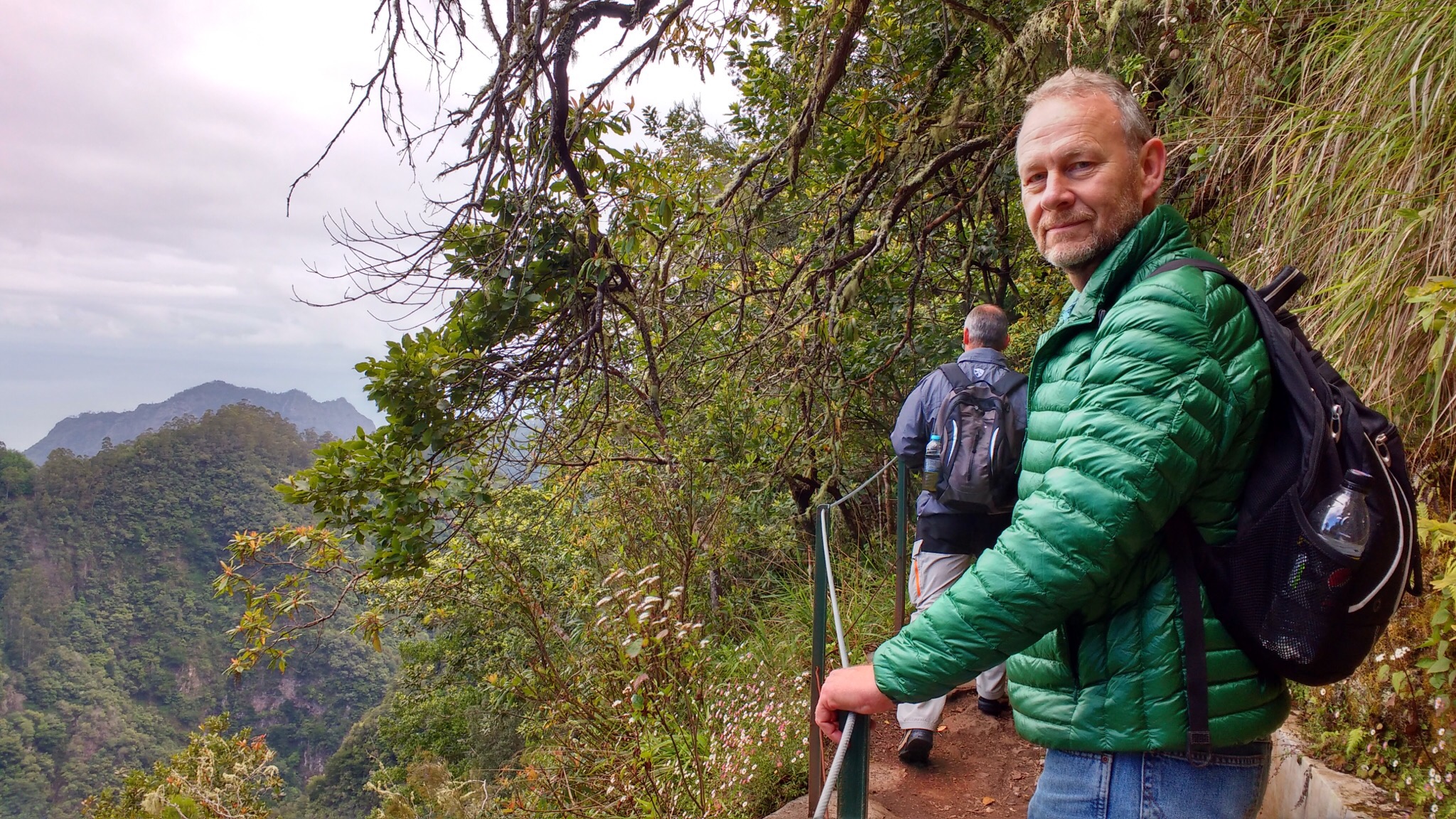
Scotland Day 3 – I’ll take the high road

It was pissing down when we left Glasgow this morning. When I awoke I looked out of the window and saw people in coats with brollys, a very reliable indicator of rain. We got a cab to Europcar and collected our new Corsa. Julie drove and I navigated, using a combination of an Aldi road atlas and Google Maps. Our destination was a tiny place caller Duror, half way between Oban and Fort William. It too me a while to work out the best route to get there because the Argyle coast is very complicated. It looks like a normal county that has been torn to pieces and then thrown up into the air to land randomly. The region to the north west of Glasgow is all lochs, islands and peninsulas with a few small towns.

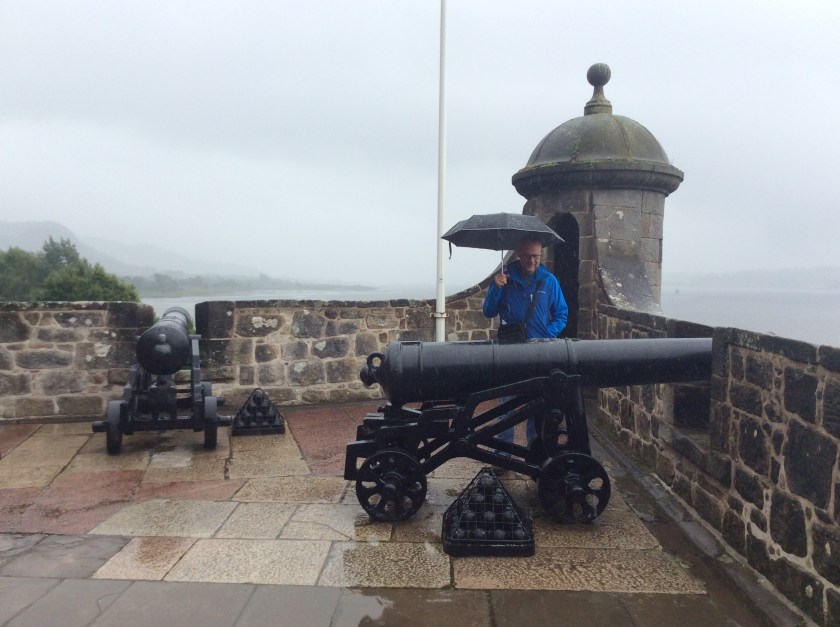
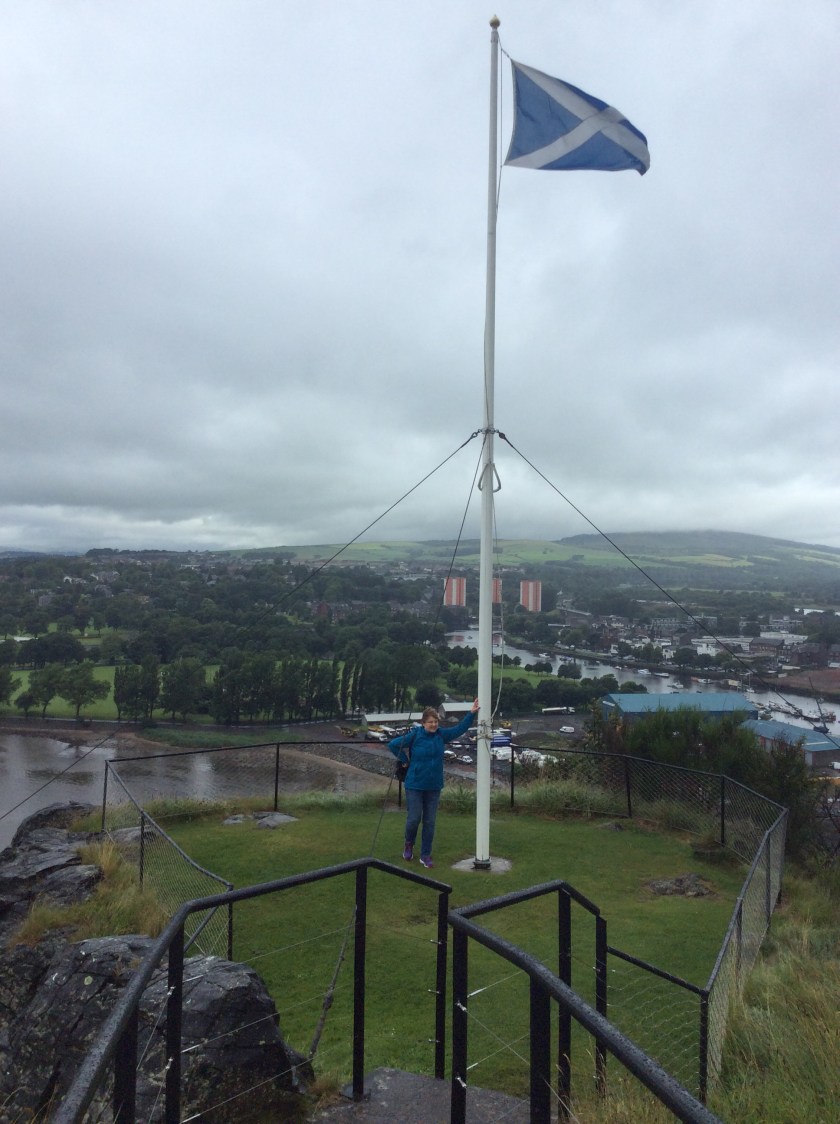
Leaving Glasgow along the M8 we crossed the Erskine Bridge (an impressive cable-stayed construction) and had a look at Dumbarton. Julie's brother Ian had lent us his Scottish National Trust cards, so we went to see Dumbarton Castle. It sits on a tall volcanic plug, like Arthur's Seat in Edinburgh, and has been a fort for fifteen hundred years. It's a steep climb up to the top, but the views over the Clyde and Dumbarton make it very worthwhile. The rain stopped and Scotland turned from monotone to colour once again, as though BBC 2 had just been switched on in 1965
The A82 took us up the side of Loch Lomond, the biggest freshwater lake in Britain. We stopped briefly at Luss, which is a small tourist trap village with a big coach park. At Tarbet we turned eat along the A83, and the landscape became much more mountainous and interesting. Basically it looked just like the Shortbread tins, we even saw some shaggy cows with big horns. The road took us all the way down Loch Fyne, which is an actual loch and not a made up place for selling fish. The sun shone and Scotland looked as it does in guide books, which is what we had come for. The road was very good, and Julie enjoyed the driving while I looked out of the window, an excellent division of labour.
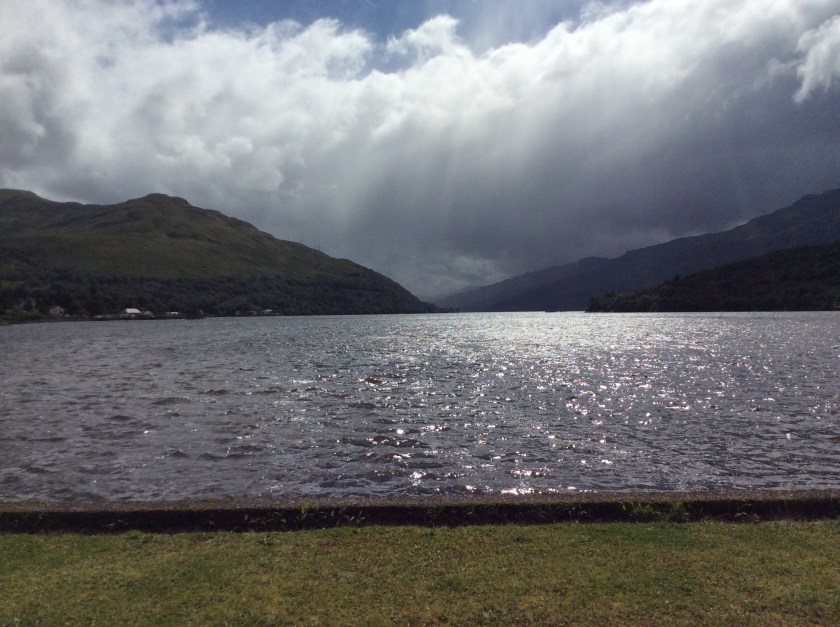
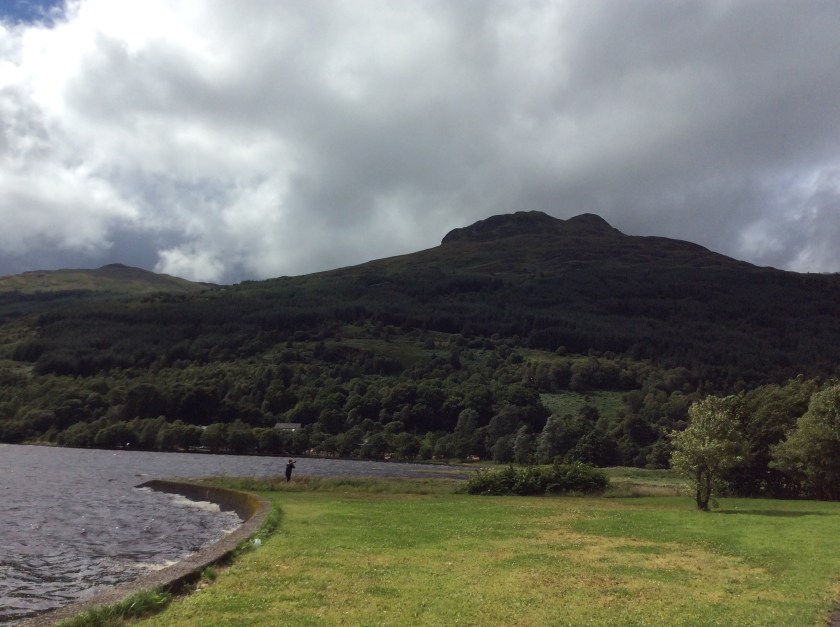
All the villages have unusual names, many of them unpronounceable for a soft Southerner. My favourite was Lochgilphead, which was at the head of Loch Gilph, From there we headed north up the A812 to Oban, which is a small town but a major transport hub for the region. Being in a fishing port, a fishy dinner beckoned, and we chose the Fishouse restaurant. The food was superb, I had haddock chowder to start and seafood pasta as my main. Both were creamy with lots of tasty fish, I would highly recommend it!
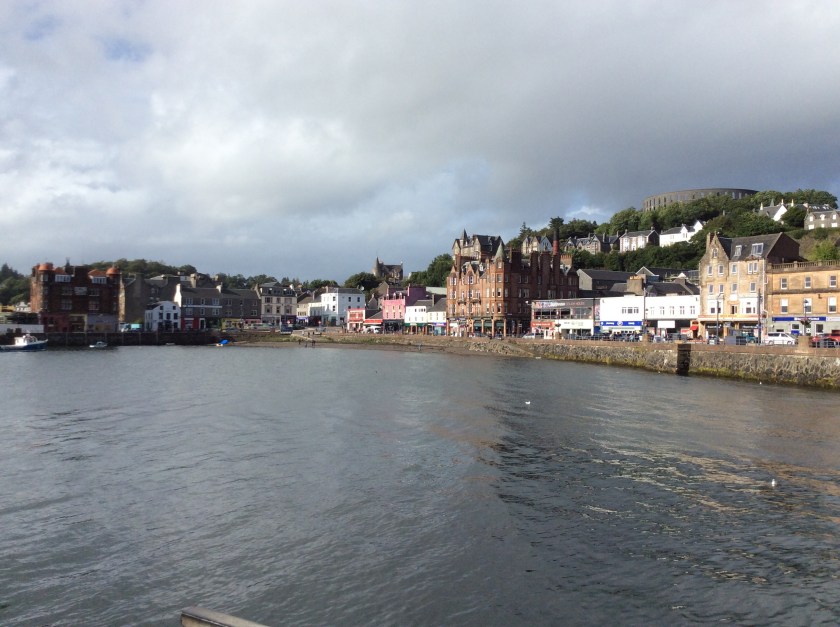
From Oban it was just half an hour north up the coast to our next AirBnB in Duror, Tigh Bahn. Our room is about a quarter of the size of the last one, but is cozy and very colourful. We have smuggled in some excellent Merlot from Morrisons in Dumbarton, the perfect accompaniment to blogging.

Scotland Day 2 – Culture Day

Glasgow is a big city with a lot to offer. On our first (and only) full day we hunted down Culture, grabbed it with both hands and gave it a big fat kiss.
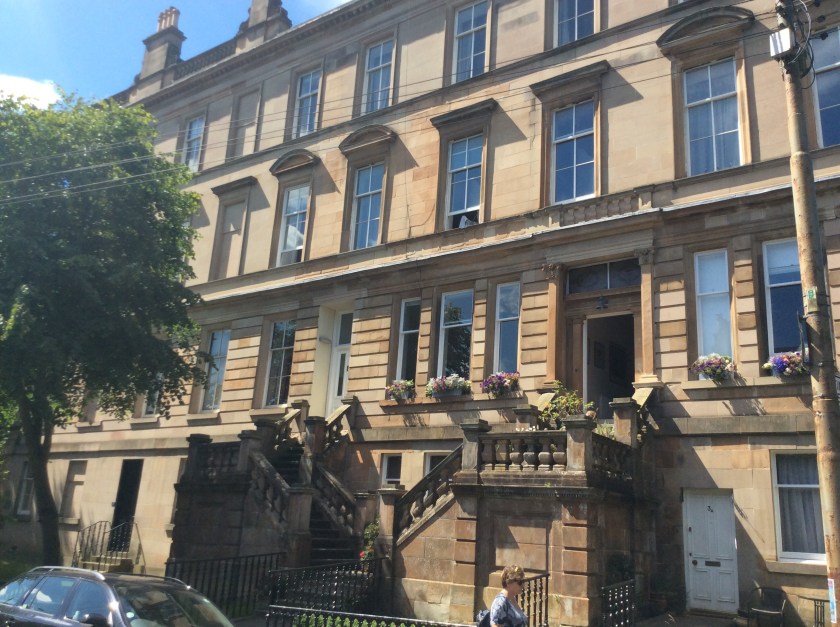
Our accommodation is in the West End of Glasgow, the hip area close to the University, which was established in 1451. A short walk through streets of beautiful Victorian tenements is the Hunterian Museum. Within the museum is the former home of Charles Rennie Mackintosh – sort of. The actual house was demolished in the sixties because it was subsiding into old mine workings. So the complete interior was stripped out and put into a rather nasty looking concrete extension to the Hunterian art gallery. Admission is by a guided tour from the gallery. Our guide was enthusiastic and engaging, and told us in some detail about the three rooms which make up this reproduction house. Mackintosh was a designer, architect and artist who did his best work at the end of the 19th century. He is to Glasgow what Gaudi is to Barcelona and Frank Lloyd Wright is to Chicago, a pioneering modernist who is still very relevant today.

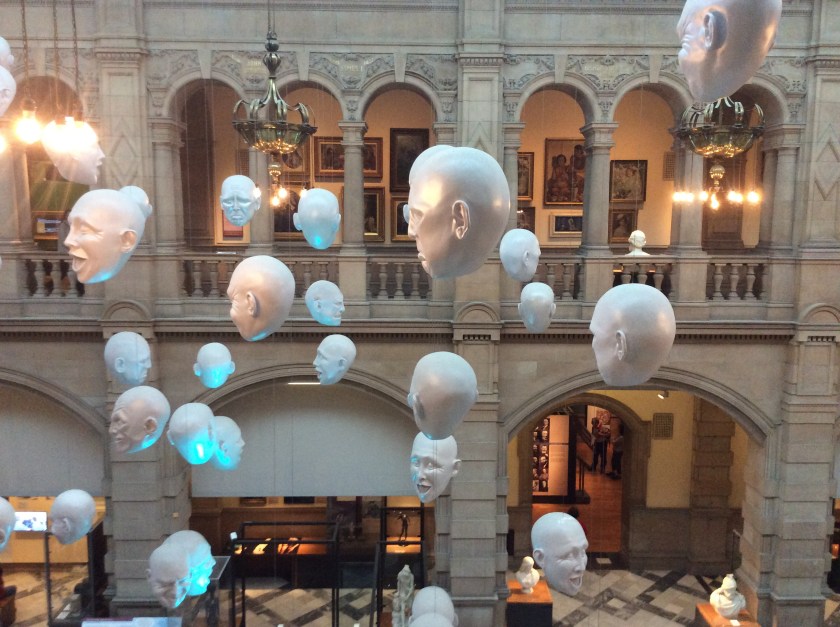
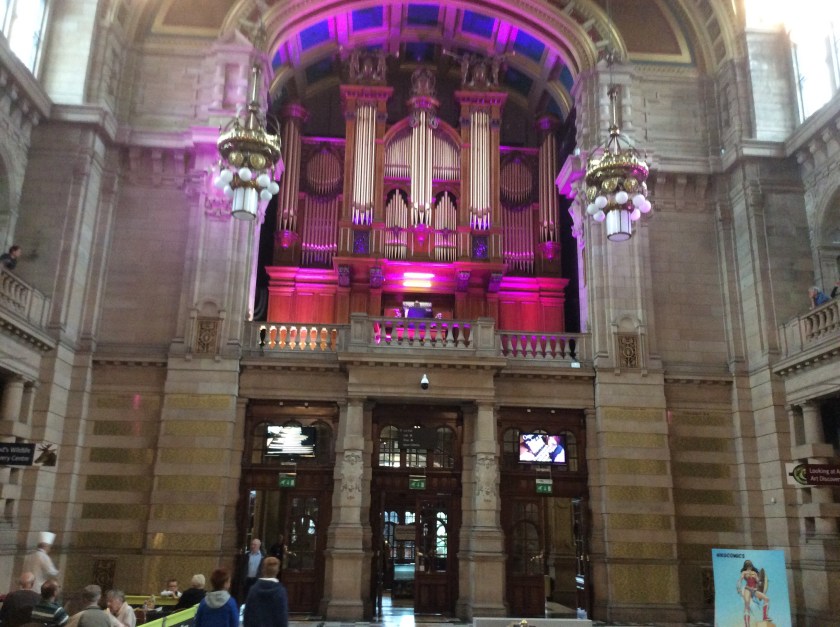
Half a mile down the hill is Kelvingrove Museum, a magnificent palace of Victorian Gothic and a fabulous place to visit. The building is reminiscent of the V&A and the Natural History Museum, a huge an beautiful exhibition of art, taxidermy and with bizarre sculpted heads suspended from the ceiling. There is more CRM stuff and some gorgeous paintings by Scottish Colourists, who were influenced by the French Impressionists. All that culture makes one peckish, and just as I was buying sandwiches the awesome pipe organ started playing some Handel (or possibly Bach). So we sat and munched our sarnies while being entertained by the organist who played with his feet as well as his hands, a TV screen showed his feet in action.
j

Tiring of being informed and educated we walked down Sauchiehall Street towards the city centre. A worthwhile diversion was to the Tenement House which is a preserved Victorian tenement apartment, shown as it would have looked seventy years ago. It has four rooms and is mostly let by gas mantles, and there is a bed in the cupboard in the kitchen! It gives a great insight into how most Glaswegians lived until about fifty years ago.
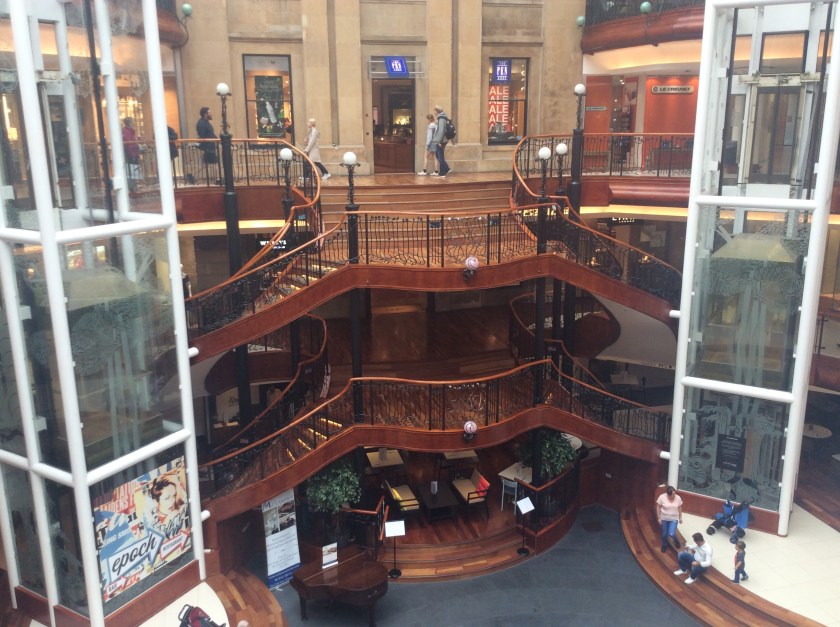
Glasgow is set out on a grid like American cities, so it's quite easy to get around. Buchanan Street is like a pedestrianised Oxford Street, lots of upmarket shops in big sandstone buildings. Princes Square is a very pretty shopping centre with lovely art nouveau stairs.
The weather forecast is for rain for the rest of the week, so Julie bought a new waterproof coat to prepare for the worst. We paid a brief visit to a design centre called the Lighthouse, and saw yet more CRM stuff, this guy gets everywhere in Glasgow! The "viewing" platform is less interesting than the top of the multi-storey car park in Hounslow, don't go there!

Getting a bit tired of walking we took advantage of our Meercat Movies deal and went to see Dunkirk. It is thrilling, nail-biting, harrowing and uplifting. You feel like you are in the cockpit with the Spitfire pilot, and in the sea with the floundering soldiers. Dinner was at a very cheap and cheerful Yates, I recommend the Echo Falls Chardonnay at a very reasonable nine quid. It was the perfect balance to a day that was slightly culture-heavy, too much for my poor nerdy brain.

Scotland Day 1 – Glasgow Virgin

The Midlands are rushing past at great speed as I look out of the window of the 7.30 train from Euston to Glasgow. It is Julie's birthday (24th July) and we are on a Virgin express on the West Coast Main Line at the start of a week in Scotland. Stafford is whizzing by and the first stop will be at Warrington. The train is only half full, so I have spread out on a double seat to myself. I have been shamefully "manspreading", which is a new social offence I read about last week. It is when a man sits on the train with his knees apart, thus signalling ownership of a larger personal space than he ought to have. I'm mad, bad and dangerous to know, fear my widespread knees!
The train is smooth, comfortable and quiet, now the irritating kid has stopped playing Frustration. For the first twenty minutes out of Euston he was popping the little plastic dome roughly once a second. I was formulating a suitable remark to his mother when he got bored and started using his phone instead. I'm over sixty now and well into grumpy old man territory, so the little shit was playing with fire.
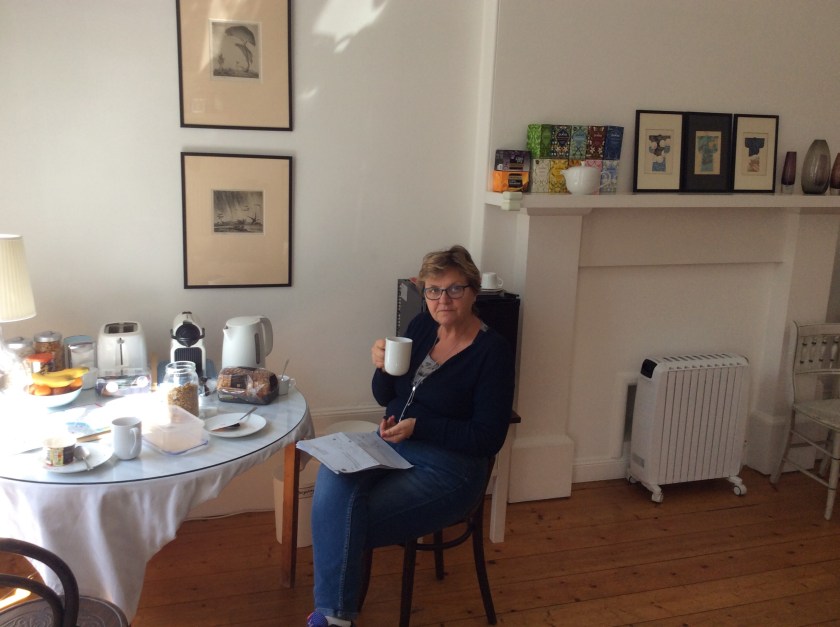
We arrived in Glasgow dead on time at 11.59, and got a cab to our AirBnB in Hamilton Park Avenue in the West End. Our room is huge with ceilings about ten feet high and massive sash windows.

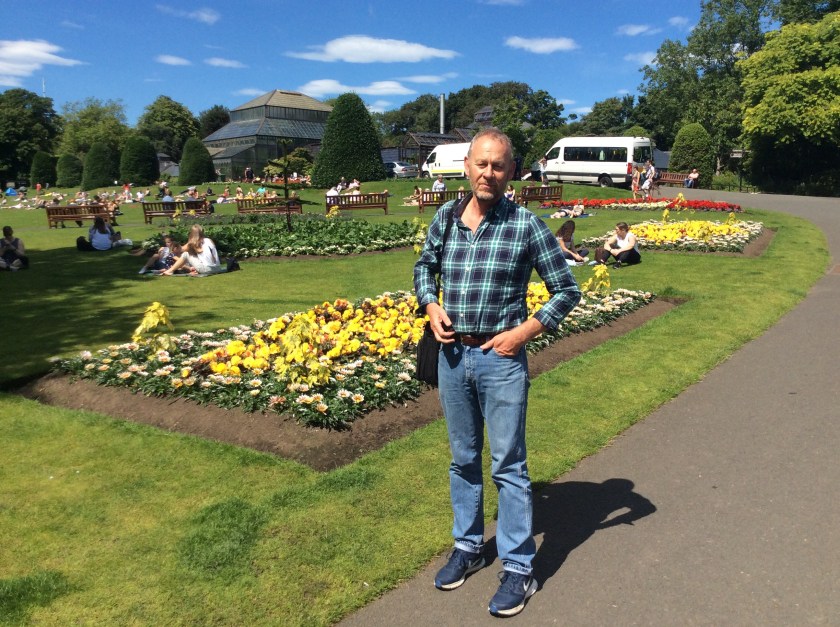
Our hostess Lucy gave us a map of Glasgow and loads of recommendations for places to visit. Miraculously the weather is hot and sunny, 25 centigrade, IN GLASGOW! After "freshening up" we walked up to the Botanic Gardens, which are lovely but the glass houses are far too hot today. Having reviewed the options for the day we decided to go to the Riverside Museum on the Clyde. Our route took us along the lovely Byers Road and then through the university and past the Kelvingrove Museum, which we will save for another day.

The Riverside Museum is a brilliant exhibition of transport and local history, displayed in an interactive and lighthearted way. I was pleased to see the battered BMW motorbike that Ewan McGregor rode around the world. But a German guy who was also looking at the motorbikes said he thought it was really ugly and preferred the classic Black Shadow further up the Motorcycle Wall. I smiled and agreed, not being a motorcycle expert. My only bike was an MZ 150 Eagle, an East German two stroke about as sexy as I am.
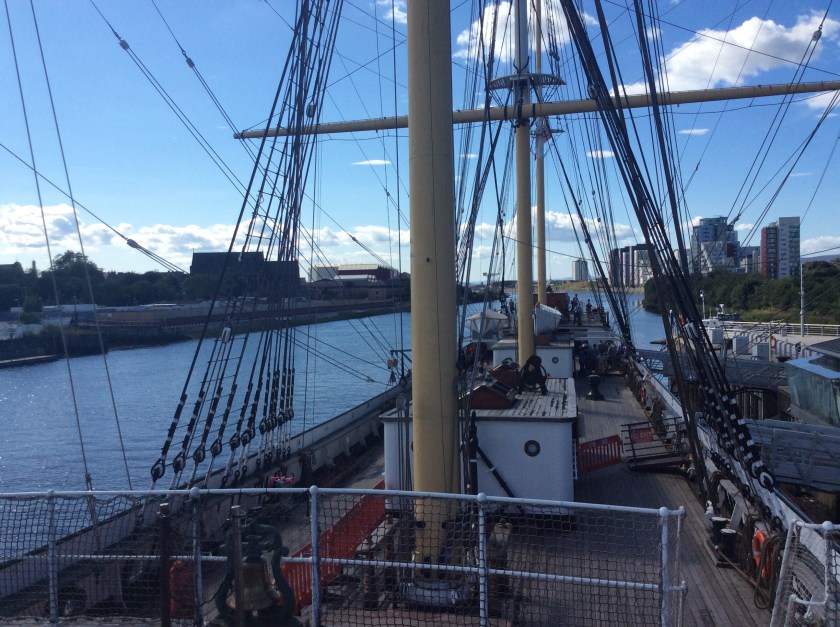
The Zaha Hadid designed museum is next to the Clyde , and moored up on the quayside is the Glenlee. It is a steel barque built in 1897 in Glasgow that sailed to Australia and South America to collect cargos of coal, guano and grain. It ended up as a Spanish Naval training vessel before returning to Scotland as a museum.

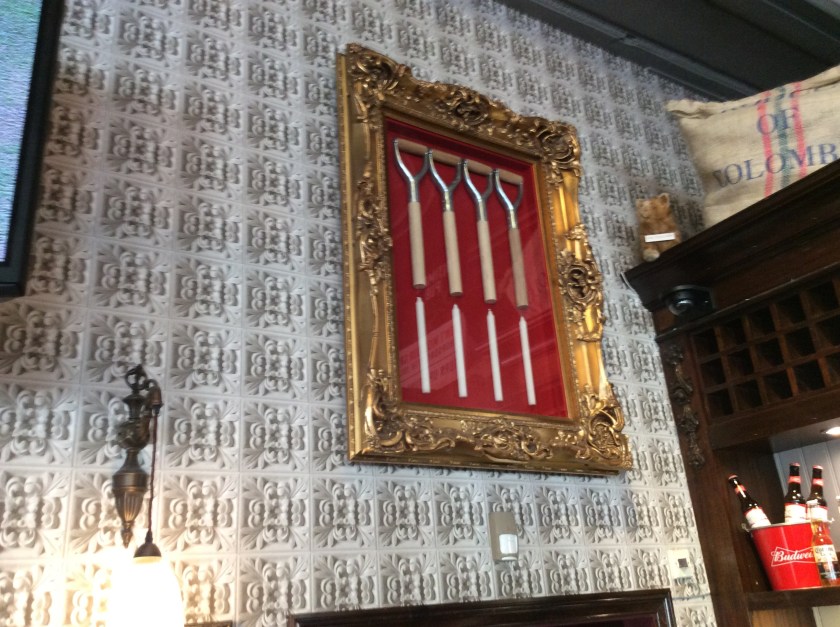
The museum closed at 5pm, and we took the subway, Glasgow's underground railway. It's a single circular line, one hundred and twenty years old, and it's £1.65 for a single, not bad. We got off at Kelvinbridge Station close to our accommodation, and found a pub called the Bellhaven Dunbar for a well deserved sit down and a drink. I liked the framed fork handles.

Istanbul  Day 5 – Kadikoy

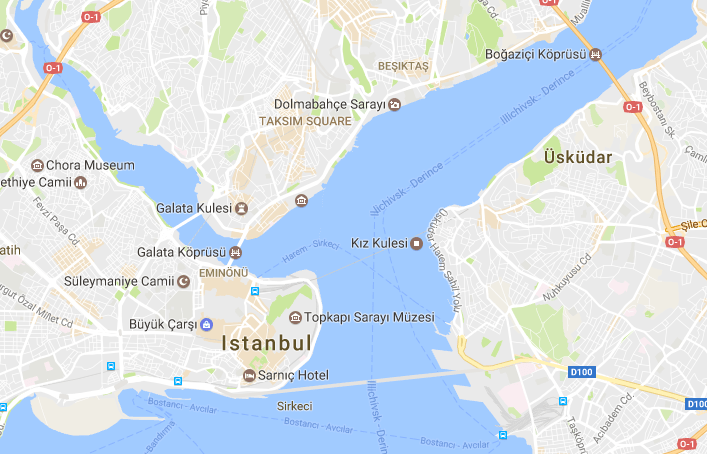
Istanbul is the only city on two continents, so Tommy thought we should visit Asia as well as Europe. We walked down the hill past Aya Sofia to Eminonu to catch the ferry over the Bosphorus to Kadikoy. It is a 20-minute ride across, avoiding the container ship and tankers going between the Mediterranean and the Black Sea. It costs less than a quid, a real bargain for an interesting boat trip.

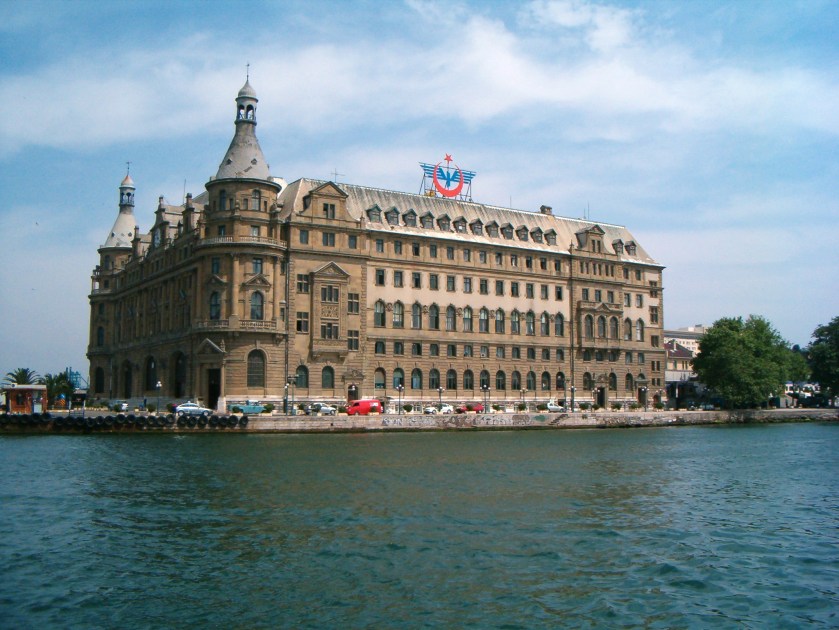
Our first stop was a disused railway station at Haydarpasa which was suggested in a misleading travel blog. The imposing Victorian building was closed for restoration so we couldn’t go inside. There was some kind of book fair going on, all the books were Turkish, so not much good for me!

Old Haydarpasa station

Haydarpasa_train_station


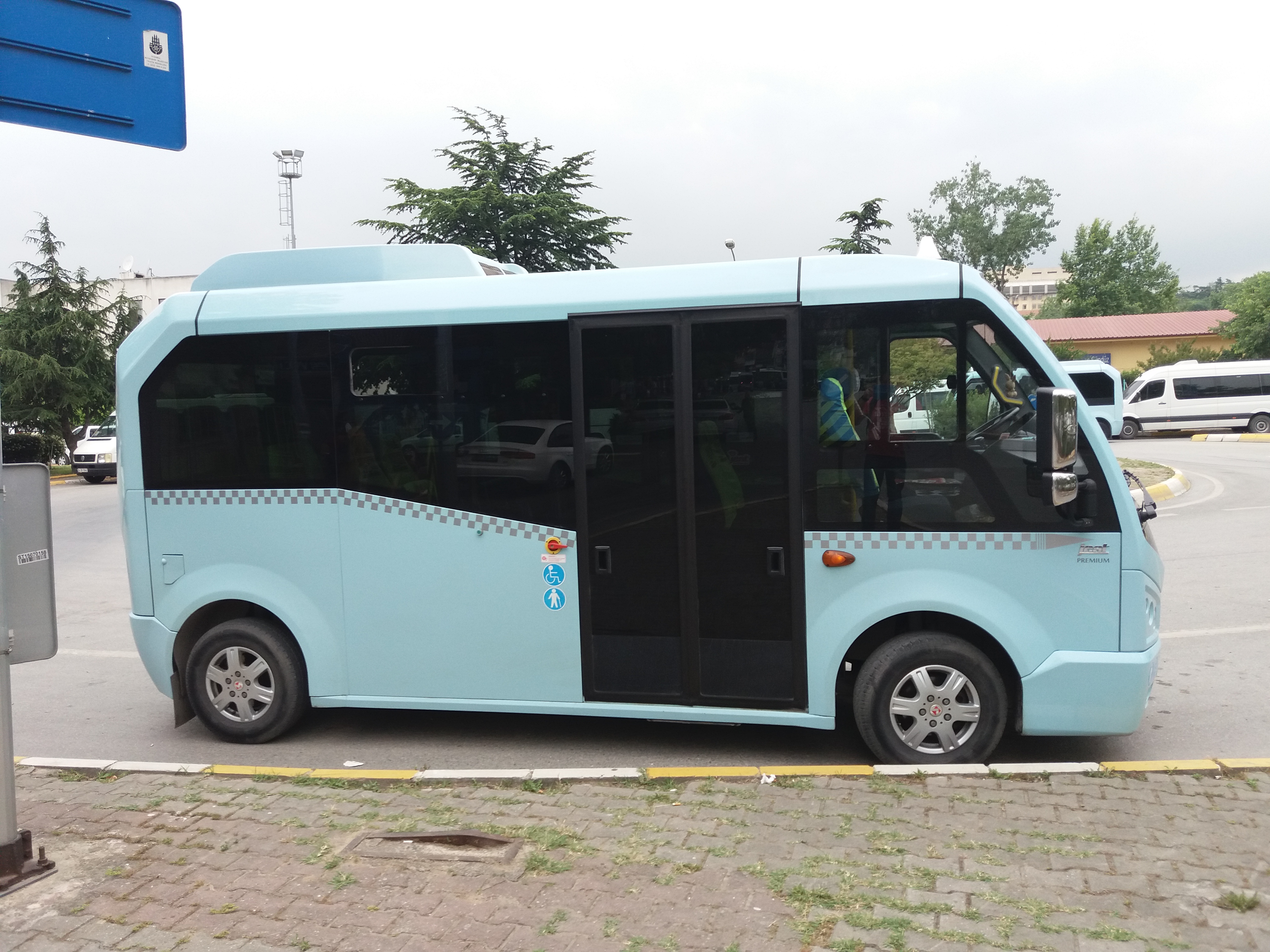
Close by was a bus station with cute little buses which look designed to appeal to 8-year-old girls, they should be called “My Little Bus”

So we walked into the town and after some hunting using Google maps, found a really vibrant district of markets and cafes. I ate a monster burger and chips for lunch, it was not Turkish but then neither am I. A shop selling second-hand albums kept Tommy happy, while Julie and I found an excellent bar playing good music and ordered an Efes Malt.

Mmm beer…

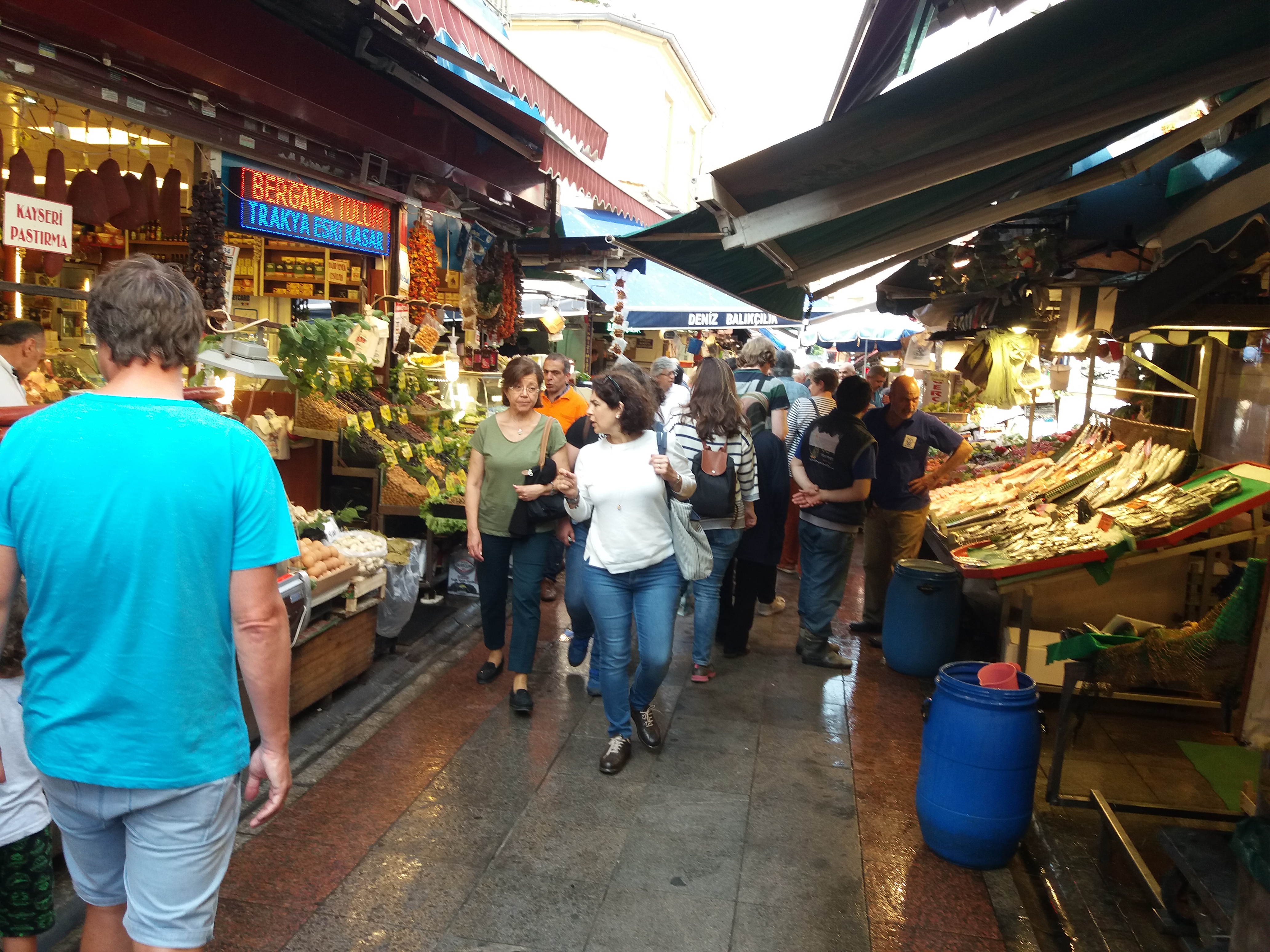
This is not a tourist district like Sultanahmet so it feels more authentic, I like it here. Walking down the hill towards the port we came across a very lively market full of stalls selling fruit, kitchen tools, nuts and glistening fresh fish. It’s the best market we have come across, all useful stuff, unlike the Grand Bazaar which just sells souvenirs.

This side of Istanbul doesn’t feel radically different to the European side, it is really one huge city of 14 million people.

I ate my own weight in meat at dinner on our last night in Istanbul, a huge mixed kebab.  I’m now farting so much I can hover like a helicopter. There are many restaurants in Sultanahmet, and few of them are really busy. The waiters stand out in the street trying to attract your attention, but there is a lot of competition and not enough tourists.

Istanbul Day 4 – Topkapi Palace

As we left our hotel this morning, the owner of the carpet shop next door asked us to go and see his kilims and carpets. Visitor numbers to Turkey have dropped by 40% so shop keepers are desperate to sell to the people who do visit. Tommy asked how much a kilim (about 80cm by 60cm) and the guy said £200, roughly ten times more than Tommy expected! There are many more carpet shops than buyers, all I have bought is a belt and a fridge magnet!

Topkapi Palace is only a half a mile from the hotel, close to Aya Sofia, and was the centre of power of the Ottoman Empire for 400 years. It’s a collection of buildings surrounded by a wall that was occupied by up to 10,000 people at a time. That included the Sultan, his extended family, the civil service, the eunochs and many other staff.  Up to 1300 people worked in the kitchen!

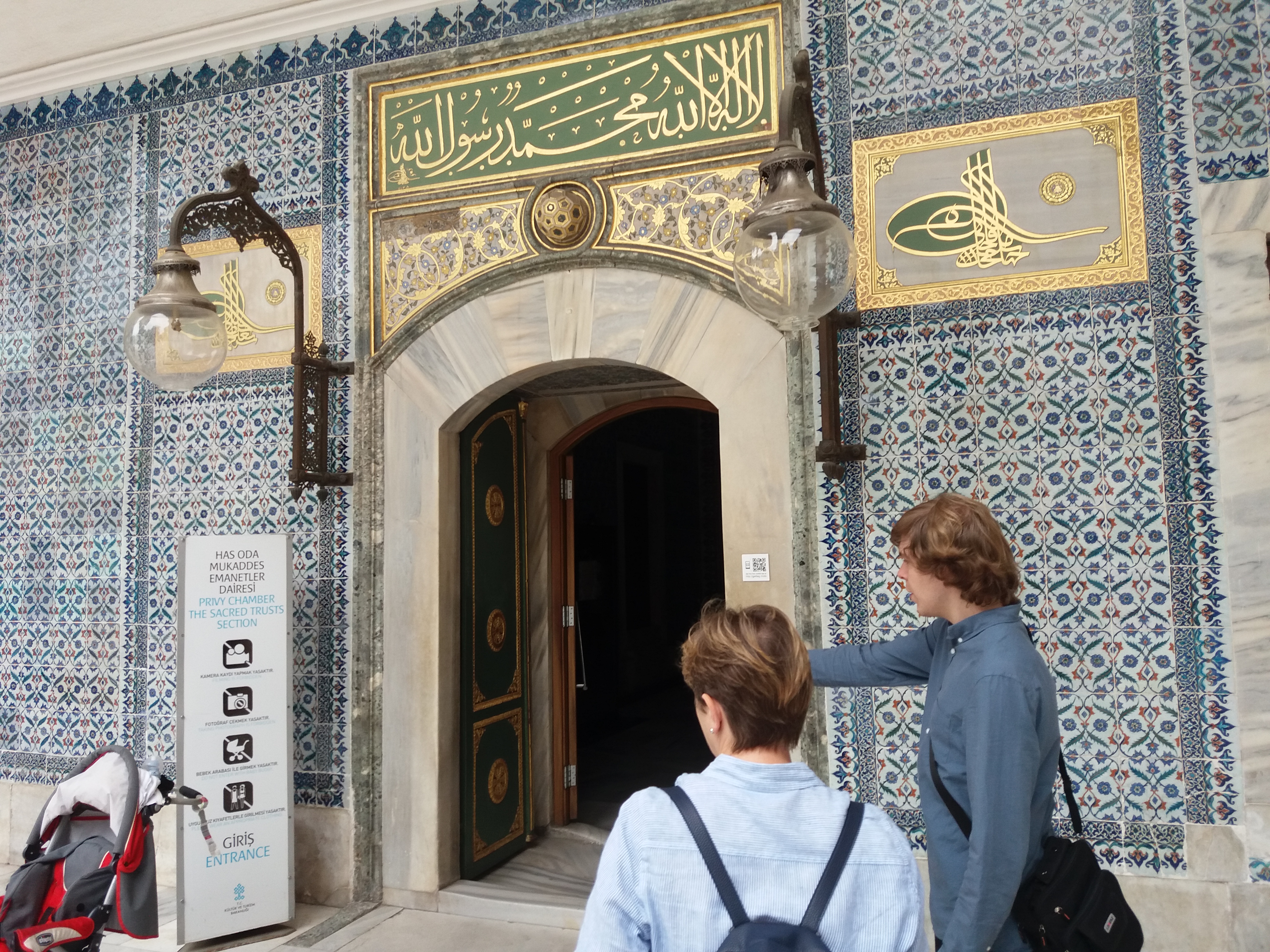
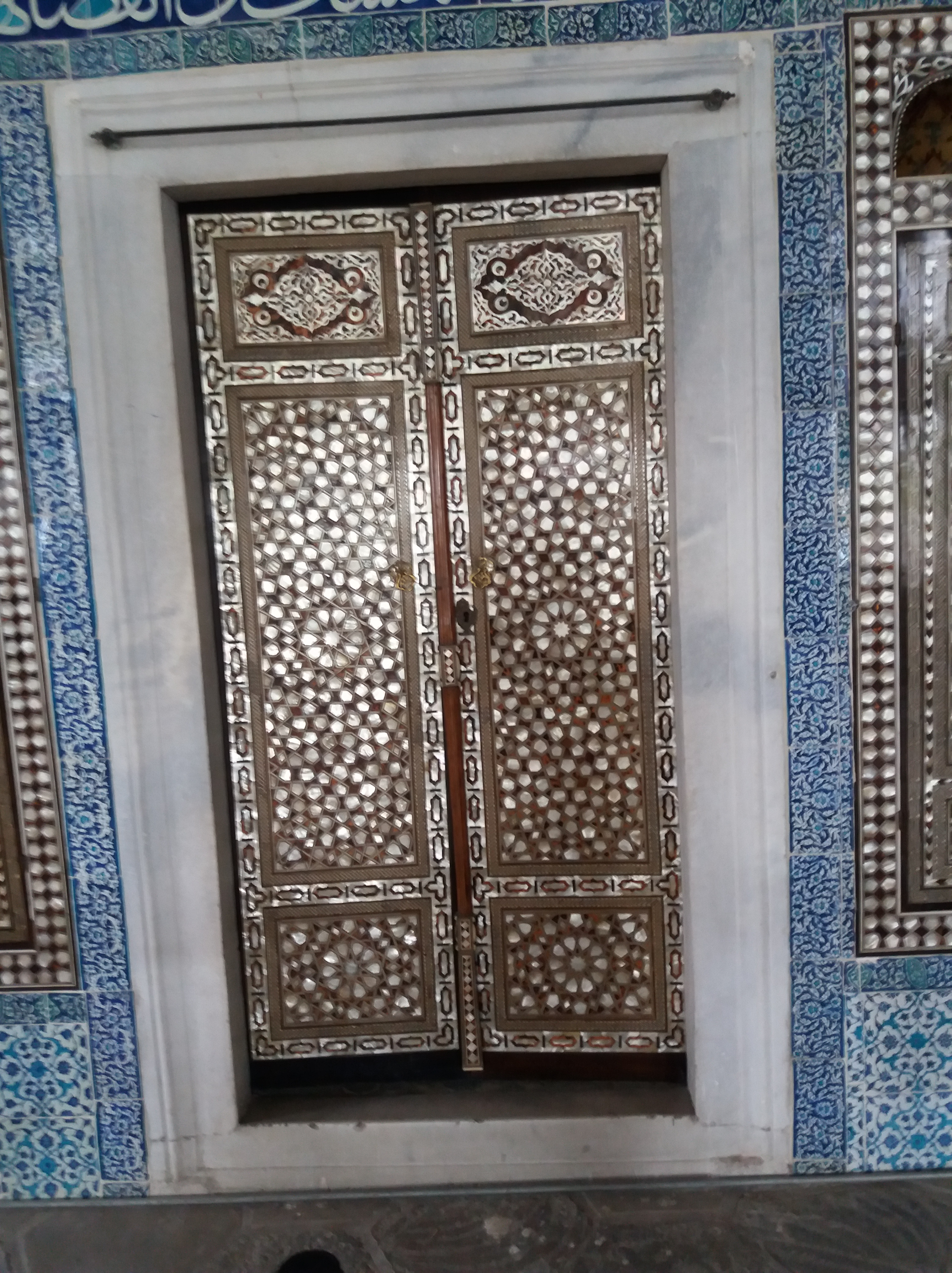
There are many buildings, but hardly any furniture apart from big beds. Most surfaces are covered in beautiful tiles or inlay made from coloured stone and mother of pearl. The styles are a mix of traditional Turkish, rococo and baroque, sometimes in the same room.

Large parts of the palace are being restored, so there are lots of hoardings closing off areas with banging going on behind.

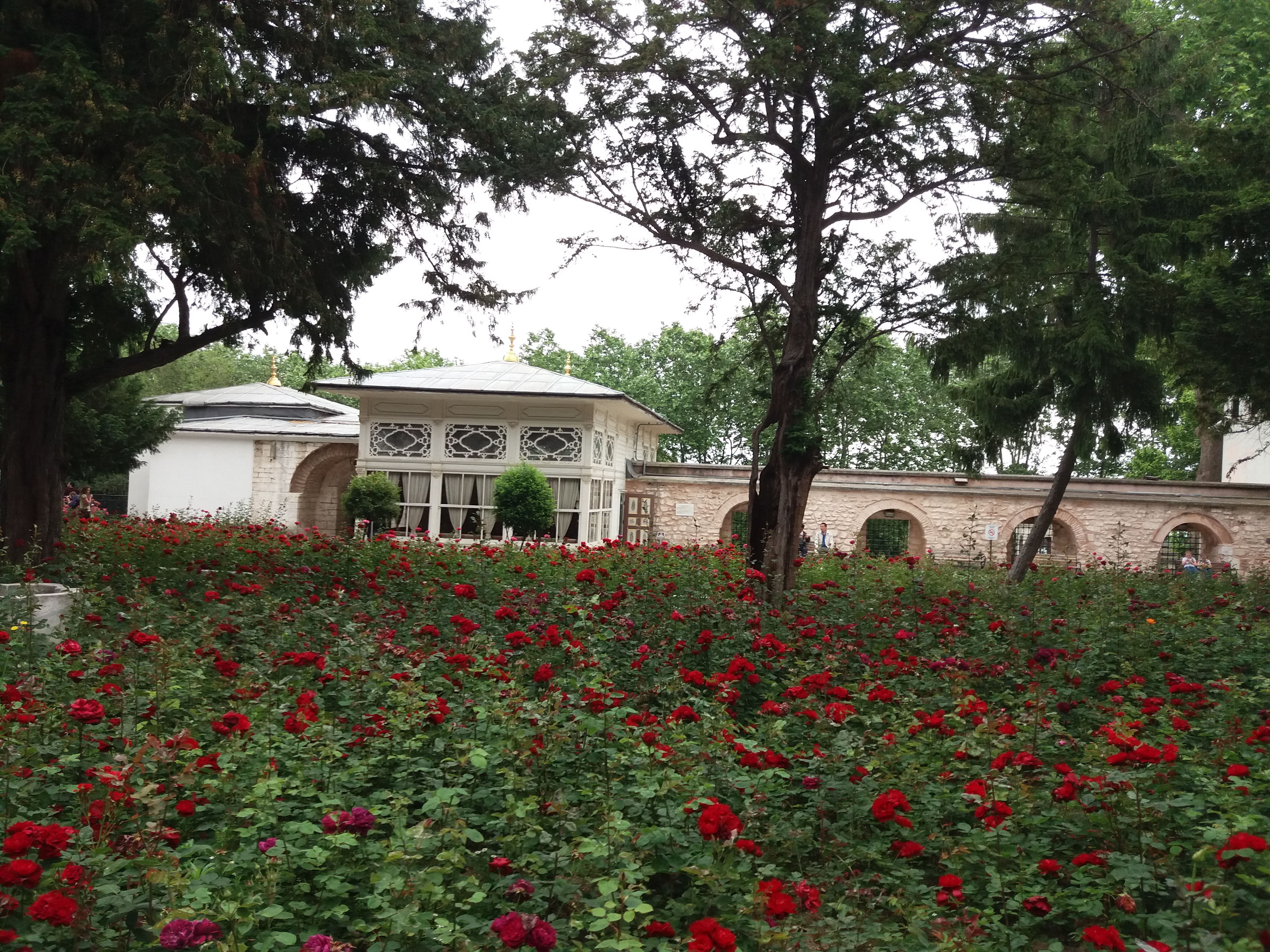
The gardens are fragrant with roses, and there are wonderful views over the Golden Horn and the Bosphorus.

After Topkapi we went back to Sarnic to put our feet up for a while. Afterwards we walked round the lovely Gulhane Park, which was a garden of Topkapi until 1912.

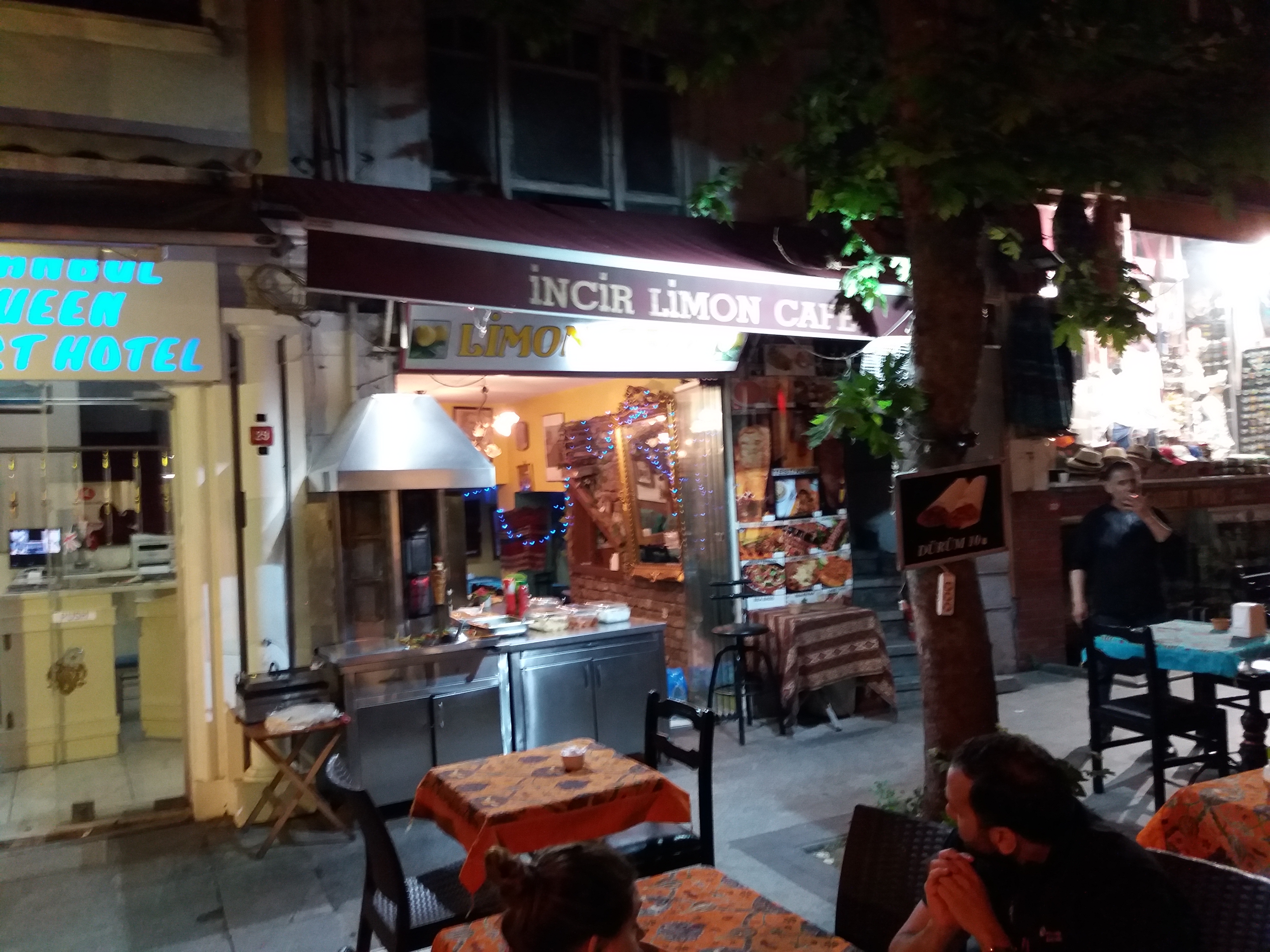
Using a combination of the Lonely Planet guide and Google Maps we found the Lokum Cafe and had a big fat Efes beer. Walking through back streets we came across the Incir Limon cafe and ate delicious chicken kebabs with a mixed meze and beer, it was the perfect Turkish meal.

Everyone has been so polite and friendly here, the Turks are lovely people!

Istanbul Day 3 – Galata and the Bosphorus

Firstly forgive me for typos, I’m writing this blog on a mobile phone and I have fat fingers. The new security rules mean that I can’t take my iPad Mini to Turkey unless I put it in a suitcase in the hold, which would cost another sixty quid.

Gradually we are getting Istanbul sussed out. Walking from our hotel this morning we discovered a street of good restaurants that we can go to later and made a booking for this evening at the Balikci Sabahattin which was recommended on TripAdvisor. So no more swearing from me about crappy food, hopefully.

We took one of the many excursion boat trips on offer from Eminonu near Galata bridge that take sightseers up the Bosphorus.

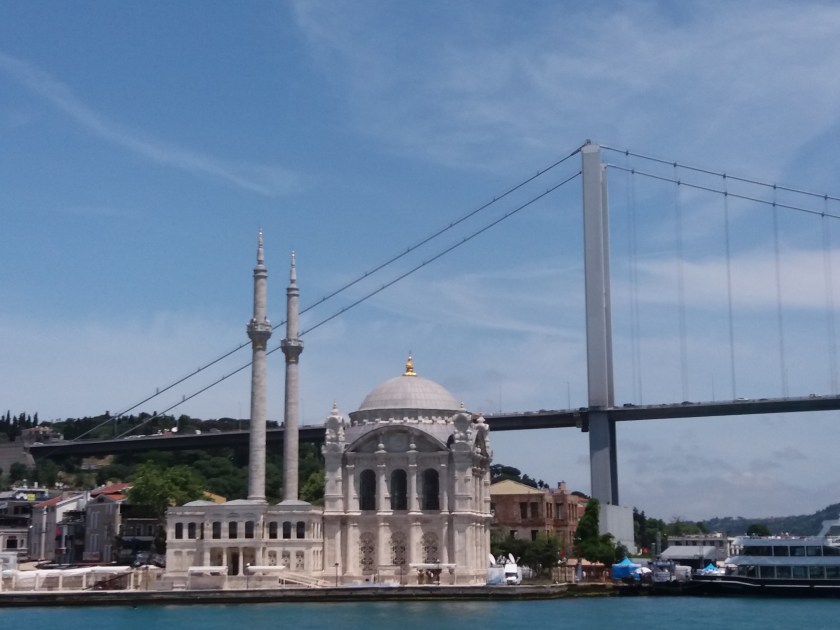
From the water there were splendid views of all the mosques we visited yesterday in Sultanahmet. The white stone and lead domes of the Suleymaniya looked fantastic against the vivid blue sky. The boat took us as far as the suspension bridge joining Europe to Asia.

A mosque and the Bosphorus bridge

20170604_125258
Ortakoy Mosque and Bosphorus Bridge

20170604_124028
Dolmabahce Palace

Along the western bank of the Bosphorus is a mix of new development on reclaimed land, and 19th-century palaces and mansions.  Just before the Bosphorus bridge I saw a crowd of birds and then three or four dolphins arcing through the water! It was an unexpected and wonderful sight. A little later on Tommy shouted and there was a black porpoise swimming beside us. All that wildlife in one of the busiest shipping lanes in the world is amazing.

20170604_133605
Oil tanker on the Bosphorus

Returning to Eminonu after 90 minutes we walked over Galata bridge and past the mighty Galata Tower, a relic of the occupation of that area by people from Genoa. Julie tracked down a cafe mentioned in the Lonely Planet guide, and I had chicken and chips followed by chocolate cake, bloody lovely. Man cannot live by kebab alone.

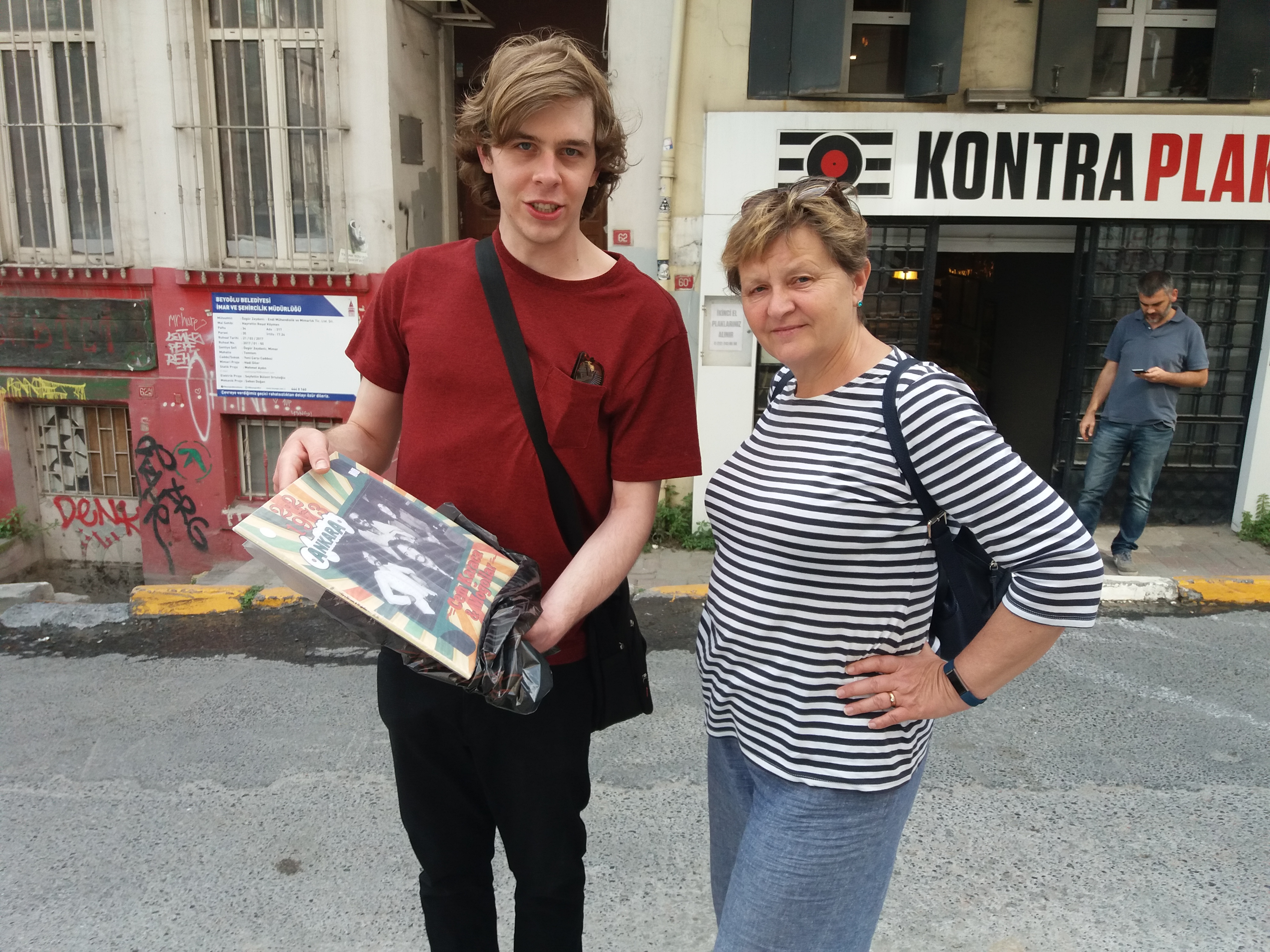
Tommy wanted to find a record shop in the area, and a friendly local lady gave us a lift in her car most of the way to Kontra Plan. He then spent 45 minutes talking to the owner and listening to Turkish rock music and emerged with three albums.


Turkish treasure hunter!


The road went uphill to Istikal Avenue, Istanbul’s own Oxford Street, with many familiar shops. It is a packed pedestrianised street that terminates with Taksim Square. Taksim is big but not beautiful, so from there we walked back to our hotel.

20170604_175036
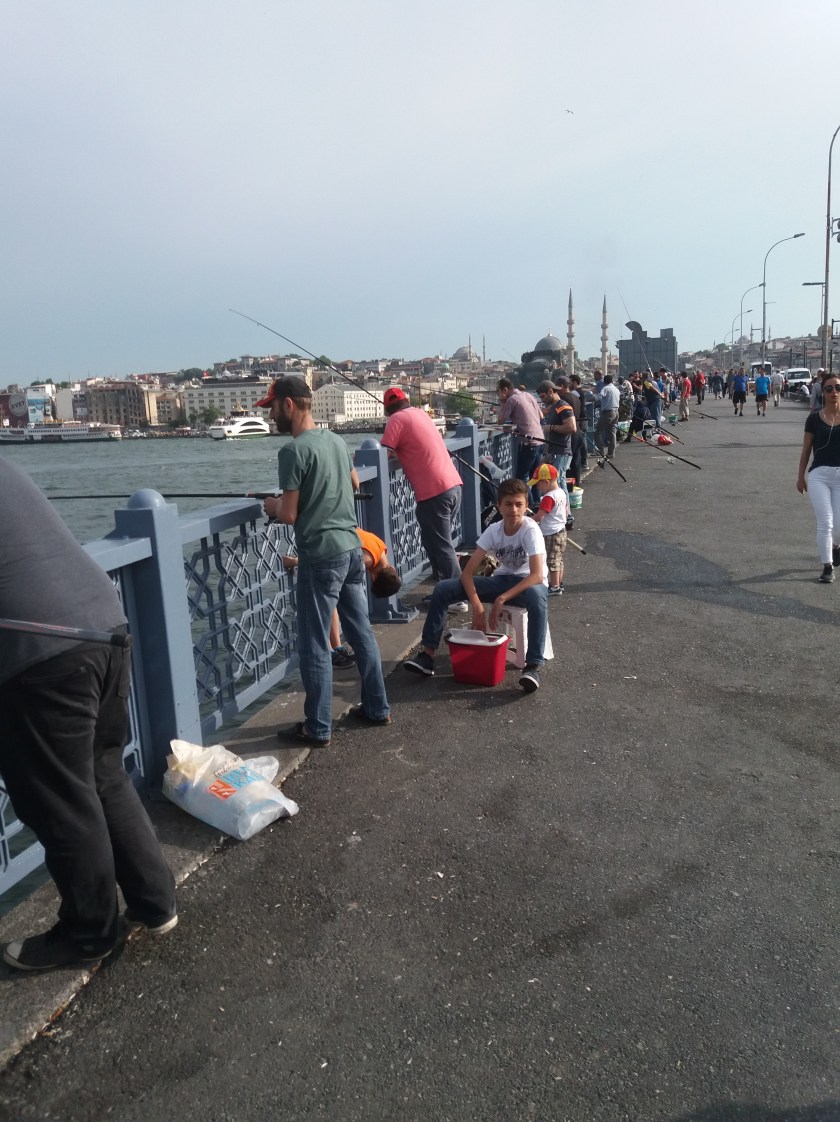
Anglers on Galata Bridge

Today we walked eight miles around the city, up hill and down dale, so I’m ready for a shower and dinner.

We went to the fish restaurant Balikci Sabahattin that we found earlier. There were more waiters than customers, and the one we got was brusque, to say the least.  He behaved like we were spoiling his evening and we were in his way. We asked for calamari for three people and got six pieces! The grilled snapper was tasty, but can with half a tomato, a small spud and a piece of lettuce. They didn’t get a tip.

20170604_164130
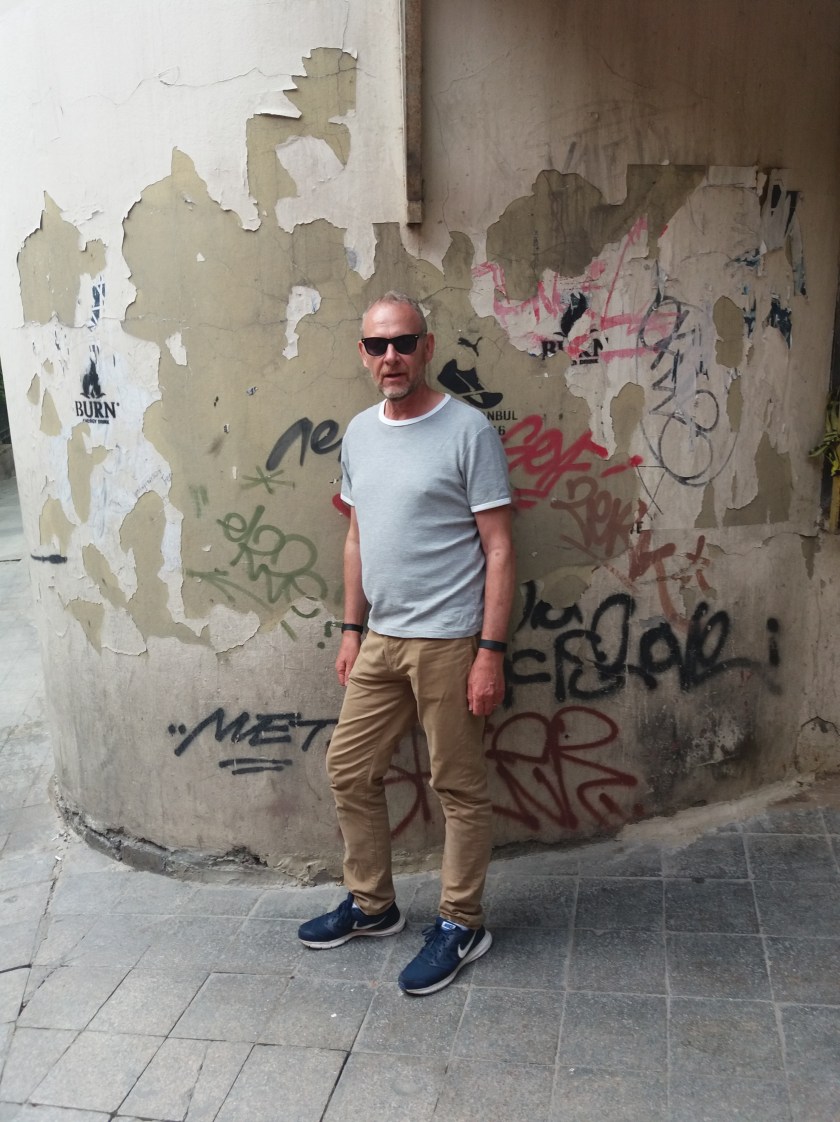
Tim in a moody rock star pose

Istanbul Day 2 – Three Mosques so far..

I had a proper Turkish breakfast today; boiled eggs, olives, bread, yoghurt and mysterious pink meat. The coffee was out of a machine and made with UHT milk, but it was strangely tasty. Underneath our dining room is a Roman era cistern, Sarnic means cistern in Turkish. There whole of Sultanahmet is full of archaeology, there is a huge amount of history in Byzantion/Byzantium/Constantinople/Istanbul.

History of Istanbul

The Blue Mosque is literally round the corner so we went their first. Julie put a scarf on her head and we all took our shoes off, so the beautiful mosque smelled of sweaty feet! The mosque is famous for the Iznik blue tiles that cover much of its interior.


20170603_112557
Julie and Tommy in the Blue Mosque


Next stop was Aya Sofia, inaugurated by the Roman Emperor Justinian in 537, so it is almost 1500 years old! After the Ottoman conquest by Mehmet the Conqueror in 1453 it was converted into a mosque, and in 1936 it became a museum.

The original Christian gold mosaics were plastered over and minarets were constructed by the Ottomans, but some of the original features have now been exposed. The dome is 180 feet above the floor, it is an ancient and genuinely awesome building.

20170603_123459
Ottoman medallion hung on the wall of the Aya Sofia

The security is tight, there are plenty of armed police around and scanners at the entrance to major buildings.

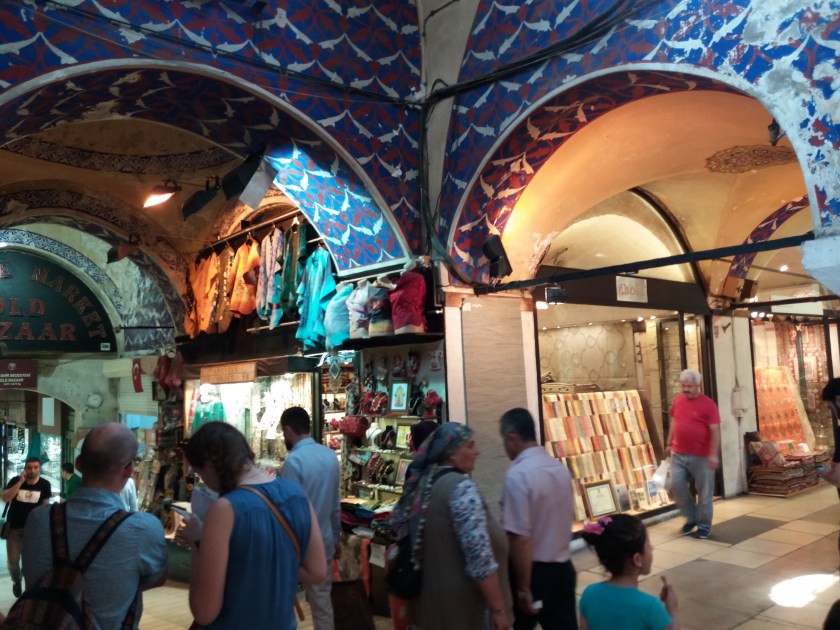
For lunch we had doner kebab sandwiches, simple and tasty. Following the tram route up the main road we found the Grand Bazaar, a huge covered market that was the Westfield of Ottoman Istanbul. Today it is a vast tourist market selling jewellery, Iznik pottery, tee shirts and all manner of tat. Tommy bought some colourful dishes for Chloe and a Tin Tin in Istanbul tee shirt for me!

20170603_151209
Inside the Grand Bazaar

Between the bazaar and the Golden Horn are more shopping streets which have stuff that you might want to buy. I got a nice brown leather belt for 20 lira, less than a fiver and it is holding up my trousers right now.

Next stop on our whirlwind tour of the Great Mosques of Istanbul was the Suleymaniya, built by the chief architect of Suliman the Magnificent, Sinan. It was competed in the mid 16th century and has been beautifully restored. It is full of light and is much less busy than the other mosques. The gardens have fabulous views over the Golden Horn to Galata.

20170603_171753
Suleymaniya Mosque

Walking downhill and past the boats moored at Eminonu we started to cross the Galata Bridge, but we’re persuaded (very easily) to stop for a beer, which is was just what we needed.  The bridge has a road over the top and restaurants beneath it, with only a small section to allow tour boats to pass beneath.

20170603_172058
The Golden Horn from Suleymaniya Mosque

Across the Golden Horn in Galata we once again failed to find a good place to eat and settled for mediocre meatballs. Tomorrow we are going to find somewhere better on TripAdvisor !

Istanbul Day 1 – Arrived in Sultanahmet 

The BA flight from T5 LHR was only three quarters full and pleasingly uneventful.  BA had got over its recent IT cock-up and was operating without a hitch.  We arrived on time at Istanbul and got a taxi to the old quarter called Sultanahmet, the heart of ancient Constantinople.

The taxi driver was a master of multi-tasking with one hand. He kept his left hand planted on the roof of the car, and his right hand was used for steering, changing gear and operating his mobile phone for directions. He was a really cool guy, but I was a nervous passenger.

We are staying at the Sarnic, a cheap hotel in spitting distance of the Blue Mosque. It is clean and simple, but you won’t find it in any travel magazines.

new sarnic
Sarnic Hotel

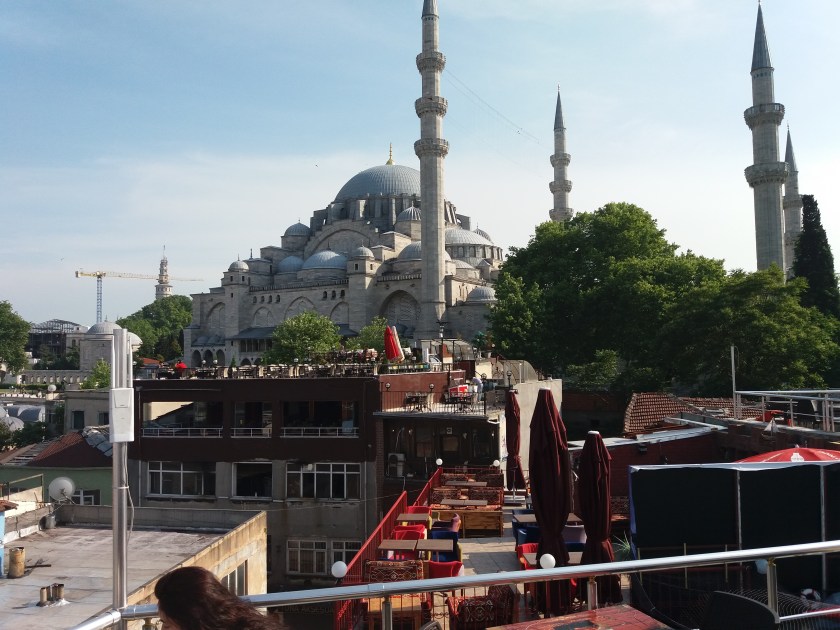
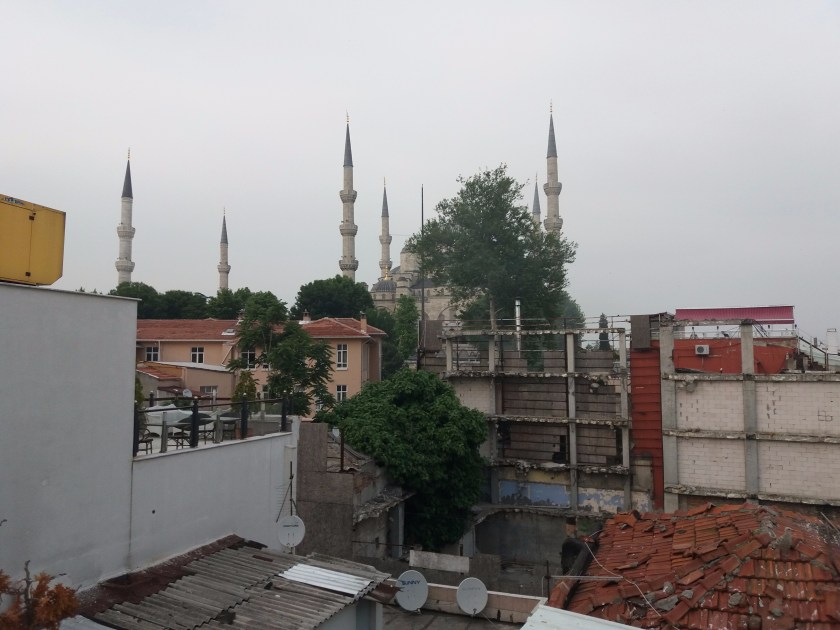
Right now I’m sat on the roof terrace drinking an Efes beer. Looking one way I’m looking at the Sea of Marmara, the other way is the Blue Mosque. Between my terrace and the Blue Mosque is a partly demolished building, which takes the edge off the view, c’est la vie. The Sea of Marmara is connected to the Black Sea in the north by the Bosphorus and to the Mediterranian to the south by the Dardanelles. From the terrace, we could see at least fifty ships anchored and waiting to either enter the port or take the passage to the Black Sea.

20170602_181155.jpg
Blue Mosque, and a tree and a nasty building
20170602_181209
Sea of Marmara

We ate dinner at the New Season restaurant round the corner from the Sarnic. It was a mistake. I have had much better Turkish food at my local takeaway, and more of it! I was still hungry after and bought a corn on the cob from a stall.

After our disappointing first meal, we walked up the street and went past all the restaurants we should have gone to, Doh! But that’s what happens on your first night in a big city. This happens every time we visit a new city. For the first two days, you are disoriented and can’t find want you want and generally get annoyed. Then you figure out what the place is about, and start to relax and enjoy the place. After three or four days you really feel comfortable and can get around with ease and the local waiters wave at you like old friends.

Screen Shot 2017-06-15 at 15.09.53

We walked past the Blue Mosque at about 8.40 pm just as the muezzin announced that the Ramadan (Ramazan in Turkish) fast was over, very very loudly from a loudspeaker system. Everyone in the shops immediately ate their dinner, they had been fasting all day.

In the gardens between the Blue Mosque and Aya Sofia, families ate picnics on the lawns by a fountain which was  lit by lights of changing colour’s.

We found a busy street with the tram line in it and a friendly waiter persuaded us to go to his rooftop bar in Pierre Loti Hotel. It had an amazing view of the great mosques and the Galatea Bridge over the Golden Horn. It was so good up there that I almost forgot about the lousy meal we ate earlier!

20170602_223946
Aya Sofia and colour-changing fountains
20170602_224016
Blue Mosque by night

Madeira Day 5 – An overcast day

I worked up and read the terrible news on ththe BBC on my iPad, a bomb had gone off at a pop concert in Manchester. I felt the same feelings of grief, horror and helplessness as everyone else. Why? How can killing so many innocents make sense? 

Two cruise liners had arrived in Funchal harbour overnight, unloading more tourists into central Funchal. In the old town the streets are lined with restaurants, and each of them has a waiter or waitress trying to ensnare passing peckish visitors. On Sunday I got away from a cheerful waiter by pretending I would go back later on. On Monday I saw him again, and had to face up to my lie! So I literally sprinted past him like I was running for a bus, luckily he didn’t give chase and try to rope me in.


So far today we have mostly done not much at all. I didn’t fancy the museum this morning in the Quinta da Cruzes, I knew it would be lots of dull religious pictures and pottery. The central market turned out to be a tourist trap selling ludicrously overpriced comestibles. Some peculiar tropical fruit were going for almost €20 a kilo, they have got to be ‘avin’a larf! The fish market was more interesting, with huge pieces of tuna and trays of deflated octopuses.  There were plenty of the local delicacy of Espada or Scabbard Fish. They are like a fishy version of Dementors, long and black with ugly pointed teeth. But they do taste very good in a light batter.


Most of the afternoon has been spent at lunch (grilled sardines) and in a bar at the  Marina slowly drinking a beer and watching cruise ships leaving and arriving. The weather is overcast, the sun has barely made an appearance today. I can see the Islas Desertas about twenty miles away in the distance, and they are bathed in sunshine. It feels like Madeira is an island of cloud sitting is a sea of sunshine, reflecting my mood.

But you know what, beer is a great mood enhancer! I hiked back to the flat, got changed and we went back to Taberna Madeira for dinner. I tried Pigs Trotters tonight because I haven’t eaten them before. Unfortunately they tasted as good as they sound.

Madeira Day  4 – A walk in the woods and a great dinner

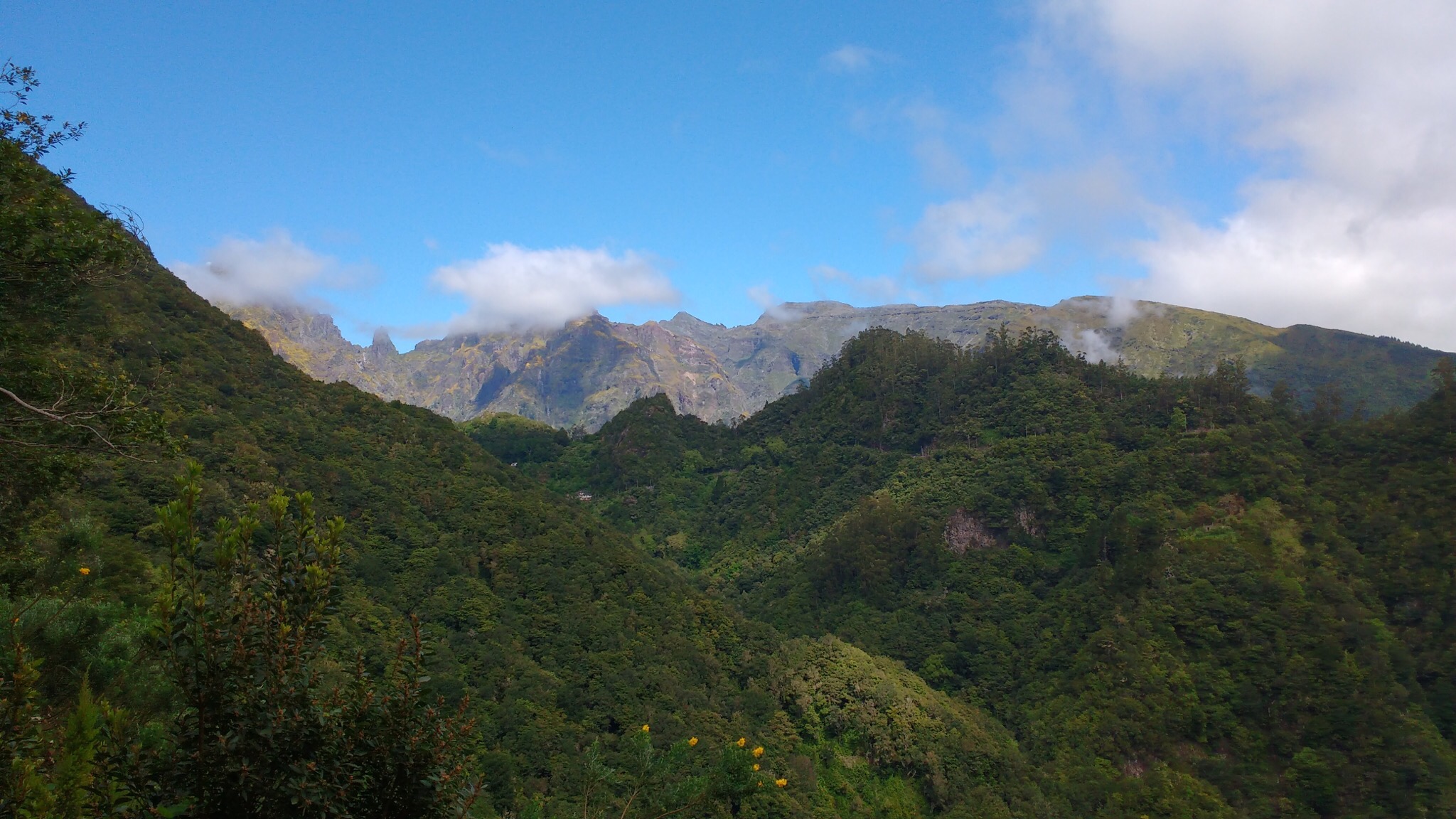
I didn’t know before I arrived in Madeira, but it is a good place for walking. Not just ordinary Going from A to B style walking, but proper boots and telescopic walking sticks style walking. We joined a coach load of people in proper boots and rucksacks with lots of pointless straps on them, to travel to a tiny village called Ribeiro do Frio, which is Cold River in English. Getting there involved climbing and climbing and climbing and lots of hairpin bends. Madeira is the land of hairpin bends and tunnels through mountains. There are very few flat bits to the island, and many mountains and ravines that need to be bridged or cut through. 

Our guide was a genial local man in his late sixties called Ali (that’s an abbreviation) who could speak several languages. He lead the walk along an irrigation channel or levada, which  winds around  the contours to take water from the wet northern part of the island to farmers fields in the drier south of the island. The levada is a concrete channel with a footpath along side it, and there are 2,000 kilometres of them on the island  which move water around very efficiently and provide excellent walking routes for tourists. 


The route we took is through the ancient laurisilva, which literally means laurel woods. This type of forest covered much of Southern Europe before the last ice age, but is now only found in Madeira, the Canary Islands, the Azores,  Cape Verde islands. These archipelagos are jointly known as Macronesia, I bet you didn’t know that did you? The main trees are bay (a type of laurel) and heather, which grows into big trees with trunks up to 18 inches thick! There is also types of giant Dandelions and Lily of the Valley, both growing up to two metres high. It must be something in the water.


The levadas are cut by hand on the side of cliff, so often there is a wall of rock to the right and sheer drop to the left. There is a wire fence to stop you from plummeting to your death, but my buttocks were tightly clenched like a choirboy at vicars conference. 


The walk was supposed to be eleven kilometres longs, but our Fitbits and phones said it was sixteen, and that’s how far it felt. 

Returning to our flat we rested for a while and then walked down to a restaurant called Taberna Madeira that we had read about on Tripadvisor. It was really, seriously good.

  • Nice vibe and modern decor
  • Charming waitress and engaging funny owner
  • Delicious house wine that was also very good value
  • The best tuna steak I have ever eaten. Ever.

If you go to Funchal go to Taberna Madeira, you won’t be disappointed.

But the walk back to the flat from the city centre is up a very steep hill, like the Hard Knot pass in Cumbria. Julie complained about having to walk up it AGAIN and that she had walked thirteen miles today. I congratulated her for completing a Half Marathon, and she told me to Go Forth and Multiply.