Tuesday 22 May
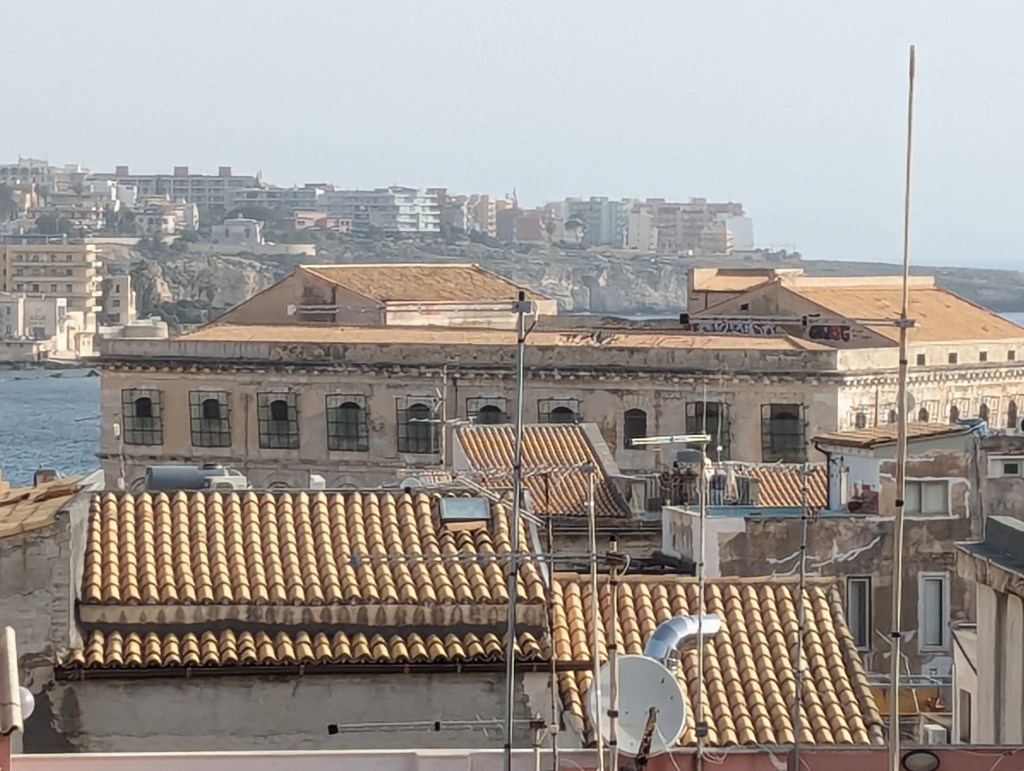
Our tiny flat (I won’t use the word “apartment”, I’m neither French nor American) overlooks the roofs of Ortigia. A few hundred metres away is a big imposing building. I took a photo of it, and Google Lens told me that it was a prison built by the Bourbon Kings in the 1850’s when they were worried about rebels after the 1848 attempted revolution. It was damaged by an earthquake in 1990, and has been left unused since then. The sky is still full of swifts flying in arcs catching invisible flying insects, quite miraculous really.
Siracusa is Syracuse, an ancient settlement at the cross roads of the Mediterranian that has been fought over for thousands of years. At one time it rivalled Athens in size and power in the Greek world.
The centre of the Greek and Roman city is now the Neapolis Archeological Park, which is a 45 minute walk from where we are staying on the island of Ortigia. The modern part of Siracusa is made of of post-war blocks of flats and uninspriring shops. We were very disappointed not to find either a Lidl or an Aldi in walking distance, which is one of the markers of civilisation for me.
We stopped for a capuccino and pastry in a cafe, but failed to blend in with the locals. Today we both look like tourists from Badiddlyboing Idaho, wearing stripy teeshirts, shorts, baseball caps and Merell walking shoes. Our attire was suitable for waking around ruins in the hot sunshine, but we would never get asked to be extras in the next Godfather movie.

Our arrival at Neapolis coincided with another huge herd of students and numerous coaches of foreign tourists also wearing Merells and shorts. The park is a big open area with pathways winding between the various places of interest.
The first part we reached was the Greek theatre which was constructed about 500 BC. At one time it would have seated about 3,000 people watching the Greek equivalent of The Mousetrap or Les Mis. I wouldnt be surprised if Phantom of the Opera is still running two thousand years in the future in some glass dome on Mars.
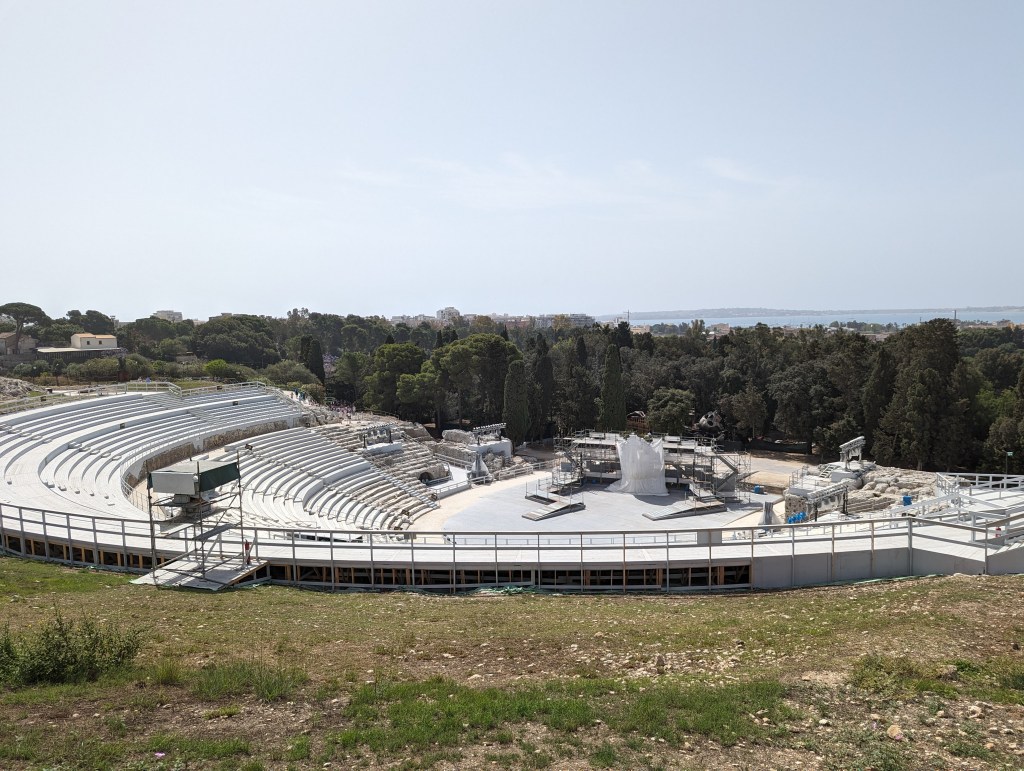
The theatre was largely looted for its stone by the Spanish 500 years ago, but the stone seats have been replaced by timber seats and audiences still enjoy versions of classic Greek tragedies.
Above the theatre are caves which were probably overpriced cocktail bars at the time of Christ. Carved into the wall are many square niches of varying sizes. They are votive niches where people would place small statues in honour of the gods. Julie was convinced they were places to rest your cocktail during the intermission in tragedy, but they were too rough to support a proper Aperol Spritz glass.

Following the herd we went down steps to the Gardens of Paradise. This is an ironically named area which is now a garden filled with citrus trees, but was once a massive quarry and prison to thousands of slaves who carved out all the stone to build the city.
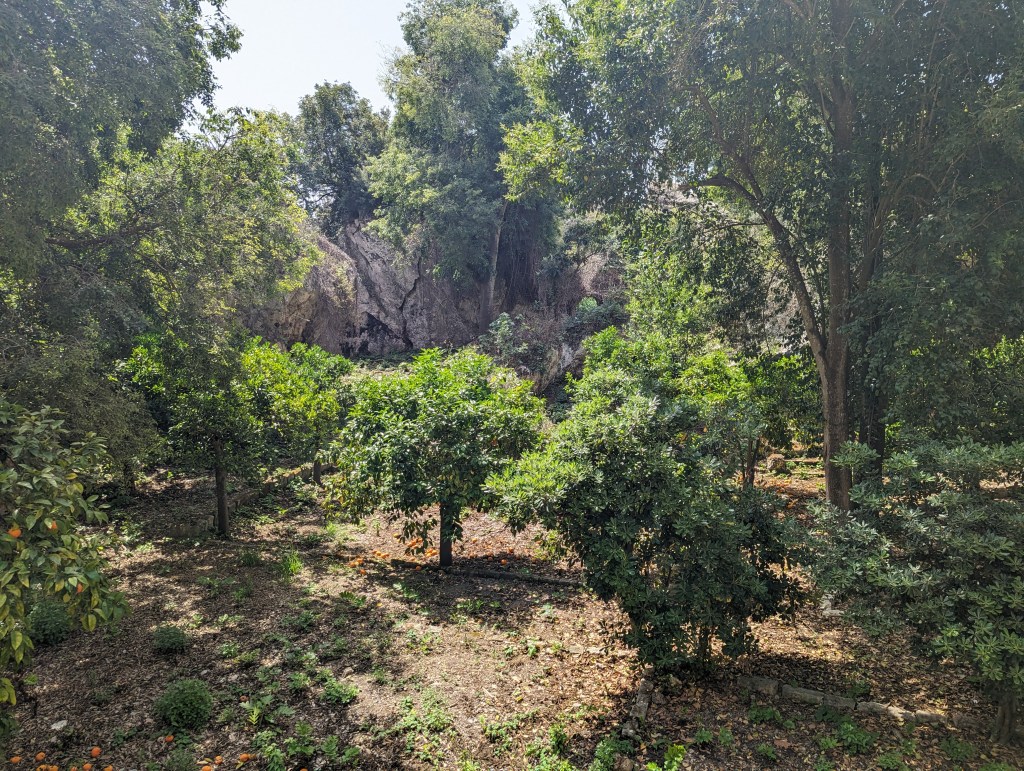
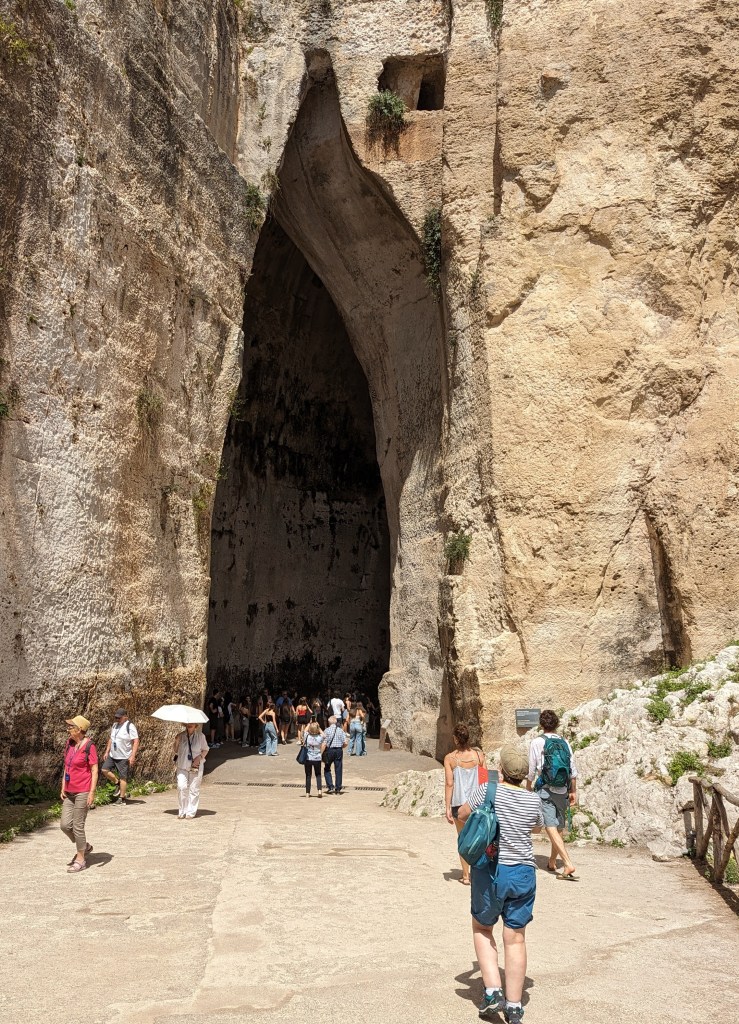
Within the quarry are some enormous caves which were excavated for their building stone. The most impressive is Dionysus Ear, which tapers towards the top and reflects sound very well. It is particularly noticeable when there are 200 8 years old kids all shouting at once.
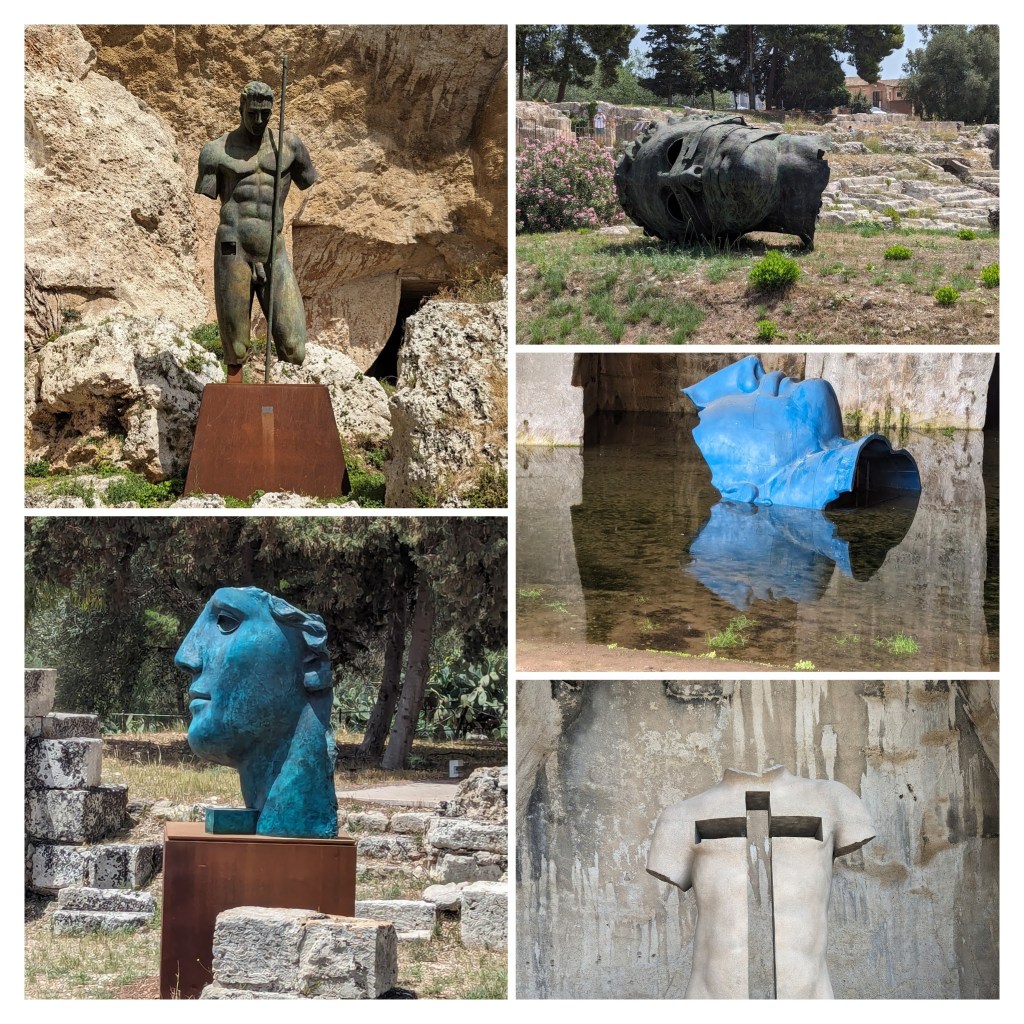
All around the park are statues of men with various body parts absent, sometimes there is just part of the face like a giant BAFTA mask. They do look good in context. The explanatory text that accompanies them is what I would call “total bollocks”, I sometime wonder what these artists are ingesting. Every time I go to the Tate Modern I think “Eh?” Just put me in the box marked pleb.
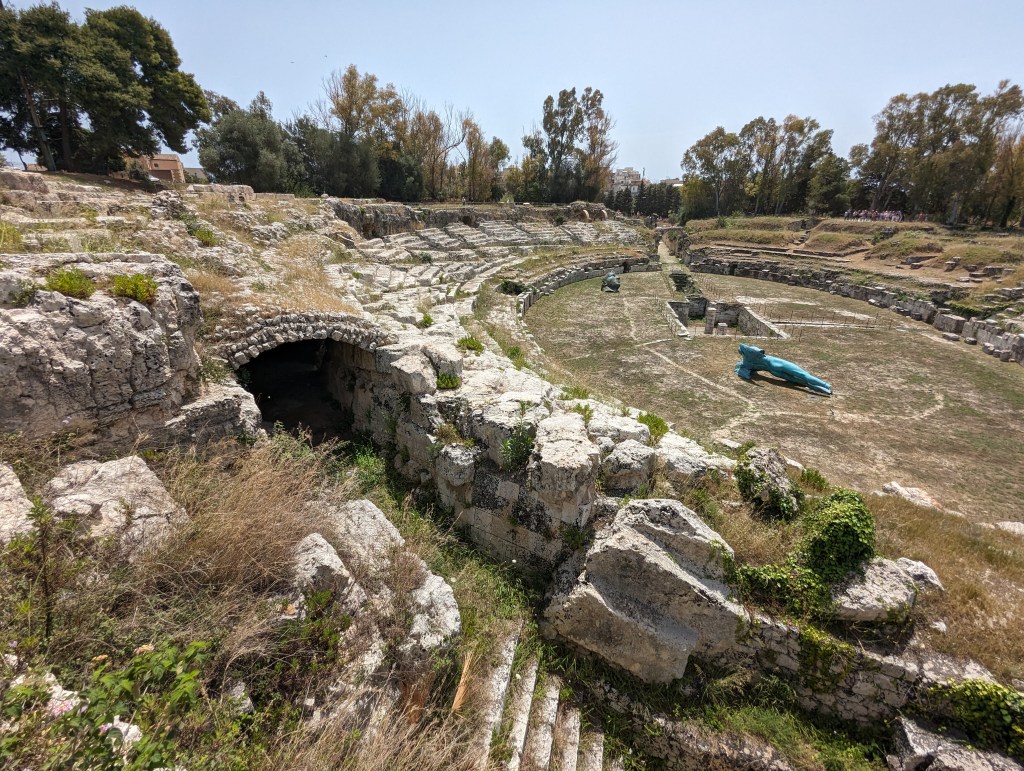
The last big site is the Roman Amphitheatre, which would have been as big as the one in Verona. But the Spanish stole all the stone in the 16th century to build Ortigia, so there are only remains left. The square tank in the middle is thought to be for containing all the gore after a circus event, and I don’t mean clowns on trick bicycles.
At the tip of Ortigia is Maniace Castle, a huge fortification first built by King Frederick II Of Swabia in the 13th century. It looks interesting, and on t’internet the ticket cost is a reasonable 4 Euros. It’s actually the entry price is a more unreasonable 9 Euros, considering what you get.
It has a huge Great Hall with nothing in it .There are several other empty stone rooms. You can descend steps to see Spanish gun emplacements with nothing in them.
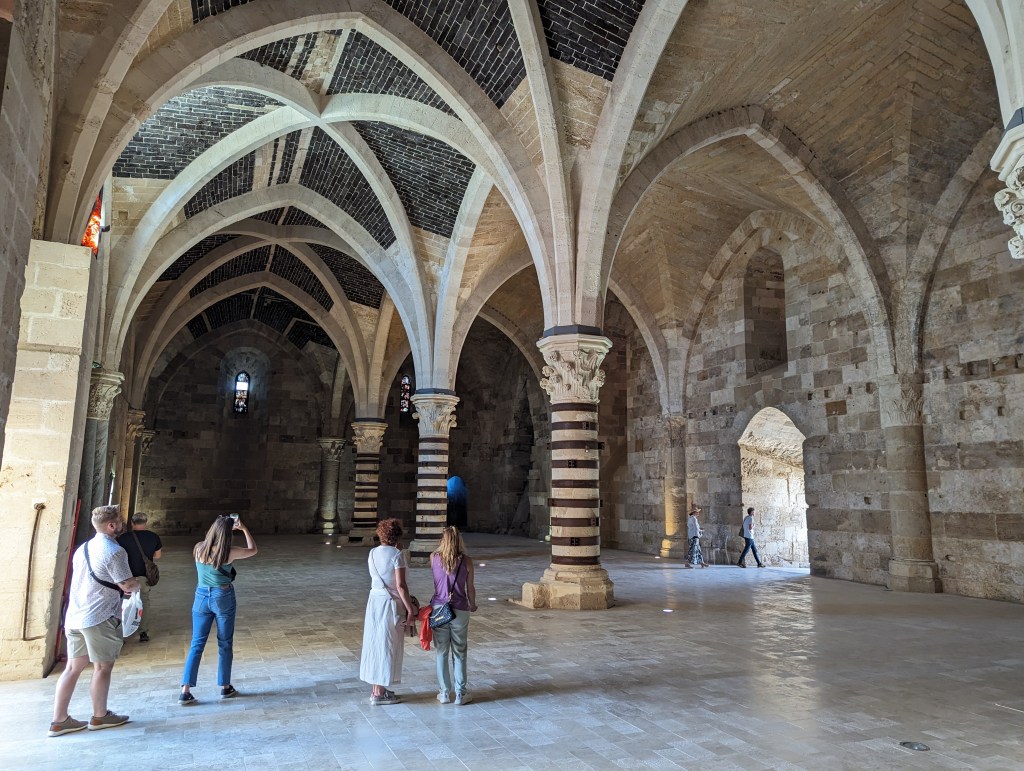
There really is fuck-all there, I have seen more explanation boards in a minor National Trust house than there is in this huge castle. You can’t even buy an ice-cream, which is a huge mistake. If the National Trust took it over there would be eager volunteers every 20 metres and a cafe with a huge array of cakes. It would be generating a massive profit within a week.
We left just as massive mob of teenagers arrived screaming like banshees.
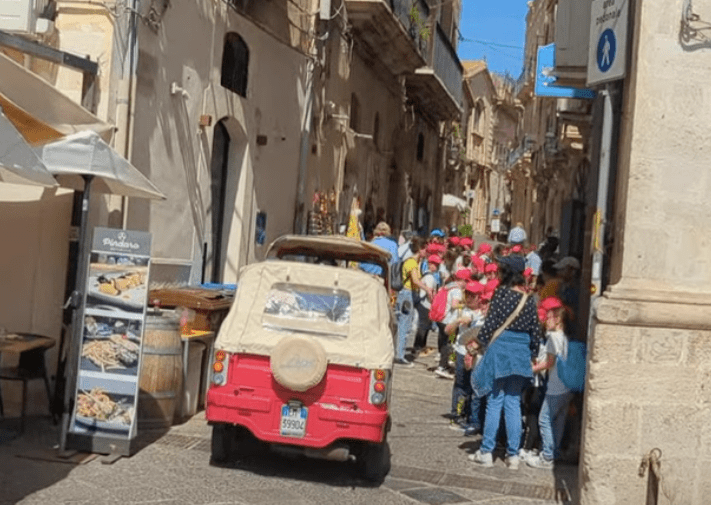
Walking back through the narrow streets we saw an Ape three-wheeler trying to get past a big group of small children, the Ape didn’t stand a chance.
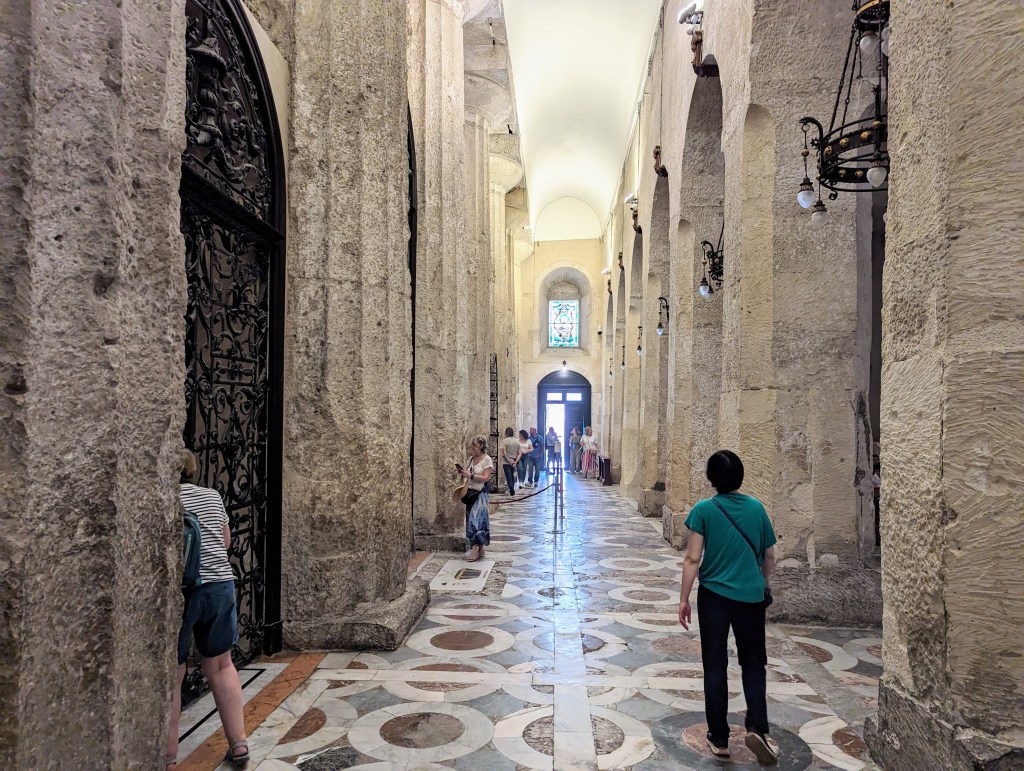
The Duomo is a gorgeous baroque cathedral on the outside, but considerably more subdued on the inside. The collonade of incredibly old Doric columns which were once part of a temple to Athen are massive and imposing.
We did enjoy sitting inside in the cool air sending WhatsApp messages. I’m sure its what Jesus would want
After a big day of Culture we went and had a Spritz by the promenade and ate more UPF snacks – perfect.
 timharnesstravels